Let me start with a request: I need your help getting our new paper open source fee funded. Here’s how this publishing process works: there are legitimate journals and trash journals. Some have higher reach than others (impact factor). If someone wants to be “published,” they can find a journal to put their work in print. Ideally, the peer-review process proceeds something like this: one submits to a journal, the editorial staff accepts or rejects the manuscript for the review process. If selected, it moves, blinded, to a panel of reviewers that are experts in the field (meaning they are anonymous to the author). The comments and criticisms are returned or the paper is rejected outright. If the former, after corrections are made, the journal moves forward with publication. The process allows great ideas to be vetted, but there are times when valid papers aren’t moved forward due to politics, even in respected journals. It happens and some editors can introduce bias, but on a whole I would say that this is the exception, and not the rule. Unfortunately, there are people gaming the system with misleading titles, abstracts, and conclusions and this leads to confusion and obfuscation for those that don’t have their pulse on a particular field.
Once all of those hurdles are cleared, the article publishes, and hopefully it informs and influences other researchers in the field to dig further. New ideas come, spread, and sometimes are replaced when new evidence presents. Journal articles can fall into a number of categories, but loosely speaking, some are reviews of a particular subject, while others present new evidence (data) that lead to reshape how we think about the world. In the latter category, some “new data” are simply reanalyzing old data aggregated from many studies. Sometimes the data are first time observations. Often, people are confused by science “always changing” and in fact, that is what differentiates science from dogma.
One scientist you’ll learn about in depth in Our Broken Plate is Justus von Liebig, arguably the father of organic chemistry and the scientist behind the chemistry laboratory practicum for students of science. He wrote,
A theoretical view in natural science is never absolutely true, it is only true for the period which it prevails; it is the nearest and most exact expression of the knowledge and the observations of that period.
~ Justus von Liebig
Ideally, one of the most important elements of science is repeatability. When new data are presented, other scientists should duplicate. One problem we face today is that “discovery” (first observation) gets more prestige than “confirmation” (repeatability). This also has a related impact on science education in that it’s impossible to review a field that has been growing. For over a century, the same four years of standard university (or eight, total, adding graduate education) is still the path to degrees and hasn’t significantly expanded in length from how people were educated a century ago, when there was arguably a lot less to know. One potential problem with a time-limited approach is that many things need to be summarized and condensed to fit within the curriculum. There’s simply not time to go back and read hundreds of books. In fact, often a modern day graduate textbook has 2-3 sentences that attempt to cover decades of discovery.
What may unintentionally occur is a massive game of “telephone” (Chinese whispers) during which the message gets distilled and distorted to the point of becoming almost meaningless. Compounding this problem are the various bloggers, media, and other self-anointed experts that have a lot of understanding about some of the latest discoveries and studies, but don’t have the breadth or depth of knowledge to cover the animal models, plausible mechanisms, metabolic ward studies, or older observation studies. Without the context, it’s very easy to create an echo chamber and perpetuate misinformation. My last blog on “starvation mode” is an example. Of course our bodies, replete with adipose, doesn’t source energy from muscle, organs, or brain. It uses our fat storage organ. Why isn’t this as obvious in the light of the many hibernating animals that survive weeks or months with little or no food?
With these massive swings in how we organize and discuss certain subjects, I think we’ve reached a crescendo for protein, carbohydrates, fat, and metabolism. I was confused, frustrated, and confident all at the same time. That’s something many of you can probably relate to as these contradictions are repeated so often. Our Metabolic Winter Hypothesis and the new paper are both review articles. They were invited reviews (thanks to my esteemed collaborators) and the result of looking back over two centuries to retrace the path of how we arrived at this current “whisper.”
Journals are in a bit of a financial conundrum right now as they built a business model on selling subscriptions with most academic institutions providing access to all their professors, researchers, and students, and the rest of us get a paywall. It can be $20-40 for a single article, which is completely ridiculous. On the other hand, that’s laid the groundwork for open access journals to thrive. The authors essentially fund their own articles and we all get access to them for free; there’s no paywall. In the best of all worlds, this is how ALL journals should operate. If there is anything that internet has solidified, it’s the value of disruptive innovators and that would be enhanced in an open access scientific forum. The obvious problem is that this can be taken to the extreme when articles become “pay to play” and articles aren’t vetted properly. We need watchdogs like Jeffrey Beall, who weed out the predatory hacks from the legitimate journals.
Help Me Get The Word Out
There are a growing number of the traditional subscription journals that are offering authors the opportunity to pay an open access fee after the review process is complete and the article is accepted. The journal we used for our first paper and this new review article is one of those publishers. I want this paper to be free, like our previous one, and need your help with the $3,200 open access fee. I funded all the work and did the heavy lifting on the research side and I’d like your help to get the message out. Our last paper broke all download records for the journal and the publisher. This one is MUCH better! It’s twice as long, there are six figures/tables, but only one more reference (104 vs. 103). It takes the Food Triangle into healthspan and longevity and it turns diet and exercise upside down. It delves into a new way of looking at metabolism that is consistent with all diets – there’s no sugar/oil prejudice. I’m likely going to piss off both sides of the debate.
The press proofs were finalized on Friday, November 11th, and I am excited for this to hit the street, but don’t have a publish date yet. It’s the culmination of nearly six years of questioning what I knew to be unquestionable. Because one of my collaborators is a program director at NIH, we also circulated the draft to some of the top minds in metabolic research and they, too, thought it was a very disruptive twist that appears to explain many contradictions in diet and exercise. Please take a moment and donate here:
Thank you for your continued support and thanks to everyone that’s supported with subscription donations and my kickstarter project. It’s been amazing to have the opportunity to work on this project. Even after Our Broken Plate ships, there is much more to information for us to weed through and we are already working on our next paper that will center on disrupting diabetes. As well, there is a possibility that research funds will become available so that new clinical trials might be put in place to sift, sort, and screen the many contradictions. Perhaps we might establish a new language surrounding metabolism and food that avoids them altogether.
Reflections
 I want to take some time to recount a little about how we got to this point as so many new readers have signed up in the last couple of years and may not have read all of the material. As well, perhaps this will help gain a little input on where we need to go.
First, but it may come as no surprise, I’m not a professional blogger. I’m an amateur. Writing one or two blogs a year for the last couple of years isn’t going to earn me enough “clicks” to matter. I don’t really sell anything here, so for those new to this site, let me give a quick recount of why it’s here and what it’s all about. In 2008, I had been struggling with my weight for nearly two decades. I didn’t know it then, but type 2 diabetes, and potentially cardiovascular disease, was knocking on life’s door. I was sick and tired of being sick and tired. I decided to put everything – all my focus – into correcting the situation. It was a full-time commitment, a no work, no play, no distractions lifestyle intervention. Death isn’t a problem easy to recover from and I didn’t want to die. I saw it all around me, eventually even seeing it with close family members. I didn’t know it at that time, but I was literally eating myself to an early death.
As part of my life reboot, a chance October 2008 report on Michael Phelps’ domination at that year’s Olympics completely stopped me in my tracks. How could he possibly eat in day approximately what I was eating in a week and be ripped and fit? It doesn’t matter if the number was 12,000, 8,000, or 6,000 Cal, it was a big number and I was eating well under 2000 Cal/day, working out 6 days a week (Body for Life – upper/HIIT cardio/lower/repeat), and a strict 6-meal a day schedule (one palm-sized serving “protein” and one fist-sized “carb” four times a day, plus two times, add a serving of vegetables). My friend, Joe Polish, had even been the guy behind Bill Phillips before-and-after contest. Bill had interviewed me on stage in 2007 about the partial success I made. Anywhere you read that I was “just taking ice-baths,” stop immediately, and discount that source. I was working hard with diet and exercise to make a difference and my success was always very short lived.
Fast forward to 2009…I had finally reached my goal of ~180 lbs (started at 240 and started documenting at 230 – see 4 Hour Body for details). I ran into Tim Ferriss (he had been at the 2007 event with Joe Polish) at the opening session of Singularity and summer International Space University, both hosted at NASA/Ames in California. He was shocked by my progress and asked me if I’d be willing to be part of his book as he too had done a lot of exploratory work on cold and wanted to tell my story in an upcoming book. I said, “sure,” at that time I had no intention on being involved in weight loss beyond my own struggles. My business partner in Zero-G Corporation, Peter Diamandis, marched me all over Mountain View, CA and had me repeat my crazy cold stress story. Ultimately, the TEDMED2010 talk happend, 4HB shipped, and the rest is history.
Unfortunately, it didn’t end there. Tim strongly urged me to have something on the web when his book hit the press to “gather the contact info of people interested – just in case – and hence, this blog is here. At the time, I didn’t care that much about (nor did I have any intention to work in) diet, health, or weight loss. How I went from weightless to weight loss still shocks me. I didn’t do this as “that guy” that works day and night just to be internet famous. The early community (both on comments and direct email) was really a lot of fun. Back then, people said crazy stuff in the media, like cold slows down the metabolism. Dr. Stacey Ingraham is mistaken, but there are many that teach and think like her at that time. I’m sure there are those out there. Again, if you’re new, this isn’t the freeze-your-ass-off diet, the ice diet, or the eat anything and lose weight with “brown fat” diet. That’s all nonsense. There were people that challenged my views of metabolism. Some were absolutely right and I was absolutely wrong. I had much more time to blog and we had some great discussions that are captured here in comments. If you read from the beginning, you’ll see how my ideas transform.
At some point, there’s it’s senseless to study metabolic output if one doesn’t understand input. So that naturally lead to my exploration to the Calorie and diet. The Calorie is often maligned. misused, and misunderstood, but I can say categorically that the dietary Calorie IS NOT the problem. It’s an accounting issue. I am just shocked at how pervasive this Chinese whisper is that we don’t know how fat is accumulated on our bodies or what happens to metabolism in “starvation” has become. It’s awful and there are huge gaps in even top academicians. Many have allowed the mechanistic milieu and socially normal eating to cloud judgment. In my review of papers for both the book and this article, I can point to paragraph after paragraph of distilled and distorted information in textbooks, journal articles, and, of course, blogs, magazines, and newspapers that can easily be demonstrated as false.
It’s not Magic or Rocket Science…
 It’s Food. Nobody understands it all. We all have bias and so many of us post and repeat things that we’ve accepted and not verified. Yes, I once said the same thing, and told the same stories about protein, carbohydrates, fat, and metabolism. If one builds a mid-life crisis metabolic lab next to their kitchen, spends nearly 70 days with no food, and reads 50-60 19th century reports, it gets real pretty quick. I’ve had dietitians, physicians, surgeons, researchers, women, men, and celebrities as clients and there haven’t been any exceptions. I didn’t intend on becoming a diet guru, but it did allow me to continue this investigation. Why am I so confident? It’s because their results don’t differ substantially from metabolic experiments in the 1950s, early 20th, late 19th, or even late 18th centuries.
How could the Calorie be so wrong? These historic results match my modern day results and weight loss to me appears to be consistent across the board? It seems that if there were a big error, someone would have caught it by now. How can there be this much confusion over a century later? I believe it’s a result of widespread misinterpreted summary to the point absurdity. My unique vantage point may have been accidentally stumbling into the quagmire from the perspective of mild cold stress combined with dietary (calorie) restriction. The vast majority of research studies on weight loss are focused on the noise – losing trivial amounts of weight over extended time periods – and they miss the metabolic adaptations that we all carry to use our storage organ, fat, as fuel in times of real scarcity. We cut through that noise with this paper and it should come as no surprise that the contradictions can be explained, but most importantly, that your questions (and challenging my partially correct stories) were all part of solving this puzzle. We need to discuss food in a different context and that’s as true for macronutrients as it is for social and ideological perspectives. There is a huge bias looming over academia, medicine, and the fitness industry concerning when, how, why and what we eat.
Penn’s NYT Bestselling book, Presto, is doing great and, of course, there are the expected many that seem to think he’s done something unhealthy, when clearly his physicians and his results disprove that opinion. There were an estimated 196,000 bariatric surgeries in the U.S. in 2015 at the cost of ~$5B. The net-net of these procedures is that people rapidly lose weight by having their intestinal tract surgically rearranged to interfere with swallowing. That seems radical and crazy to me, whereas teaching people not to swallow, or at least to swallow something different to achieve the same weight loss rate, seems far more sane. Somehow it’s hard to imagine people dying from too many salads or sweet potatoes. Surgery doesn’t deal with the root cause of obesity: our broken social relationship with food.
Nonetheless, I am proud him and of the many other people that have stepped up to the plate…and actually made a move! These are real lifestyle transformations, not crazy hacks. As of November 12th, 2016, 425 people have lost 20,444 lbs. I have nearly 150 to add to that number, perhaps some of them have reported in as well. If you HAVEN’T reported to Nichelle, please email your information to her so we can include it in next week’s tally. As you might imagine, I have been a bit deluged by requests and so many have reached out for my help. I’d like to gauge interest in how many of you might want help in a serious lifestyle transformation. My policy up to this point is that no one can sign up with me unless they know someone who has succeeded. On a few occasions, I have made exceptions…but I regret it every time. I am considering something different and have assembled an amazing team to potentially offer this to a wider audience. It will still be extremely limited as I’d prefer people to finish and not just start. I’d rather backload success than frontload failure like we’ve come to expect from other weight loss programs.
Instead, our program is centered on transforming how you think, talk, and socially react to food. Here’s your best chance to let me know and to potentially slide around my knowing someone barrier. Once we get this launched, future clients will all come from existing successful ones, but I created this mailing list form with basic information needed to gauge interest. Please be sure to confirm your subscription via the email sent to you.
I’m not going to share this list, nor will I be using it outside of this one request. I don’t know how long this list will stay open or even if we’ll will move forward with the project, but at least it will give everyone an opportunity to toss your name in the hat. If we launch this, we’ll be creating a fun, inspiring community centered on a new paradigm of food and social eating.
Our Broken Plate
 I’m behind, but the road ahead is a clear path. It’s a HUGE hurdle behind me to have this paper published. I have two more chapters to write in the book, but there is no doubt this was a much larger task than I had anticipated, especially alone.
FundAnything seems to have bit the dust. If you backed that platform, I have the email address used there and will find a way to contact everyone when the book is ready to ship. Don’t panic. I apologize for underestimating just how much time this would take, but progress is good and it WILL be finished. I will be updating kickstarter backers as well. As soon as I get the main writing behind me and the cleanup begins, I may launch a dedicated blog for Our Broken Plate and move this discussion over there.
Thank you again for your support, encouragement, ideas, and patience! It’s been a long journey, but I’m not too far away from the finish line. If you want to subscribe and donate monthly and pass on one starbucks every 30 days, then consider this my tip jar and it will be put to good academic use for books, lab supplies, and research.
As always, I am grateful to all of the regular donors, emails, FaceBook Friends, and commenters for allowing me to pursue this passionately for the last six years. It has been such an unexpected adventure and there’s much more work to finish.
Thanks!
Ray


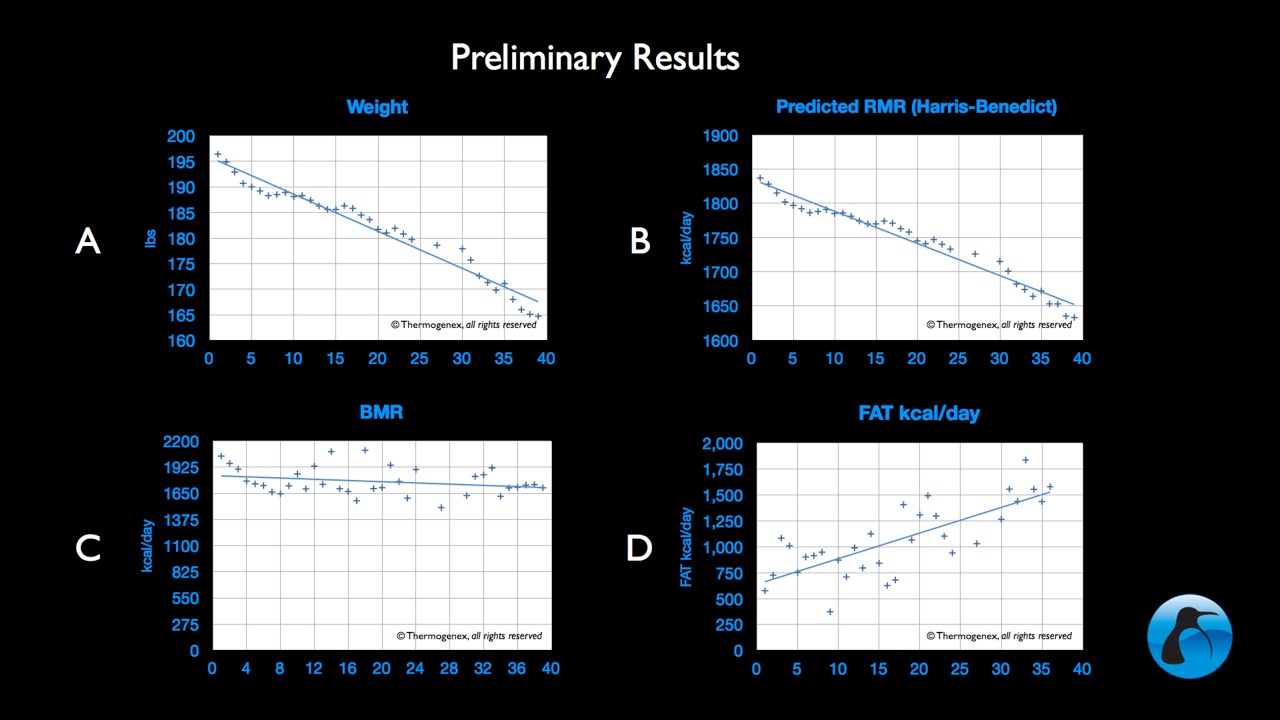


 Over the last 6 months, we’ve spent a lot of time on macronutrients and food. I believe (and can prove) the common protein-carbohydrate-fat speak paradigm is broken. These macromolecules are all well understood scientifically, and yet conceptually, real food doesn’t come in simple little packages; macronutrient density/percentage varies from food to food. Even when we attempt to cluster foods together with the these labels, it doesn’t capture the dynamic and interchange of the overriding metabolic rules and microbiome influence.