Currently viewing the tag: "mitochondria"

After 4 months we are finally nearing the end of our dietary journey.  We discussed the basic context of Macronutrients (protein, carbohydrate, and fat) as “fuel.” We learned that there is a group of Micronutrients – vitamins, minerals and phytochemicals that all constitute “service” or biological maintenance.  We understand that fat has more energy density (2x) than protein or carbohydrate.

Our body uses primary fuel glucose/glycogen through the TCA or krebs cycle to obtain energy (brain biggest single user, followed closely by liver and muscle)  and the body stores a glycogen (a special muscle protein with a carbohydrate shell) and fat (adipose tissue) for rainy day “reserves.”

If you are REALLY starving, or consume an excess, protein is (inefficiently) converted to be used in the sugar cycle through gluconeogenesis (creating new glucose from protein).  The body protects protein a bit, because there’s no sense in digesting the muscle tissue when there is plenty of fat or glycogen around to tap into. Fat on the other hand goes through a different pathway from protein/carbohydrate to derive energy (beta oxidation), but after that are dumped into the same krebs cycle.

Proteins DO NOT = Flesh. There are many very important proteins from enzymes like insulin to blood proteins like hemoglobin, which are recycled and recreated every day.  Proteins are macromolecules, unique sequences of amino acids that are defined by our genes. New proteins are created every second in your body and others are eliminated.  Protein is NOT a food group that you need to “manage.”

You should now recognize that when we break down the bonds of a starch (a carbohydrate) into glucose (a simple sugar) it happens through an enzyme (e.g. amylase created by the AMY1 gene) and we don’t have the enzyme to break down fiber (cellulose). Remember that both starch and cellulose are long chains of glucose – only one is digestible by Humans. Termites and cows eat cellulose in wood and grass to obtain glucose.  Similarly, agave and corn syrups are both high fructose (a 5 carbon sugar) syrups and one is squeezed from corn, the other from Agave plants. Fructose is fructose and I’m not a big fan of simple sugars of any kind as a main dietary source of energy.

We discussed fat as a storage container for energy and it’s necessary role in the diet. We touched on cholesterol – the bold blood biomarker advertised as an indicator of health – and its role as a basis for Vitamin D and all cell walls. We know that to lose weight we MUST go on a naturally high-fat diet (consuming our own).

Finally we figured out that proteins have a bit of an identity crisis in that they CAN be digested for energy, but what we actually need from them is the 10 essential (indispensable) amino acids that our body can’t synthesize. This causes the protein conundrum and is what sends everyone into a “pass the protein” muscle-head mindset.  Ultimately our body needs energy and amino acids to repair or build muscle that has been biologically stressed from a workout. “Protein” does not have to be the source of both the energy and the amino acid. It’s only required for half of the 20 amino acids (the 10 essential/indispensable).

To be clear about our need for amino acids, I want to dig deep, to the very OTHER end of this dialog, because it will be far easier for you to let go and follow along.  So please, set aside your bias and what you may believe about “protein” and let’s look at it from a very different perspective.

Roots

Roots - A California Redwood is a MASSIVE living organism full of "protein"

Let’s take a trip back to grammar school science class. The plants use chlorophyll and CO2 (carbon dioxide) along with energy from the sun for photosynthesis (photolight + synthesisputting together) .  Plants make sugars – sugar cane? Fruits? Tubers/rice starches (poly sugar)? All from carbon dioxide and sunlight. When you see the giant redwoods in California we KNOW they didn’t eat anything at all to grow that big. they absorbed a little carbon dioxide (okay a LOT) from the air, sprinkled sunshine, and presto.

These are MASSIVE living organisms with complex biochemistry and structure. They are full of all sorts of regulatory proteins and cells. Trees create cellulose (remember – long chains of glucose with beta amylase bond) to reach enormous heights. How about all the chlorophyll protein in the leaves? More massive and more protein in one of these single trees than your biggest meat-head on Venice Beach – don’t you think? In fact, did you know scientist are devising new ways to classify trees based on Phylogenic analysis – looking at  molecular structures of  DNA, RNA and protein to group closely related organisms (like trees)?

Where do they get the protein?

Nitrogen Cycle: source - wiki commons

The roots. They form these amino acids (remember Nitrogen?) from the “fertilizer” we put on the ground around them. Farmers often refer to the fertilizer as nitrogen or nitrates and while there are a few more things they get, understand that the nitrogen is critical for both protein and DNA/RNA.  They need these same building blocks, but can’t seem to get the “perfect protein” of an egg into their system.

Guess what – Plants can synthesize ALL 20 amino acids. A potato has every single amino acid. So does rice, but wait, aren’t these “carbs?” Not only that, you’ll remain in POSITIVE nitrogen balance  even if that’s all you eat [Nitrogen Balance is a measure excreted excess nitrogen from protein not needed in urine/feces]. I’m not suggesting an all potato diet, but if this is true, how does that impact how you think about food?

Where do you get your protein?

Even venus flytraps  and other carnivorous plants derive some of their nitrogen from fertilizer and ALL of their energy from the sun. They shun protein as a fuel.

The nitrogen cycle is well known and there’s no need to go into in in great detail, but  just understand we can eat animals that eat plants or we can eat plants.  We can get complete, sufficient compliment of the 10 amino acids that we don’t make either way. There’s no debate. Everything else is simply ideological arguments and I gave up politics when I retired from my government job.  Everyone can debate it, but the science isn’t going to change.

Tie Me Dinosaur Down, Sport.

Herbivores eat plants (maybe not redwoods) and they get essential amino acids and energy from grasses, leaves, and even fruits.  We are talking about some of the largest animals on the planet and even herbivore dinosaurs out numbered carnivorous dinosaurs.  We have discussed that a “grass fed” cow that has “complete protein” (amino acid profile) and gets its protein from…grass. If we ingest the beef, we get the amino acids (synthesized by the plants) use some for repair and burn the rest.  We don’t store amino acids, we just use them.

Potato - Vitamins, minerals and protein - OH MY! There are many foods with protein that we unwisely categorize by the dominant macronutrient (e.g. potato = carbohydrate). This is a mistake. source: http://www.potato2008.org/

I would have to say my “beef” with all the protein double-talk is that it’s not hard to understand. Why do we complicated it? Why don’t we talk about foods to eat instead of vilifying/praising the macronutrient de jour.  I don’t want to convert anyone and I don’t want to be converted. I just want to understand a pattern of eating and how it fits in with basic caloric and nutrient needs.

This is really not difficult science and yet everyone pauses at a vegetarian or vegan diet with an incredulous question, “where do you get your protein?”  By now, hopefully that is sounding pretty ridiculous to everyone.  It’s not difficult to eat complete amino acid profiles or sufficient quantities. You don’t have to mix and match sources.  The fact is that we are flooded with a massive excess of protein/amino acids every day and most of them are inefficiently burned as fuel putting loads on our other organs to screen, sift and sort.

This is NOT an appeal to get you to “switch” a diet. It’s simply a basis for a rational understanding of what you eat and why.  It’s a foundation of information and review of things we know to be true so that you may then ask yourself a basic question: why would anyone educated to any advanced level be recommending or suggesting that “protein” is a necessary “something” you actually have to manage day to day?

This kind of thinking isn’t limited to protein pandering by diet gurus, physicians, and nutritionists. Remember, the sun once rose in the east and set in the west and that was PROOF that the sun revolved around the Earth – can’t you see it right there every day, you idiot? So democracy doesn’t win in science, at least not for long.

This protein argument is not much different and it’s most likely rooted in economy of agriculture, ideology, and cultural bias.  I can’t believe how I have been attacked for just EXPERIMENTING with a vegan diet.  It’s a “label” – oh, so you are a VEGAN? NO, I am not a vegan.  No one  should have to bow to such social labels, but we all know it happens on all sides of the debates.

I don’t want to engage in this debate of a pragmatic vegetarian (for health) vs an ideologic vegetarian (don’t eat animals), because it has all sorts of dimension, but none of the debate needs to be about protein, carbohydrates or fats.  Food doesn’t need to be described that way and everyone seems to have an ideology that drives their view of the science, rather then letting the data speak for itself.

If you want to deal in ideologic vegetarian arguments, I heard the most persuasive argument against eating animals (carnism) in my life recently by Dr. Melanie Joy and she does make some good points. I wan’t persuaded for those reasons, but it was the most compelling argument I’ve heard to date.   This is not my mission, but then again, I don’t see the difference between eating your house cat, a salmon or a cow in terms of basic food macronutrients. They would all provide fat/amino acids with a few fat soluble vitamins from a strictly scientific perspective. When you pause to think about it, other than fish and perhaps the seals eaten by Inuitsboost meat consumed is from herbivoires. Generally speaking, we don’t farm carnivores and I think for good reason.  These are all available from plants as well. These are not mutually exclusive arguments.

Kathy Freston - The Veganist

I’m not advocating eating cats or avacados right now, just making a point. We all have some sort of ideology that is brought to the table to justify what we do and reject what we “believe” is wrong. Kathy Freston (the veganist) talks about “leaning into” a vegan diet in her new book, The Lean. Her husband eats meat. She does not, but she can tell you all sorts of reasons (like her personal ideology and ridding herself of life-long acne).  She and I have discussed this and we both have to laugh, because her book or cause isn’t a discussion about protein.

On the other side of the table, there are many “Vegans” that parade unproven health benefits to disguise ideological arguments.  That is no more correct than the USDA misrepresenting food calories (like fat) on labels using a ridiculous per weight reporting system combined with recommended daily values of nutrients described per calorie. Of the two issues (vegan health or food labels), the latter is probably more responsible for deleterious health of the world.

So, to everyone reading – I am openly experimenting (with good results) with a nutrient dense, calorically restricted diet and I have been working on limiting protein consumption and biosimilar macromolecules by eating a vegan diet. I get plenty of protein.

I needed to understand how to burn fat quickly and eventually it challenged everything I knew about food.  I learned that when you cut down to a “naturally high-fat diet” of love handles, beer bellies and thunder thighs, it’s amazing how well it goes.  Sprinkle a little micronutrient on there and get your game on. Adding thermal loading takes it to an entirely different level.

Got Milk?

Finally, how much amino acid  (protein) do we need? I decided to do a little research to look at protein, carbohydrate and fats in various milks.  I mean, would anyone argue that a growing baby isn’t best fed by its mother’s milk for at least some period of life? This is not by any means the final word, but it certainly might give us some clues; although sometimes I feel like I’m living in the nutritional equivalent of National Treasure. I found sources everywhere and put them into a giant spreadsheet so I could plot protein, lactose (carbohydrate), and fat.

I won’t do a lot of interpretation, but instead let you take a look. How do Human infants stack up to other species? We learned last year (BATgirl 1 & 2)  that human infants are born with more fat and BAT than nearly any other species. We know that there are many factors in determining the “perfect food,” but one would think that good ole Mother Nature might get something right. So how does it look?

[Click to Enlarge]

Percent Protein in various species of animal milk © Ray Cronise

Percent Protein in various species of animal milk © Ray Cronise

Percent Fat in various species of animal milk © Ray Cronise

I think right away you should recognize species of arctic or aquatic environments as having a lot of energy and “leaning” on fat (sorry Kathy, damn that’s a good term). Then there are the fast growers, like rats, that have enormously high protein requirements.  I haven’t plotted some of the other things I have in the table like “time to sexual maturity” (do men ever get there?), but there is a lot to learn.

Also, I’m not suggesting that this is the holy grail of diets – you all know that I believe balancing protein, carbohydrates and fats is not only futile, but is exactly how we created this entire mess in the first place.  I just want to point out a few obvious confused facts in the diet lore that abounds. Is goat milk REALLY a closer to Human milk than cow milk? I’ve heard that before.  What species matches ours most closely and if we are to consume milk past weaning, why don’t we drink THAT? Am I sounding like an Ass? Wait, what about the fat?

Marketing is way ahead of knowledge and I too stayed in the dark for WAY too long.

We are basically starchivoires. It’s how we derived our calorie needs for millennium and it really helped us evolve this tremendously energy-hungry brain. Underground storage organs, Tubers, corms, rhizomes, and bulbs, are available year round in the areas where Humans are shown to evolve (my ancestors: maternal – Haplogroup J1b and Paternal – Haplogroup R1b1b2a1a2 as I had my genotype analyzed along the way). With that said, we can eat other things too and they may prove to be better in the long run, but starches are not “evil” and I’ve seen direct proof of diabetes reversal on a starch-based diet.

I think you’ll see the work of Dr Nathaniel Dominy move ahead of Dr. Loren Cordain in the future and yet both have something to important to contribute to evolutionary biology foundation.  I have absolutely no doubt that meat has played a significant role in our evolutionary past and feel equally certain that excessive dairy consumption has been part of the energetic demise.

Many Paleo and Vegan proponents agree on the deleterious health effects of milk, but is it the protein, carbohydrate, or fat that’s the reason? What about other biomimetics (biosimilar compounds) in dairy (let’s lump cheese, yogurt,  ice-cream in while we ware whipping) and what role do they play? Is it an immune response to whey are casein that is similar as the oh-so-popular evil wheat-gluten protein? We just aren’t sure and yet there are THOUSANDS of good, peer-reviewed papers on the negative effects of dairy consumption and none of it ends up on the “got milk” posters in the school cafeterias.

We know, for example, that bovine (cow) insulin is only different by three amino acids (out of 51) from human insulin. If you believe that human infants get very important enzymes and protective hormones from ingesting their mother’s breast milk, can you at the same time reject that you might be getting harmful ones by drinking the milk of another species decades after you would have been naturally weaned? What health impacts occur due to these biologically active compounds? What if we package it up as “solids” and feed it to our kids three times a day as cheese? Why is it so damn hard to walk away from eating it???

Did I mention how much I LOVE to eat cheese and yogurt? Well, I do and I still do even after not eating it regularly for nearly three years. I’m guilty, but I have that evolutionary big brain and I want to use it to inch my health along.

There are plenty of successful groups of people (like the inuits) that have moved into more energy demanding environments (like cold) and have been able to adapt the diet to eating higher levels of fat to make up energy deficits. The same is true of the original mediterranean studied in the late 50s (now the basis of the olive-oil craze).  We can eat energy dense foods when we NEED the calories. Are they really more important?

I know that calories count. The discrepancy is in the counting and labeling.

I hope this has been informative. Again, the take home is that when we are trying to run a calorie deficit, don’t fall for all of the little tricks – you’ll have to get over the addiction to calories one way or another whether they originate as ingested carbohydrate or fat.  No one knows for certain what the “real answer” will be, but I hope all of you feel a little more well-equiped and begin talking about FOOD not protein, carbohydrate or fats. What I’ve learned first hand through mild cold stress is that the Human body is amazingly adaptive. You can’t fool it easily and there’s no need to do it.

Note on comments – Let’s not diminish this to a vegan-paleo debate, nor talk about co-founding variables in the china study. What I am more interested in help is in the foundation of FOOD and food groups in lieu of protein, carbohydrate and fat.  I want you to see that food is typically a mixture of two or all and that we end up in traps by the “majority macronutrient” classification scheme.

I will touch on the feed forward response, satiety and absorption next and then we’ll return to the regularly scheduled program on mild cold stress – already in progress. Thanks to EVERYONE for support (paypal) and acting so incredibly civilized.  I think this blog is starting to take root over in the paleo and vegan worlds, let’s hope they all remain as respectful as everyone has here. I really appreciate it and apologize that we had to veer off mild cold stress for foundational material. It will be necessary information for the next step in thermal loading.

And last, but not least, having just spent a week with Wim Hof over at his home in Amsterdam planning our next chapter, take a few minutes to look at these hysterically funny commercials by Columbia Sportswear:

https://www.youtube.com/watch?v=17Pc85ypazE

You can see them all at:  Columbia Sportswear Omini Heat

and let’s NOT forget our very own Andrew Stemler at Crossfit London:

**************
Do you like these blogs and want to help me? Please take a minute to scroll up on the right side of the screen to consider making a monthly donation to this program. You can also make a one time donation here:

Thanks!
Ray


Irisin transforming fat to BATWe take a quick break from our macronutrient discussion to talk about some really exciting news in the hypothermics world that showed up in the last two weeks. It’s great when new data shows that old thoughts might be wrong.  This one comes from researchers at Harvard Medical School (and a host of other institutions).(1)  These scientist discovered a new hormone, irisin, named after the greek goddess iris – the personification of the rainbow and messenger of the gods.

What is most exciting is that this hormone could be another piece of the “calorie” controversy – the irritating paradox of calorie in, calorie out.  So let’s take a look at what they found.

Only the Good Die Young

In the past we have discussed the role of the uncoupling protein, UCP1, that instructs the mitochondria to generate excess heat instead of producing ATP.  This protein is mediated by another very important co-activator, PGC1-α. You may have heard about it in connection with what are called the Sirtuin proteins. If not, let’s back up and review a little on these before getting into this new discovery.

By regulating the production/activation of this family of molecules, scientist have not only been able to vastly alter obesity in mammals, they also are able to affect animal longevity.  You’ve heard of Resveratrol by now and these are the very same metabolic pathways altered by that molecule. (2-4)

PCG1-alpha altered mice show dramatically different aging.

Increased PGC-1α expression in skeletal muscle prevents age-associated weight gain and improves exercise capacity during aging. (A) Comparison of mice expressing the PGC-1α transgene in skeletal muscle (MCK-PGC-1α) and wild-type littermates (control) at different ages. (B and C) Lean and fat mass of 22-month-old wild-type and PGC-1α animals as determined by DEXA scans, (D) Relative hindlimb mass of 22-month-old wild-type and PGC-1α animals (E) Treadmill performance test at different ages for wild-type and PGC-1α animals; Source: Proc Natl Acad Sci U S A. 2009 Dec 1;106(48):20405-10. Epub 2009 Nov 16.

For example, if you look the the photo to the right, you’ll see a pair of mice. One mouse (left),  was genetically modified to have enhanced PGC1-α and compared to a normal control mouse (right).  Just a scan of the photos and you will quickly see that the modified mouse ages “gracefully.”  Its control cage-mate gets plump like the rest of us even though it’s in the same environment. The genetically modified mouse stays healthy.

It doesn’t stop there. Take a look at graph “E” to on the bottom right.  That is the difference in performance of Treadmill tests (I wonder if they used Livestrong?).  Look at the difference of performance at 22 months! Like a fine red wine, these mice get better with age.  In addition to the lack of weight gain and increased running skills, these mice showed no age-related bone loss or insulin resistance and the typical systemic inflammatory response was mitigated.

Despite what people might say, you’re not going to get these results from drinking red wine (sorry), but these are incredible first steps to unlocking the mystery of aging and metabolic syndrome.

Message to My Blubber

The new research identifying the irisin hormone is just as exciting.  This hormone was hidden as part of a much larger molecule and these researchers were able to  isolate it.  Irisin is secreted as a result of exercise in both these transgenic (modified) mice and Humans.  It turns out that this is way for the muscle to “communicate’ with the forming white adipose cells, signaling them to become the more energetic brown adipose tissue (BAT).  The concentration of this hormone jumped sharply after exercise (Human and mice).

The researchers went a step further.

By doing experiments in cultures, they discovered that nano molar levels (tiny amounts) of this hormone cause a 50-fold increase in the UPC1 protein. When delivered in vivo (in the animal) they still saw a 10-20 fold increase of in UCP1, which resulted in an increased energy expenditure and improvement in the glucose tolerance of mice fed a high fat diet.  But a nagging question remained. What purpose would be served by a hormone being released in response to exercise that INCREASED energy consumption?  One might thing that the opposite would be true – evolution would dictate conservation of energy.

Cavemen Didn’t Exercise

A long time before 5-toe shoes and grown men (and women) running through NYC Central Park beating their chest and throwing boulders, we were far more like the bird sitting on your back porch (unless you are looking at a pigeon – they don’t count); we starved.  If you look all around you and ignore domesticated animals (including pigeons and rats), you will find that every animal is starving.  They live to eat every day and it is a struggle to find calorie.  It is THE struggle that anthropologist are still trying to unravel with Humans.

Where did we get the energy to become the modern-day intellectual giant?

You should see the conflict. If we were starving and now find that a hormone is released in response to strenuous activity, which turns energy storing white fat into energy burning brown fat, that would be a NEGATIVE not a positive evolutionary trait. The quest to find food would be a downward energy spiral.

Ah, but we really had no reason to run through the park or roll giant tires around. Why would our ancestors need to exercise?  It turns out that there is one activity that WOULD cause a lot of muscle activity, yes it’s shivering.  It was a way for animals to keep warm and in response to the biological stress of cold, muscle secreting a hormone to create more BAT to keep warm was a GOOD thing.  It meant staving off hypothermia.

A further interesting fact is that PGC1-α was originally discovered by scientists, because it was unregulated by cold exposure.  We also know that in addition to caloric restriction, mild cold stress is the only other way that we have demonstrated longevity in mice. Even more exciting is that recent tests (unpublished) have show a nearly 5-fold increase of BAT output of a 52 year old man vs 20 year old controls.  This increase was even though they had similar levels of BAT, so there is even more energy to tap into. You can adapt and cause increased metabolic activity.

Un-wrapping it All

I think we are seeing just the tip of where all of this is going. In the last decade we have moved from the idea that we lose all of our BAT with aging, to we have a fixed amount of BAT, to now understanding there are hormonal mechanisms to create new BAT.  Further the exact pathways that are responsible for longevity through caloric restriction also are affected by mild cold stress.  These systems respond to biological stress of starvation and cold, like a muscle responds to the stress of weight training,  by creating a more resilient biology.

Mild cold stress does not have to be miserable, or even cold.  It can come in a lot of different forms. In the David Agus new Book, The End of Illness, he discusses at great length the role of inflammation in aging. He even gives an example of a one of his “all-star” cancer patients. Diagnosed with prostate cancer at the age of nearly 80, he decided to make a life changes that include swimming every day. He is now almost 90 and doing incredible.

I have documented the profound ability to thermal load through swimming.  In addition we know that mild cold stress starts in warm water (27C/80F).  Today we have learned that a hormone has been identified that is not only increases PGC1-α, it’s causes all the benefits of longevity seen through sirtuin activation. It’s exciting to see this all come together and I know we’ll only learn more. This is not the ice cube diet or really even “freeze your ass off,” it’s a basic adaptation with millions of years of evolutionary excellence.

Turn the heater off, go for a walk, let go of a few layers, move,  or just swim – do something.  You have nothing to lose and we all look funny as hell in shorts, gloves and face masks.  If laughter is the best medicine, worse case is you’ll make someone live longer by laughing.

Ray


(1) Boström PA, et al.,  “PGC1-α-dependent myokine that drives brown-fat-like development of white fat and thermogenesis,” Nature. 2012 Jan 11. doi: 10.1038/nature10777. [Epub ahead of print]

(2) Wenz T, et al. “Increased muscle PGC-1alpha expression protects from sarcopenia and metabolic disease during aging,”Proc Natl Acad Sci U S A. 2009 Dec 1;106(48):20405-10. Epub 2009 Nov 16.

(3) Tong Shi, et al. “SIRT3, a Mitochondrial Sirtuin Deacetylase, Regulates Mitochondrial Function and Thermogenesis in Brown Adipocytes,” J. Biol. Chem., Vol. 280, No. 14, Issue of April 8, pp. 13560–13567, 2005

(4) Marcia C. Haigis and Leonard P. Guarente, “Mammalian sirtuins—emerging roles in physiology, aging, and calorie restriction,” Genes Dev. 2006 20: 2913-2921.

**************
Do you like these blogs and want to help me? Please take a minute to scroll up on the right side of the screen consider making a monthly donation to this program. You can also make a one time donation here:
Thanks!
Ray

What an incredible month and I can’t believe November came and is gone.  “Fat bottom girls, you make the rockin world go round…”  It’s time to dive into Fat.  It’s sort of the original sin of food. Unlike proteins and carbohydrate, most of us know when we have too much of it around.  We covered some material in the BATgirl posts – predominately the “brown” flavor, so now let’s talk about the “white version.” After we discuss a little bit about how we get it and how to lose it, we will pick up with the dietary forms of fat.

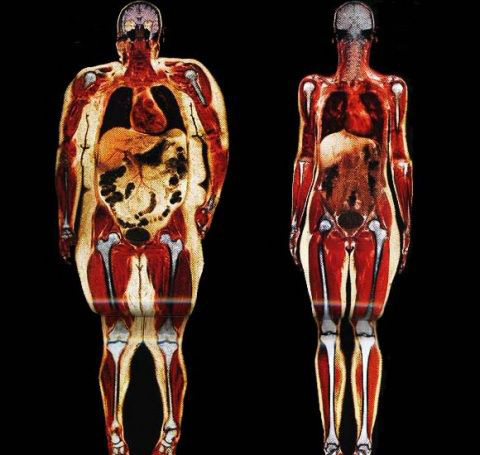
Look at this image. Do you feel your fat suit? I did when I was 50 lbs heavier and I do right now as I gear up to take the last 15 or so off.

Everyone by now has heard me say, “you can’t out-exercise your mouth.”  I think most realize that movement is amazing for health, but relative to how many calories one can stuff into their mouth on any given day, movement is probably only a small part of the weight loss plan.  Here is the corollary to that quote: You must go on a high fat diet to lose weight.

It’s ALWAYS true. Let’s see why.

Saving For a Rainy Day

I hope everyone came away understanding that carbohydrate is neither bad, nor unhealthy.  We have been taught in the last few years to fear carbs and before that it was fat.  The reality is that our bodies run on a carbohydrate based economy – Glucose.  When we consume too much energy, the evolutionary survival trait kicks in and we naturally store this energy as fat in adipose tissue to use at a later day.

Our problem is the later day never comes.

In organic chemistry we refer to this class of compounds as Lipids. They are mostly carbon and hydrogen, but are very different than carbohydrates. For one, they are typically insoluble in water – you’ve seen the oil floating in vinegar and oil dressing.  Lipids act in the same way.  There are three main categories of Lipids: Fats, phospholipids, and steroids.

We have  discussed  Free Fatty Acids (FFA) being used by the mitochondria to produce ATP (or heat in presence of up regulating proteins). In general, fatty acids are how we store fat in chains of about 18 carbons long. In some sense they look a lot like the chains of glucose in starch, but are typically shorter in length. FFA are just the units of these that have been mobilized to use as energy,  analogous to the free glucose that is freed from starch/glycogen.   The bonds in these fat molecules have a LOT of energy, which is why our bodies use them to store for a rainy day.

When the rainy day never comes and we continue to go back to the table to refuel, there’s no hiding where it goes.

Cholesterol is a steroid of fat that is produced by the liver and intestines and is used as a starting material to produce other important materials in our body like Vitamin D and cell Membranes.

Phosopholipds are manufactured to create the “lipid bilayer” of cell membranes. One end is the fat we are discussing – it wants to repel water (hydrophobic – phobos Greek for fear) and the other end is REALLY attracted to water (hydrophilic – philia Greek for love). These form a sandwich with the water loving side pointed to the inside and outside of the cell and the “fatty part” in the middle. This keeps things from freely passing from one side to the other.

I won’t get into any more details, but I hope you have a taste of how this range of lipid molecules are related. Many don’t know that cholesterol is a steroid or that it is a form of fat. Others might not know that very important molecules, like Vitamin D come from cholesterol our bodies (and other animals) make.  As well, every single cell in your body is absolutely dependent on fat for it’s membrane as are many of the bioactive molecules.

Fats are important and it is a shame that we now use the word “fat” to monolithically categorize food. Like “carbs,” it’s simply a bad idea. It leads to many people becoming confused and obsessed with managing something in hopeless ways.  Our results in managing our weight speak for themselves. We have used the “macronutrient shuffle” to move society into unprecedented chronic disease. When your body NEEDs fat, it can make it.  Now, if it has enough ability to manufacture all of these necessary components like cholesterol and fatty acids, what do you think happens when it is simply OVERRUN with the stuff by consuming excess amounts of it in your diet?

System break downs. Oh, but I eat the HEALTHY kind. I need more Omega-3s. Yeah, right.

Heart disease, diabetes, and other chronic illness end up consuming your health, but managing “fat” alone is not the answer. I am not certain that eating it in massive excess trains the body to deal with it any better.  A commenter on Carbohydrate Part – 3 tried to count (a very small list) of fat regulating hormones to justify why we don’t need to eat carbohydrate. Since most hormones, all cell walls, and the primary energy storage is all based in a FAT economy, don’t you think we would have a few extra processes hanging around?  Eating is one activity and our preferred, day to day, economy of energy is carbohydrate – glucose.

I understand his confusion. In fact I think one of the most profound statements at TEDMED 2011 was, “molecular biology has failed.” What was meant by the speaker is that there is not just one genetic pathway to health – identify the bad gene and eradicate it was the naive thought we had pre-Human genome knowledge. Now we understand that there exists a “symphony” of reactions that are going on and we don’t have to understand each one to manage them. Instead we can manage in a more holistic approach.

Your body CAN shift over and stuff fat into that primarily energy economy if that is what it is given (or you are starving), but it is not our primary operating mode (glucose, glycogen, blood sugar).  When you run out of glucose/glycogen your body naturally starts metabolizing fat. This is why the Atkins-type diets are so effective short term. They mimic starvation mode.  When this fat is gone (and we’ll see sometime before) the body can metabolize protein (your muscle).  These are the phases of starvation.  Deplete short term energy, move to long term, and then go into complete survival to “protect the brain and organs” and sacrifice the arms, lets, etc..

Not too unlike what we learned about getting cold – stop flowing blood to the extremities and protect the core.

Under a NORMAL diet, we get alarmed when excess ketones (byproducts of this fat metabolism)  show up in urine.  ketogenesis is the result of going into a fat-based economy and often looking for ketones in the urine is a sign that you have switched over.  As the two of the main ketone groups, acetoacetate and beta-hydroxybutyrate, are very acidic, blood pH can drop, which results in ketoacidosis.  The other ketone formed is acetone – fingernail polish remover, well, before they removed it because it was unhealthy.

All in all, these byproducts are a natural part of Fat metabolism. You have to go through this process to shed those love handles.  I think doing it like I did in yo-yo dieting probably has a very unhealthy effect – I just don’t like the idea of acetone running through my system.  This is one of the issues that is unresolved in eating – is long term ketosis detrimental to health?

It seems to me that living in this mode is not healthy long term even though short term it is VERY effective in losing body fat. I think the positive longevity benefits associated with caloric restriction are from nutrient dense, calorically poor diets.  While on the surface these two forms of  “starvation” may share a common name, it’s likely the outcome is very different. Just my speculation.

Your High Fat Diet

photo: Issac Hinds bodybuilding.com

So, this might come as a complete surprise, but the way you lose weight is to go on a natural high-fat diet. In fact it is EXCLUSIVELY the way you lose, because it is YOUR fat that you need to digest.  At it’s basic level weight loss is actually quite simple in theory: eat enough micronutrients (the maintenance stuff – vitamins, minerals, essential amino acids) to keep the system running and then consume your “gas reserves” for energy.

If you want want a 6-pack (btw, everyone has one) you have to remove enough fat to SHOW it. You just can’t see it through your “fat suit.”  lose body fat (without muscle atrophy, or break down) and stay toned with a moderate amount of exercise and you WILL look fit.

Now some of us don’t have as much muscle mass and putting that on is a completely different topic.  As any bodybuilder will tell you there are two steps to their sport: 1) Putting on mass (excess calorie combined with muscle stress/exercise) and 2) dropping body fat for competition (right Christy?) .

While some level of fitness can be maintained (you don’t need to become obese), putting on muscle mass typically comes with some extra body fat (and water) that are normally shed just before competition.  Most body builders would be hard pressed to stay at this extremely low (some unhealthy) level for much time.

The point here is that the way you shed fat is to restrict caloric intake (of any kind) and just focus on high nutrient food.  This is most easily accomplished with plants/fiber, but there are other ways to do it as well.  The part I want you to keep in mind with EVERY BITE is that if you are putting calories IN, then the body does not  have to tap into calories OUT of your fat reserves. Remember the gas station analogy?

There are very healthy ways to create caloric restriction and stay satiated throughout the process.  Remember this point as well – the body does not KNOW it is fat.  Therefore, anything you do to push it away from its CURRENT set point (reduce calories) it will see as starvation and most likely turn on hunger.

There is a base to metabolic restriction that the body can’t get around and we will see in Part 2 that increasing cold exposure with added exercise will preferentially send free fatty acids out to be metabolized  by mitochondria for heat and can create a one-two punch on the love handles.

**************
Do you like these blogs and want to help me? Please take a minute to scroll up on the right side of the screen consider making a monthly donation to this program. You can also make a one time donation here:


Thanks!
Ray

carbohydrates, like potatoes need not be your enemy. These can be good sources of nutritionIn Part 1, we began the process of distinguishing the difference between a food group and a macronutrient. Carbohydrates (Carbs) are probably the most vilified of the macronutrients. This is probably due to the ubiquitous availability of starch foods throughout human history. For the most part, oils, fats, and meats were the food of the rich. Everyone else ate beans, rice and potatoes.

If we listed the many staple foods: grains, rice, beans, squash, quinoa, potatoes and corn we see a high amount of starch. Remember, starch is simply a long chain of glucose. We all need glucose to live and our primary energy is derived from glucose and stored glycogen or fat (more later).

I want you to know that a carbohydrate need not be fattening, nor lead to diabetes.  In fact, Carbohydrates can be very satiating (1) for 4-5 hours after meals. What seems to be the big diversion, where the “bad carbs” come in, is the processing (blending, frying, flouring, pasting, etc) of carbohydrate.  When we break down starch too much in the food preparation process, it leads to lots of simple sugars. These are both easy to overeat and can have other deleterious health effects.

Starch digestion begins in the mouth with the amylase in the saliva. The starch begins to break down to glucose.  A great way to experience this first hand is to take a unsalted cracker and just hold it in your mouth. You will begin to generate a lot of saliva and as you hold it there, begin to taste sweetness as the glucose is formed. Remember, a termite can do exactly the same thing with cellulose in wood.

From an evolutionary biology perspective, the AMY1 gene that is responsible for making amylase is so important  that you have as many as 12 copies of it (2).  It was extremely important to our hunter-gather predecessors. While there’s been much put forward on the “hunting” side of the equation, some of the most recent anthropology suggest that the “gathering” side dominated.  Underground storage organs (USOs – tubers, bulbs, corms, and rhizomes) played a significant role in our energy management of times past.

Men like the idea of beating their chest and running through the woods hunting and they write a lot of the stories, but gathering is actually a better (less sexy) explanation of our survival. It even allows the elderly to participate productively in the group, even grandmothers would have a significant role in the earliest tribes. Anyone can dig up a potato, they aren’t very fast, and they grow in predicable places.

The naked mole rat is found with archeology of hominid population explosions and points to USOs as a gathered food source. click photo for NPR Story

Many of the early tools used to process USOs were probably made of wood and didn’t survive in the archeological records, but the early Hominid starch crystals in teeth have. Also there are also fossilized populations of mole rats that surge with every human population expansion (3). We’ll also learn that the mole rat has some FASCINATING genetics that impacts thermal loading.

I don’t want to get into the Paleolithic debate. What I want everyone to see is that starch IS an important evolutionary part of your fuel system, but at the same time recognize french fries are NOT the starch I am talking about.  Your view of carbohydrate has been jaded since the beginning of diets. In the earliest of diets (Banting) it was simple breads combined with butter/sugar that caused the excess energy to creep in. Processed starch (sugars) of all kinds can lead to excess caloric intake; it’s just easy to digest and pleasurable to overeat, especially when combined with salt and fat.

For today, understand that primary complex carbohydrates: squash, legumes, onions, carrots, whole corn, whole rice, and potato are all good bases of energy. They are satiating ways to make up for caloric deficit, but don’t confuse those items, “items your great grandmother would recognize as food,” Michael Pollan might say, with the “carbs” served at school lunch.

Most importantly understand that many of these “starchy” foods also contain significant proteins with complete compliment of the essential amino acids your body will use to synthesize your own protein. These complex carbohydrates are broken down by amylase to glucose: the fuel for your brain and many cells in the body.  If they aren’t consumed with excessive alternate energy sources (like excessive fat or simple sugar), your body will tap into it’s own fat reserves.  If too much pre-processing is performed, then you might see increased problems managing blood sugar.

Eating carbohydrate is convenient and pleasurable, and know there is room for “carbs” in your diet if you make the correct choices.

So, when we are putting this all together and I say carbohydrate, I want you to think about these whole, starchy food items that enter YOUR kitchen/cooking reasonably resembling how they came out of the ground or off the plant. Sugar, raw, brown…whatever, is refined. I challenge you to eat the 250 lbs of sugar a year  gnawing on sugarcane, however; you might be able to do it with grapes or beets.

Others have commented on fructose, a simple sugar in fruit, and I think there is merit to the issues that come from too many simple sugars, especially highly processed. This likely includes high fructose corn syrup, apple juice, sucrose, agave nectar, etc…).  Fruits are not found in nature year round, but USOs are. Similarly, think about what is easily stored (beans vs beets).  It’s amazing to hear people rave about “natural agave nectar” (inulin/fructose squeezed from agave) and then begin to lambast the food industry for high fructose corn syrup (fructose squeezed from corn). Yes there are some differences, but we’ll debate it in 5-10 years.  It’s all simple sugar  to me and best avoided.

These simple sugars are energy without the fiber or micronutrients. Others, like Robert Lustig, have covered the issue of fructose in far better detail than I will, but likely our problem as a nation is probably more related to drinking, for example, too much apple juice, rather than eating too many apples. The same is true of french fries vs potatoes. The larger group health statistics just don’t separate the issues (e.g. apples vs apple juice or fries vs potato) with enough granularity and it is all complicated with saturated fats and other compounding, synergistic concoctions we now call food.

Many energy dense foods are now available year round (like fruits or avocados) and so we must be careful with these foods.  We’ll see a similar trend with fats, oils, and nuts.

Starch is a wonderful molecule and has been around for millions of years. Starch is just one bond different from wood.  You are designed to eat starch, with back ups systems in place (AMY1).  We can identify paleolitic starch in teeth, even knowing the plants that produced it, and so there is nothing wrong with carbohydrate as a food – it highly processing it and combining with other energy-rich processed product that causes much of the issues.

You will inevitably hear more about the amazing work anthropologist, Nathaniel Dominy is doing with starch and USOs.  I personally believe the depth and thoroughness of his work will have an impact on what many, like Loren Cordain, believe to absolute. Nate has a very uncanny ability to see past the obvious. For the record, he’s a meat eater, despite what he’s uncovered in the last few years about starch in anthropology.

In terms of the thermodynamics, most natural starches come with a compliment of other micronutrients that are beneficial.  These are “energy foods” and so we absolutely CAN lose weight by eliminating them from your diet.  I am not suggesting diets higher in fat or protein (atkins, paleolithic, slow carb) cannot be used to lose weight – I am diet agnostic. What I can explain is on whole the overall management of energy, heat (not temperature), that is responsible for your success.

If we stop isolating these foods based on our perceived/suggested notations of macronutrient content and return to simple food, A calorie will be a calorie.  Once you learn to recognize what you are consuming at every meal (and snack) you’ll see the results you’ve been after. It doesn’t even take discipline once you understand the underlying principles.

Gauging on the comments/questions, I might dig in a little more (Part 3) on carbohydrate. Eventually I will post the overall biochemistry and some have written asking me to explain the TCA cycle (that complex part in the middle of a Lustig presentation if you’ve seen one).  Otherwise, I will move onto fat and catch sugars in the wrap up.

Next week is TEDMED in San Diego. It’s hard to believe a year has past.  I’ll probably have at least one update on what I learn there, but will *try* to write two posts on fat before I leave so they can post next week.

(1)  Carbohydrates and human appetite, Blundell, JE, et al.,Am J Clin Nutr 1994;59(suppl):728S-34S.

(2) Diet and the evolution of human amylase gene copy number variation, Perry, G.H., et al., Nature Genetics 39, 1256 – 1260 (2007)

(3) Communication/presentation with Dr Nathaniel Dominy, Dartmouth University Dept of Anthropology

**************
Do you like these blogs and want to help me? Please take a minute to scroll up on the right side of the screen consider making a monthly donation to this program. You can also make a one time donation here:


Thanks!
Ray

BAT, Brown Adipose Tissue, Thermal diet and weight lossWe learned in Part 1 that not only do human infants start out with more fat than any other species, a higher percentage is brown adipose tissue (BAT). Women, in general have more than men and as Humans age, BAT seems to dwindle. It’s likely if you have ever been obese, you have less BAT then your skinny friends.Custom gummibåt

I have dozens of papers here on BAT. My interest with BAT began after Tim and I discussed it at length and started exchanging ideas and data. Honestly, I came to my conclusions from the complete opposite (but complimentary) approach – it was much more of a 30,000 ft level view on the subject. Read Full Article →