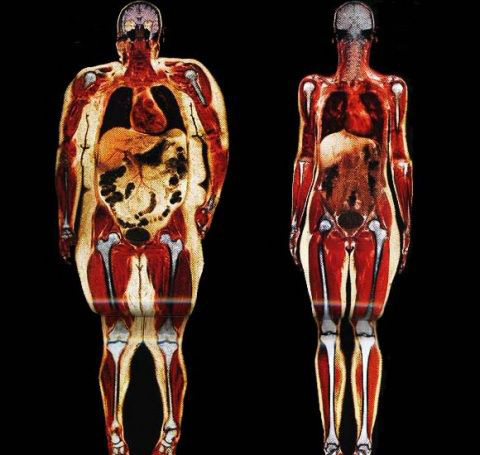
Currently viewing the tag: "fat"

calorimeterLet me start with a request: I need your help getting our new paper open source fee funded. Here’s how this publishing process works: there are legitimate journals and trash journals.  Some have higher reach than others (impact factor). If someone wants to be “published,” they can find a journal to put their work in print. Ideally, the peer-review process proceeds something like this: one submits to a journal, the editorial staff accepts or rejects the manuscript for the review process. If selected, it moves, blinded, to a panel of reviewers that are experts in the field (meaning they are anonymous to the author). The comments and criticisms are returned or the paper is rejected outright. If the former, after corrections are made, the journal moves forward with publication. The process allows great ideas to be vetted, but there are times when valid papers aren’t moved forward due to politics, even  in respected journals. It happens and some editors can introduce bias, but on a whole I would say that this is the exception, and not the rule. Unfortunately, there are people gaming the system with misleading titles, abstracts, and conclusions and this leads to confusion and obfuscation for those that don’t have their pulse on a particular field.

Once all of those hurdles are cleared, the article publishes, and hopefully it informs and influences other researchers in the field to dig further. New ideas come, spread, and sometimes are replaced when new evidence presents. Journal articles can fall into a number of categories, but loosely speaking, some are reviews of a particular subject, while others present new evidence (data) that lead to reshape how we think about the world. In the latter category, some “new data” are simply reanalyzing old data aggregated from many studies. Sometimes the data are first time observations. Often, people are confused by science “always changing” and in fact, that is what differentiates science from dogma.

One scientist you’ll learn about in depth in Our Broken Plate is Justus von Liebig, arguably the father of organic chemistry and the scientist behind the chemistry laboratory practicum for students of science. He wrote,

A theoretical view in natural science is never absolutely true, it is only true for the period which it prevails; it is the nearest and most exact expression of the knowledge and the observations of that period.

~ Justus von Liebig

Ideally, one of the most important elements of science is repeatability. When new data are presented, other scientists should duplicate. One problem we face today is that “discovery” (first observation) gets more prestige than “confirmation” (repeatability).  This also has a related impact on science education in that it’s impossible to review a field that has been growing. For over a century, the same four years of standard university (or eight, total, adding graduate education) is still the path to degrees and hasn’t significantly expanded in length from how people were educated a century ago, when there was arguably a lot less to know. One potential problem with a time-limited approach is that many things need to be summarized and condensed to fit within the curriculum. There’s simply not time to go back and read hundreds of books. In fact, often a modern day graduate textbook has 2-3 sentences that attempt to cover decades of discovery.

What may unintentionally occur is a massive game of “telephone” (Chinese whispers) during which the message gets distilled and distorted to the point of becoming almost meaningless. Compounding this problem are the various bloggers, media, and other self-anointed experts that have a lot of understanding about some of the latest discoveries and studies, but don’t have the breadth or depth of knowledge to cover the animal models, plausible mechanisms, metabolic ward studies, or older observation studies. Without the context, it’s very easy to create an echo chamber and perpetuate misinformation. My last blog on “starvation mode” is an example. Of course our bodies, replete with adipose, doesn’t source energy from muscle, organs, or brain. It uses our fat storage organ. Why isn’t this as obvious in the light of the many hibernating animals that survive weeks or months with little or no food?

With these massive swings in how we organize and discuss certain subjects, I think we’ve reached a crescendo for protein, carbohydrates, fat, and metabolism. I was confused, frustrated, and confident all at the same time. That’s something many of you can probably relate to as these contradictions are repeated so often. Our Metabolic Winter Hypothesis and the new paper are both review articles.  They were invited reviews (thanks to my esteemed collaborators) and the result of looking back over two centuries to retrace the path of how we arrived at this current “whisper.”

Journals are in a bit of a financial conundrum right now as they built a business model on selling subscriptions with most academic institutions providing access to all their professors, researchers, and students, and the rest of us get a paywall. It can be $20-40 for a single article, which is completely ridiculous. On the other hand, that’s laid the groundwork for open access journals to thrive. The authors essentially fund their own articles and we all get access to them for free; there’s no paywall. In the best of all worlds, this is how ALL journals should operate. If there is anything that internet has solidified, it’s the value of disruptive innovators and that would be enhanced in an open access scientific forum. The obvious problem is that this can be taken to the extreme when articles become “pay to play” and articles aren’t vetted properly. We need watchdogs like Jeffrey Beall, who weed out the predatory hacks from the legitimate journals.

Help Me Get The Word Out

There are a growing number of the traditional subscription journals that are offering authors the opportunity to pay an open access fee after the review process is complete and the article is accepted. The journal we used for our first paper and this new review article is one of those publishers. I want this paper to be free, like our previous one, and need your help with the $3,200 open access fee.  I funded all the work and did the heavy lifting on the research side and I’d like your help to get the message out. Our last paper broke all download records for the journal and the publisher. This one is MUCH better! It’s twice as long, there are six figures/tables, but only one more reference (104 vs. 103).  It takes the Food Triangle into healthspan and longevity and it turns diet and exercise upside down. It delves into a new way of looking at metabolism that is consistent with all diets – there’s no sugar/oil prejudice. I’m likely going to piss off both sides of the debate.

The press proofs were finalized on Friday, November 11th, and I am excited for this to hit the street, but don’t have a publish date yet.  It’s the culmination of nearly six years of questioning what I knew to be unquestionable. Because one of my collaborators is a program director at NIH, we also circulated the draft to some of the top minds in metabolic research and they, too, thought it was a very disruptive twist that appears to explain many contradictions in diet and exercise. Please take a moment and donate here:


Open Access Donation


Thank you for your continued support and thanks to everyone that’s supported with subscription donations and my kickstarter project. It’s been amazing to have the opportunity to work on this project. Even after Our Broken Plate ships, there is much more to information for us to weed through and we are already working on our next paper that will center on disrupting diabetes. As well, there is a possibility that research funds will become available so that new clinical trials might be put in place to sift, sort, and screen the many contradictions. Perhaps we might establish a new language surrounding metabolism and food that avoids them altogether.


Reflections

Ray Cronise Self ExperimentsI want to take some time to recount a little about how we got to this point as so many new readers have signed up in the last couple of years and may not have read all of the material. As well, perhaps this will help gain a little input on where we need to go.

First, but it may come as no surprise, I’m not a professional blogger. I’m an amateur. Writing one or two blogs a year for the last couple of  years isn’t going to earn me enough “clicks” to matter. I don’t really sell anything here, so for those new to this site, let me give a quick recount of why it’s here and what it’s all about. In 2008, I had been struggling with my weight for nearly two decades. I didn’t know it then, but type 2 diabetes, and potentially cardiovascular disease, was knocking on life’s door.  I was sick and tired of being sick and tired. I decided to put everything – all my focus – into correcting the situation. It was a full-time commitment, a no work, no play, no distractions lifestyle intervention. Death isn’t a problem easy to recover from and I didn’t want to die. I saw it all around me, eventually even seeing it with close family members. I didn’t know it at that time, but I was literally eating myself to an early death.

As part of my life reboot, a chance October 2008 report on Michael Phelps’ domination at that year’s Olympics completely stopped me in my tracks. How could he possibly eat in day approximately what I was eating in a week and be ripped and fit? It doesn’t matter if the number was 12,000, 8,000, or 6,000 Cal, it was a big number and I was eating well under 2000 Cal/day, working out 6 days a week (Body for Life – upper/HIIT cardio/lower/repeat), and a strict 6-meal a day schedule (one palm-sized serving “protein” and one fist-sized “carb” four times a day, plus two times, add a serving of vegetables). My friend, Joe Polish, had even been the guy behind Bill Phillips before-and-after contest. Bill had interviewed me on stage in 2007 about the partial success I made. Anywhere you read that I was “just taking ice-baths,” stop immediately, and discount that source. I was working hard with diet and exercise to make a difference and my success was always very short lived.

Fast forward to 2009…I had finally reached my goal of ~180 lbs (started at 240 and started documenting at 230 – see 4 Hour Body for details). I ran into Tim Ferriss (he had been at the 2007 event with Joe Polish) at the opening session of Singularity and summer International Space University, both hosted at NASA/Ames in California. He was shocked by my progress and asked me if I’d be willing to be part of his book as he too had done a lot of exploratory work on cold and wanted to tell my story in an upcoming book. I said, “sure,”  at that time I had no intention on being involved in weight loss beyond my own struggles. My business partner in Zero-G Corporation, Peter Diamandis, marched me all over Mountain View, CA and had me repeat my crazy cold stress story. Ultimately, the TEDMED2010 talk happend, 4HB shipped, and the rest is history.

Unfortunately, it didn’t end there. Tim strongly urged me to have something on the web when his book hit the press to “gather the contact info of people interested – just in case – and hence, this blog is here. At the time, I didn’t care that much about (nor did I have any intention to work in) diet, health, or weight loss. How I went from weightless to weight loss still shocks me. I didn’t do this as “that guy” that works day and night just to be internet famous. The early community (both on comments and direct email) was  really a lot of fun. Back then, people said crazy stuff in the media, like cold slows down the metabolism. Dr. Stacey Ingraham is mistaken, but there are many that teach and think like her at that time. I’m sure there are those out there. Again, if you’re new, this isn’t the freeze-your-ass-off diet, the ice diet, or the eat anything and lose weight with “brown fat” diet. That’s all nonsense. There were people that challenged my views of metabolism. Some were absolutely right and I was absolutely wrong. I had much more time to blog and we had some great discussions that are captured here in comments.  If you read from the beginning, you’ll see how my ideas transform.

At some point, there’s it’s senseless to study metabolic output if one doesn’t understand input. So that naturally lead to my exploration to the Calorie and diet. The Calorie is often maligned. misused, and misunderstood, but I can say categorically that the dietary Calorie IS NOT the problem. It’s an accounting issue.  I am just shocked at how pervasive this Chinese whisper is that we don’t know how fat is accumulated on our bodies or what happens to metabolism in “starvation” has become. It’s awful and there are huge gaps in even top academicians. Many have allowed the mechanistic milieu and socially normal eating to cloud judgment. In my review of papers for both the book and this article, I can point to paragraph after paragraph of distilled and distorted information in textbooks, journal articles, and, of course, blogs, magazines, and newspapers that can easily be demonstrated as false.

It’s not Magic or Rocket Science…

Ray Cronise, Penn JilletteIt’s Food. Nobody understands it all. We all have bias and so many of us post and repeat things that we’ve accepted and not verified. Yes, I once said the same thing, and told the same stories about protein, carbohydrates, fat, and metabolism. If one builds a mid-life crisis metabolic lab next to their kitchen, spends nearly 70 days with no food, and reads 50-60 19th century reports, it gets real pretty quick. I’ve had dietitians, physicians, surgeons, researchers, women, men, and celebrities as clients and there haven’t been any exceptions. I didn’t intend on becoming a diet guru, but it did allow me to continue this investigation. Why am I so confident? It’s because their results don’t differ substantially from metabolic experiments in the 1950s, early 20th, late 19th, or even late 18th centuries.

How could the Calorie be so wrong? These historic results match my modern day results and weight loss to me appears to be consistent across the board? It seems that if there were a big error, someone would have caught it by now. How can there be this much confusion over a century later? I believe it’s a result of widespread misinterpreted summary to the point absurdity. My unique vantage point may have been accidentally stumbling into the quagmire from the perspective of mild cold stress combined with dietary (calorie) restriction. The vast majority of research studies on weight loss are focused on the noise –  losing trivial amounts of weight over extended time periods – and they miss the metabolic adaptations that we all carry to use our storage organ, fat, as fuel in times of real scarcity. We cut through that noise with this paper and it should come as no surprise that the contradictions can be explained, but most importantly, that your questions (and challenging my partially correct stories) were all part of solving this puzzle. We need to discuss food in a different context and that’s as true for macronutrients as it is for social and ideological perspectives. There is a huge bias looming over academia, medicine, and the fitness industry concerning when, how, why and what we eat.

Penn’s NYT Bestselling book, Presto, is doing great and, of course, there are the expected many that seem to think he’s done something unhealthy, when clearly his physicians and his results disprove that opinion.  There were an estimated 196,000 bariatric surgeries in the U.S. in 2015 at the cost of ~$5B. The net-net of these procedures is that people rapidly lose weight by having their intestinal tract surgically rearranged to interfere with swallowing. That seems radical and crazy to me, whereas teaching people not to swallow, or at least to swallow something different to achieve the same weight loss rate, seems far more sane. Somehow it’s hard to imagine people dying from too many salads or sweet potatoes. Surgery doesn’t deal with the root cause of obesity: our broken social relationship with food.

Nonetheless, I am proud him and of the many other people that have stepped up to the plate…and actually made a move! These are real lifestyle transformations, not crazy hacks. As of November 12th, 2016, 425 people have lost 20,444 lbs. I have nearly 150 to add to that number, perhaps some of them have reported in as well. If you HAVEN’T reported to Nichelle, please email your information to her so we can include it in next week’s tally. As you might imagine, I have been a bit deluged by requests and so many have reached out for my help. I’d like to gauge interest in how many of you might want help in a serious lifestyle transformation. My policy up to this point is that no one can sign up with me unless they know someone who has succeeded. On a few occasions, I have made exceptions…but I regret it every time. I am considering something different and have assembled an amazing team to potentially offer this to a wider audience. It will still be extremely limited as I’d prefer people to finish and not just start. I’d rather backload success than frontload failure like we’ve come to expect from other weight loss programs.

Instead, our program is centered on transforming how you think, talk, and socially react to food. Here’s your best chance to let me know and to potentially slide around my knowing someone barrier. Once we get this launched, future clients will all come from existing successful ones, but I created this mailing list form with basic information needed to gauge interest. Please be sure to confirm your subscription via the email sent to you.

I’m not going to share this list, nor will I be using it outside of this one request. I don’t know how long this list will stay open or even if we’ll will move forward with the project, but at least it will give everyone an opportunity to toss your name in the hat. If we launch this, we’ll be creating a fun, inspiring community centered on a new paradigm of food and social eating.

Our Broken Plate

Our Broken Plate, Ray CroniseI’m behind, but the road ahead is a clear path. It’s a HUGE hurdle behind me to have this paper published. I have two more chapters to write in the book, but there is no doubt this was a much larger task than I had anticipated, especially alone.

FundAnything seems to have bit the dust. If you backed that platform, I have the email address used there and will find a way to contact everyone when the book is ready to ship. Don’t panic. I apologize for underestimating just how much time this would take, but progress is good and it WILL be finished. I will be updating kickstarter backers as well. As soon as I get the main writing behind me and the cleanup begins, I may launch a dedicated blog for Our Broken Plate and move this discussion over there.

Thank you again for your support, encouragement, ideas, and patience!  It’s been a long journey, but I’m not too far away from the finish line. If you want to subscribe and donate monthly and pass on one starbucks every 30 days, then consider this my tip jar and it will be put to good academic use for books, lab supplies, and research.


Hypothermics Donation

As always, I am grateful to all of the regular donors, emails, FaceBook Friends, and  commenters for allowing me to pursue this passionately for the last six years. It has been such an unexpected adventure and there’s much more work to finish.

Thanks!

Ray

kickstarter, Our Broken Plate, Skip a meal and your body will begin to hold onto fat. We should eat frequently to keep our metabolism up (ugh-I said this all the time). The most important meal of the day is breakfast. I’m not getting all sciency today. I will ramble a bit.  We’ll talk at a much higher level. There’s been a lot of reductionism in nutrition and metabolism and it is spreading fast. While the internet has provided unprecedented access to information, it’s also allowed a lot of science babble to infiltrate every subject and diet has to be the gold medal champion. Everyone eats so we all must be experts.

I hear of quantum physics and love from people that don’t know the schrodinger equation or a microcanonical ensemble exist. Their “frequencies resonate.”   It’s widespread co-opting of science terminology to make things sound more well thought out and factual than they really are. In science, we celebrate the unknown. We don’t know how to define the emotional and it’s handled in the soft sciences.  They see trends, but science looks for fundamental rules that govern how things work. 2 + 2 = 4 is a mathematical relationship and as amazing as may sound, it’s true whether here or on voyager spacecraft that’s left our solar system.  If you have two marbles and your travel mate has 2 and  put them in a bowl  there will be 4. We have other scales and mathematical tricks that can make this equation an inequality, but in normal counting, it’s true and can be verified.

In 1996 Carl Sagan wrote a fantastic book, Demon-Haunted World. In it he warned (foreshadowed) a reality of the future:

” I have a foreboding of an America in my children’s or grandchildren’s time — when the United States is a service and information economy; when nearly all the manufacturing industries have slipped away to other countries; when awesome technological powers are in the hands of a very few, and no one representing the public interest can even grasp the issues; when the people have lost the ability to set their own agendas or knowledgeably question those in authority; when, clutching our crystals and nervously consulting our horoscopes, our critical faculties in decline, unable to distinguish between what feels good and what’s true, we slide, almost without noticing, back into superstition and darkness…

The dumbing down of American is most evident in the slow decay of substantive content in the enormously influential media, the 30 second sound bites (now down to 10 seconds or less), lowest common denominator programming, credulous presentations on pseudoscience and superstition, but especially a kind of celebration of ignorance.”

He went on to say,

“We’ve arranged a global civilization in which most crucial elements profoundly depend on science and technology. We have also arranged things so that almost no one understands science and technology. This is a prescription for disaster. We might get away with it for a while, but sooner or later this combustible mixture of ignorance and power is going to blow up in our faces.”

While that sounds all a bit cynical, I really am using it to give us a nudge. We need to be skeptical, but sifting and sorting through the blogs, diet books, media, and social discussions is a daunting task for even the best educated. There’s a saying that a specialist knows more and more about less and less until they know everything about nothing. Conversely, a generalist knows less and less about more and more until they know nothing about everything. We all fit this to a degree in some aspect of our lives.  Clearly the internet and media echo chamber has spoken on starvation mode and it’s doom and gloom if you don’t eat.

A Closer Look

Here is one example quote I found with a Google search that is quite interesting:

“Quite simply, your body goes into ‘starvation mode’. This mechanism, which is thought to have evolved as a defence against starvation, means the body becomes super efficient at making the most of the calories it does get from food and drink. The main way it does this is to protect its fat stores and instead use lean tissue or muscle to provide it with some of the calories it needs to keep functioning. This directly leads to a loss of muscle, which in turn lowers metabolic rate so that the body needs fewer calories to keep ticking over and weight loss slows down. Of course, this is the perfect solution if you’re in a famine situation. But if you’re trying to lose weight, it’s going to do little to help you shift those unwanted pounds.”

Let’s talk about basics. Fat is a storage organ. It is there for times of famine. The body constantly taps into this storage organ when we enter the fasted state (~4-6 hours after a meal). So here is what they are saying, in a nutshell – if you don’t eat the body holds onto the back up reserves.  That’s backwards thinking.  Further, it’s posited that the body will instead use lean tissue (from muscle/organs) and accelerate that loss – all to preserve our fat storage organ.

Reflect on that for a minute.

Why would the body hold onto this precious fat storage and instead cannibalize our vital organs and muscle tissue, because of food scarcity? How might that helped the evolutionary process? Seems to me that those who digested their heart or leg muscles before using fat reserves when there wasn’t any food wouldn’t have jumped into the gene pool with all the vigor as those of us that actually lived on our storage organ. Don’t you think? I’m imagining the number of people it took to build the pyramid stopping 3-6 times a day for a quick pick-me-up. Don’t you think they tossed them some water and said, “keep chiseling! pull the rope” and perhaps they ate some bread etc… a little later?

Now, the body absolutely has some adaptive changes to accommodate food reduction. There are metabolic shifts and changes in how we use fuel.  I learned last year that even after 30 days of a VLCD followed by a medically supervised 14 distilled water fast I wasn’t deficient in anything.  I don’t want to cloud the discussion with ketosis, fat adaption, etc… as it’s all somewhat tangential to the main point. Let’s for a minute put aside the debate over metabolism havoc. Let’s acknowledge we can’t explain everything and yet our bodies managed to get you right here staring at a screen from a single cell without help and perhaps in spite of what we swallowed. It’s remarkable.

When in the fasted state we use reserves. That’s why they are there. Fat and glycogen are long and short term (respectively) storage organs. You’ll be fine on the 4 hour flight without peanuts.

Magic Meals

Last year when I was coming home from the self-experiment, my daughter and I decided to stop in Vegas and visit with Penn & Teller.  I have known them for over 20 years and we hung out after the show. I’ll leave the bigger story for Penn to tell in his spring 2016 book, but he called me later and asked for help. Maybe you’ve seen the news by now, but essentially he lost a little over 100 lbs, most of it in a three month period we worked together. He’s off 8 BP meds and in fact his medication is down to almost nothing now. You can listen to us discuss this on his Penn’s Sunday School podcast here or download it on iTunes.

He’s looking and feeling great. While the media likes to toss around “1000 kcal/day” diet (or gastric bypass), he has no idea how many calories were consumed. I don’t either and as I will be explaining there are much better ways to think about food energy conservation that are not only predictable, but also repeatable.  Then there is the echo chamber – read this article and imagine that this otherwise well-educated physician makes all these WRONG diagnoses based on information in People Magazine. What physician or scientist uses People Magazine as a primary source and then does an analysis? This is how the echo chamber works.  I’d challenge his notion that nutrients are somehow deficient because he was at a caloric deficit. I wonder how Dr Ayoob would explain the successful results of this 382 day water fast (and btw, he didn’t gain it back)?

Speaking of Fast…

Today happens to be the 5 year anniversary of my TEDMED talk that slipped me into this entire world of food. I had no idea this was coming and if it hadn’t been for Tim Ferriss urging, I wouldn’t even have a website. I didn’t do this for a business. It was an intellectual curiosity.  My friend Tim Jenison had an amazing project I helped on back in 2009 that became the inspiration for my research. If you haven’t seen Tim’s Vermeer, it is a REALLY great documentary.

I was staying with him and beside the bed on a shelf were stacks of history and art books about Vermeer. Tim, as you will see, was obsessed with how this artist did these incredible paintings. Vermeer captured on canvas that which the eye can’t see.  The movie tells the rest of the story and I have my tiny appearance with our 2am decision to start building walls for the room – look for the forklifts scene. After The 4 Hour Body came out there was a little backlash about the veracity of my work. Keep in mind, I did the cold stress work, because I was desperate to lose weight. It wasn’t a research project, but I did jot down notes as it’s habits for me.  That was the seed that went into 4HB and you can read the rest elsewhere on this blog.

What puzzled me was still the Calorie and the apparent contradictions. I wasn’t buying the Good/Bad or even the “high fat/low carb” (or any variation thereof) dogma.  I wanted to understand it.  Well, I did as my budget would allow to dig into this project like Tim.  Having a midlife crisis calorimeter in a lab adjacent to the kitchen is a great way to test anything you want about food.  I learned a lot and especially that most of the older studies were easy to reproduce. I don’t think they are wrong, but I believe a lot of things we repeat, that  I repeated, aren’t correct. You all know very well by now that I don’t think “protein, carbohydrate, or fat” serve us anymore as food groups/categories.  We need a new paradigm.

FullSizeRender-1Today is day 16 of a medically supervised 21 day water fast for my book.  I feel fine and perfectly normal (as normal as I get). Hanging out with new and old friends here, reviewing 5 years of research and writing.  I may have to go out to 24 days depending on how some tests turn out at the end (more in future blog or book). As I mentioned, I wasn’t deficient in anything last time at day 14 and I performed a midpoint blood panel (~$1500 each) to see how well that tracks my last fast. Of course I will do a blood panel at the end.

This time I am focused on “muscle loss” particularly urinary nitrogen. As we learned in Passing the Protein (part 1, part 2), urea is the metabolite of amino acid metabolism and so one can track loss by collecting 24 hour urine samples. We need the indispensable amino acids (~9 of 20 depending how one counts them – not 2 +2), the rest we make. It’s been 2 weeks of drinking water and peeing in a jug.  This will supplement the dexa results from last year and give a more complete picture. If all else fails, I guess it’s training for the reality show, Naked and Afraid.

Take a look at my results above and what you’ll see, like last year, my metabolism is fine. It’s not crashed, but scaled with my mass and my fat burn is through the roof.  Yes, as evolved, our body actually uses our fat STORAGE organ in times of no food. That’s not a difficult concept, but wow, is there a lot of confusion. I want to try to nudge this. I’d like to change the dialog.

Cool not Cold

I don’t want to sound opportunistic, but you may have read about the recent tragic death in a Las Vegas cryotherapy spa. It is a horrible loss to her family and they have my condolences. This is probably an isolated incident, but nonetheless it’s an opportunity for me to reiterate my position. As anyone that follows this blog for a while knows, I am an advocate of mild cold stress not extreme.  One does not need to go to extremes to get the benefits of cold therapy.  If you are new to the blog, use the tags at the side and you’ll be able to navigate to the many posts that discuss this.  Mild cold stress begins in water temperatures below 80F (26C) and air temperatures below 60F (15.5C).  There is no reason to go below 60F(15.5C) water or 32F (0C) air.  Generally speaking one can get all the benefit they need from just a 10 degrees or so on the thermostat or to carry layers and use as needed.

Ideal temperatures are 75F (24C) water and 55F (13C) air.  These are the most comfortable and are likely plenty to get the beneficial impacts.  Remember the “reverse ski layering” strategy – take them along and wear as needed instead of leaving the house bundled and losing layers throughout the day.  A quick walk from the office parking lot to the front door won’t likely result in hypothermia. It’s fall in the northern hemisphere and we are naturally adapting to the cooler temperatures. The photoperiod is also getting shorter.  These are all biological cues that signal winter is coming (wow has that phrase changed meaning in 5 years). As we explain in the Metabolic Winter Hypothesis, the combination of sleep, dietary restriction and mild cold stress may have a synergistic effect with activation of the sirtuin genes – those that we have shown in animal models to increase healthspan/lifespan. Contrast showers can aid in this adaptation process and it’s helpful in sleep.

As well my close friend, Wim Hof, has been on many blogs lately and I don’t want this to sound contradictory to what Wim teaches. His main message is what our body is capable of doing with training and that he’s not a unique superhuman (I’m still impressed). In fact, when I visited him a few years ago in Amsterdam, he noticed one day that he wore a jacket on our walks to the grocery store and I had a t-shirt and gloves. In his warm laugh and great accent he said, “look at that. The iceman has a coat and you are in a t-shirt.” We opened the windows that evening and slept amazing. He was grateful for reminding him that he’d been locked up in the apartment.  Wim is pushing science to go past the handed down dogma on extremes and human limits and he’s doing amazing work with the autonomic immune system.  I don’t want this to be misunderstood.

Kickstarter- Our Broken Plate

our broken plateIn the next week I will be launching a kickstarter campaign for my book, Our Broken Plate (update: Campaign went live on November 1st and closes on December 13th). I’ve had a lot of requests over the years to write one and so it is now a “done deal.”  I’ve had some discussions with publishers, but feel that I can be more true to my message if I at least write it first as a cohesive story. Honestly, they all want me to write a diet book and that may be way more successful, but I don’t want to write a diet book.  My goal was to examine how our social relationship with food changed over the last two centuries.  It’s been fascinating to  pile my own shelves full of old books and especially be emerged in the the 19th century when all the fun happens. By 1920s we are on a trajectory to where we find ourselves today. It’s surprising that many scientists predicted, and even warned about this situation.

There are no villains. It’s not an evil government conspiracy as many of the recent books have put forth. There’s no greedy corporate America that is just trying to kill us all with genetically modified food.  We don’t discuss big pharma or  big farms. It’s not a “fat vs carb” or eat meat/don’t eat meat story.  It’s not a textbook as we’ve already made food way too complicated. The book is more of a history-mystery with my self-experiments juxtaposed on some of the great science on metabolism and nutrition. I’m going to stretch it a bit in places with new explanations for old data.  I find it ironic that many of the players of the late 19th century would be perfectly comfortable, and to some extent know more, in a discussion today about metabolism then as it plays out in the blogosphere. We’ve forgotten so much and this valuable data is lying fallow on university bookshelves and used book stores around the world. I’ve collected some of the best and for me holding that 170-200 year old book in my hands and reading it is incredible. I don’t think we are all broken as is so widely claimed. To me it’s our relationship with food that’s broken.

I plan to finish the book in the coming months and hope to have it published by April 2016. We’ll have a crowd-sourced cover design and many other activities. I’ve learned so much from the people here and on the various Facebook groups. The questions have been fantastic.  Having worked now with over 100 people one on one has been a real eye opener. If there are any subjects that you’d like to see covered (the book is pretty far along at this point) please comment below.  I may not be following up as closely as normal as there’s lots of testing to do and I have my kickstarter campaign staring me in the face.

I appreciate your support and thank you for hanging in here even when there were extended times I had nothing to say. Perhaps this research project will make up for it.

In addition to the kickstarter (there are a couple of high end rewards, but most are books)  I’d like to immediately raise $5,000 to help defer the costs of the testing and travel associated with this test and as a jump start to the writing project. I appreciate your support! You can use this link or the one above near the goal donation meter.


Hypothermics Donation

As always I am grateful to all of the regular donors, emails, FaceBook friends, and  commenters for allowing me to pursue this passionately for the last 6 years.  It’s been such an unexpected adventure and there’s much more work to get done.   I’m going to get back to my water now.

MetabolcWinterThe last year left enormous personal progress.  It’s been a difficult year in terms of time, but scientifically rewarding. There are many reasons people launch blogs. Some need attention. Others need authority. Then there are others that are bored.  Probably the most common are those that just want to make a contribution in an area that find passionate.  Health, fitness, and cooking are among the top blogs and there are many, often conflicting, opinions on the subject.  While people might “agree to disagree,” there are many opinions that are just wrong.

This blog really started, because Tim Ferriss insisted I put “something” up before our 4 Hour Body Nightline segment aired in late 2010.  I had no idea what direction my research would take at that point and certainly no idea how this blog would unfold. But make no mistake, I’ve had wrong ideas about the world

I’ve unintentionally held these wrong ideas throughout my science career.  Sometime it’s due to lack of data, the inability to see the picture clearly, which causes one to make a (wrong) educated best-guess.  Many times it’s simply a key element of information that is missing or present that skews opinion one side or the other of “correct.” More often than I care to admit, it’s because I blindly accepted something I read (ironically, just like you and this blog) and either didn’t care to verify what was said or I simply didn’t have the requisite background to see through the “trickery.”  Sometimes we are fooled, not merely by another author’s ignorance, but intentionally.

That’s not the spirit of science. The goal is to learn and of course we only learn when we are wrong about an idea. Simply repeating what we know isn’t learning – our view about the world must change to learn and hence those that haven’t given this any careful consideration might say, “these scientists, they are always conflicting, this week one thing, next week something else.”

Exactly. That is THE point. When our ideas conflict with what is observed in the universe, it’s not the universe that needs to be fixed.

The Emotion of Science

Recently a major milestone occurred with the collection of evidence that supports cosmic inflation theory.  A moment that’s repeated throughout time – a scientist’s ideas verified – was captured in this incredible video as Assistant Professor Chao-Lin Kuo surprises Dr. Linde at his home:

Did you get that?

“I always live with this feeling, what if I’m tricked? What if I believe into this just because it is beautiful…”

If you aren’t in science, this video portrays an emotion you might not be aware exists. Not to imply scientists are objective robots or blind to emotional trickery, but that what must be overcome is the human urge to find that beauty or pattern.  Before we push send, publish, or make the call, all good scientists have that queasy feeling and few put it into such eloquent and simple words as Dr Linde has here. That’s a different kind of beauty and it happened quite automatically in this extemporaneous interview.

Trying to chip away and find a nugget a truth in a noisy world is what drives many and while information is more plentiful than ever, blogs have unintentionally added  even more noise and created extra layers of difficulty. Who do we believe?

What if I’m Tricked

Two weeks ago one of several journal articles I’ve been working on was accepted. It’s finished peer review and I will update when it it publishes. Later in this blog you can help by donating to the Open Access Fee for the journal.   When I began my journey 5 years ago, I wasn’t doing a science project or an N = 1 trial. The goal wasn’t why I lose weight it was to simply lose it.  Soon thereafter, I was confronted with health issues that didn’t go away with the weight loss as surmised and that started me on yet another, parallel journey.

When Tim Ferriss asked if he could tell my story, I consented having no idea the magnitude of that agreement.  I had data only because that’s what I do by habit, not because I was trying to “prove” something.  As soon as one makes a claim that is unconventional, the “truth” police come out and one finds their ideas attacked. Much of it was nonsense that didn’t really deserve the rebuttal, but there was some honest criticism that was certainly welcome.

It necessitated digging in even further to demonstrate an idea I thought to be a simplistic and self-evident truth. Is it “out there” to suggest that it take more energy to maintain constant body temperature in a cooler environment?  I think most people reacted to this innate phobia of cold and it didn’t help that some wanted to summarize it as the “ice cube diet.” Either way, I needed good data – what if I’m tricked? In looking at the overall thermodynamics, mild cold stress was certainly important, but the thermodynamics of food was absolutely key.

There are a lot of smart people being “tricked.”  Thermodynamics is relatively sound and accountable – if one establishes the boundary conditions. My confidence was not born out of hubris, but because I had some of the greatest minds on my team. Richard Feynman said it best,

There is a fact, or if you wish, a law, governing natural phenomena that are known to date. There is no known exception to this law; it is exact, so far we know The law is called conservation of energy; it states that there is a certain quantity, which we call energy, that does not change in manifold changes which nature undergoes. That is a most abstract idea, because it is a mathematical principle; it says that there is a numerical quantity, which does not change when something happens. It is not a description of a mechanism, or anything concrete; it is just a strange fact that we can calculate some number, and when we finish watching nature go through her tricks and calculate the number again, it is the same.”

Our problem is understanding “nature and her tricks.” When our ideas don’t conform to the universe, it’s our ideas that need reformed. Some might make the absurd claim that obesity is proof that the conservation of energy is wrong. I’m betting the error happens when we “calculate some number.”

Fast forward to the review article that is about to publish. In it, we make an argument for a metabolic winter hypothesis. My collaborators are two esteemed researchers.  I am not saying this for an empty “appeal to authority argument” (attack logic flaws when one doesn’t have their own data is the vogue approach taken on many blogs these days), but out of genuine respect for both of them.

Dr. Andrew Bremer was at Vanderbilt Children’s Hospital serving as a pediatric endocrinologist and professor of medicine at Vanderbilt Medical School when we met.  Last November, he was tapped by the National Institutes of Health to become the Director for Type 2 Diabetes Prevention and Treatment Research and Digestive and Kidney Diseases Medical Officer.  Many of you know his work already if not by name, as he’s a co-author and first author on many of the fructose/endocrinology  articles by Robert Lustig.  He’s a PhD/MD and his publication record is phenomenal.

When I began describing some alternate explanations for the etiology of metabolic syndrome and obesity, he listened and ultimately it changed his perspective. He too, is not beyond being “tricked.”  He’s also an incredible mentor and researcher and I’ve learned so much from him in the process.  He was able to put aside things he was taught in medical and graduate school to explore new ideas. We now have a lifetime of future work to do after securing funding. When we originally met during one of my children’s office visits, I had no idea who he was and he asked me if I’d mind reading a paper he’d recently published.  Later that evening I was shocked to read it and a week later got the nerve to ask him about potential collaboration on my project.

My second co-author, Dr. David Sinclair, is at Department of Genetics Harvard Medical School and Department of Pharmacology School of Medical Sciences, The University of New South Wales, Australia.  He’s one of the world authorities on longevity, in fact voted Time Magazine’s Top 100 Most Influential People a few weeks ago.  He’s probably one of the people most responsible for the last few years of my exhaustive research. He is also an incredibly well-published author and most recently his paper in Dec 2013 Cell on NAD/HIF-1α has taken another critical step towards untangling the web of aging.

Like Andrew Bremer, I had no idea who David Sinclair was when standing in line the first day of TEDMED 2009.  He overheard me talking to another person in line and joined in the conversation.  He was very certain that mild cold stress had more application than just weight loss and really encouraged me to think very differently about the problem. Later, when he got up on the TEDMED stage  for his talk, I was shocked by just how much of an authority on the subject he was.  The entire TEDMED experience granted me the opportunity to brainstorm with top scientists – people I certainly would have never had access to without this event.

We continued our conversations and even picked them up the years following and he kept encouraging me to push.  There was, and still is, so much I don’t know about longevity, but he’s on top of it and it is a huge advantage to have someone like this on a collaborative team.

Together, we were able to create a fantastic multi-disciplinary team to tackle this first review and others are in preparation. Unfortunately I was drinking from a firehose and it took many hours to digest the several thousand papers, couple hundred textbooks, and do my own self experiments in the lab. These guys are way ahead of me and still are on so many facets of our research.   The blog wasn’t the top priority. I apologize for the absence, but it’s important to have an influence on the other publication machine that pushes all ideas forward as well.

Confidence in Nonsense

So this brings up the question we need to all ask ourselves about the things we repeat every day.

How do I know?

I ask myself this question all the time. Who did it come from and how do they know? Science investigation and curiosity has permeated my entire adult life and I think that begins with the natural curiosity of all children. I guess I just didn’t grow up. I’ve had the privilege to work with some of the most innovative, bright minds in the world. It’s help me to develop an arsenal of tools and disruptively innovate in many different industries. Attending various scientific gatherings allows me to work with others that disrupt and that moves everything forward. It also keeps me honest, people are quick to point out when I’m being tricked.

Konrad Dannenberg (original German Rocket Scientist) talks with Burt Rutan the morning after the successful SpaceShipOne first launch. I took Konrad to the launch that year. My all time favorite picture of two heros.

Konrad Dannenberg (original German Rocket Scientist) talks with Burt Rutan the morning after the successful SpaceShipOne first launch. I took Konrad to the launch that year. My all time favorite picture of two heros.

One of my mentors in creativity, Aerospace Maverick Burt Rutan, says, “you have to have confidence in nonsense If you want to innovate.” Rutan is arguably one of the most innovative aeronautical engineers of the past 50 years. Rutan adds, “an innovation is by definition something that half of the people think is impossible, and half say, well, maybe it can be done.”

Rutan knows innovation—he was the first to fly around the world nonstop without refueling. He was first to launch a privately funded spaceship, winning the $10 million Ansari X Prize. He joined forces with billionaire entrepreneur Richard Branson to build the first private suborbital spaceship for Virgin Galactic’s launch into space tourism. His very success in all these projects was a result of breaking all the rules and letting his goals define his approach. How else does one come up with an airplane design as unconventional as the Boomerang.

Aviation has certainly advanced over the years. Let’s focus our attention on the year 1894. Two significant, separate innovative events occurred – 120 years ago.  Karl Benz introduced the Velo, becoming the first production automobile and that very same year Wilbur Olin Atwater published the USDA’s first Bulletin on the Nutritive Value of Food.

What has happened in the intervening Century in Food Science versus Transportation? On the transpiration front we blew past trains, automobiles, airplanes, sound barrier and spaceships! Space is on the verge of privatization – companies I co-founded in the 90s have flow over 10,000 people in weightlessness (gozerog.com) and 7 people to Space Station (Space Adventures); one flew twice! Humankind has walked on the moon and sent probes to other planets and even out of our solar system! We’ve made huge progress on the shoulders of visionary, disruptive innovators. Today, the entire U.S. access to space rests on the work of PayPal founder, Elon Musk, and his company Space-X.

Now consider how much progress have we made in nutritional health as it relates to food science since the 1894 with introduction first USDA nutritional guidelines? Not very much. Our nutritionally driven chronic diseases have become MUCH worse.  Having now researched metabolism and nutrition reaching all the way back to Hippocrates (460-377 BC), I can certainly say that any one of the 19th century great nutrition researchers, Atwater, Rubner, von Voit, etc… would readily recognize and not be too terribly surprised by a modern day diet book. We are still obsessed with juggling mythical ratio of “proteins, carbohydrates, and fats” something I would argue is a somewhat irrelevant and certainly a dated way to look at food. We simply heap lots of multi-syllable organic chemistry, endocrinology, and molecular biology words onto these antiquated and overly simplistic organization of foods. It’s like strapping explosives onto a Velo with the idea that will take us to Mars.

What do you think Mr. Benz reaction would be sitting in a Mercedes SLS AMG GT as compared to a Benz Velo?  I’m certain that Lavoisier would be impressed with the simplicity of running a calorimetry experiment in my lab – vous appuyez sur le bouton?  Mais, c’est incroyable! But the data we collected would not differ significantly from what he knew to be true as I describe in Muscling Your Metabolism (part 1). How do I know? because I repeated it and generated numbers that were very close.

I am not suggesting we’ve made no progress in molecular biology, genetics, or physiology, but our ability to treat chronic disease through nutrition or public information about food is an utter failure.  The average walking around advice for diet and exercise is broken and most diet books are written by people that couldn’t possibly have measured many metabolisms.   Most importantly our relationship with food is broken. Nutritionism is broken.  Worse yet are the industry authorities and blogs that repeat unsubstantiated “facts” over and over again – insanity through inundation. I was guilty of the same thing not too long ago, but for the last 4 years, I haven’t taken anything at face value.

A Good Skeptic

In areas of food and metabolism we are inundated by an inordinate amount of untested hypotheses and anecdotal evidence. To be sure, the diet and fitness industry is loaded with R&D (rip off and duplicate), but where are the people with what Rutan calls “confidence in nonsense?” Does anyone else notice the sheer-volume of myths and urban legend that permeate every level of our daily discussion of food and nutrition?

I am not alone in this opinion.

In the January 31, 2013 issue of The New England Journal of Medicine article, Myths, Presumptions, and Facts about Obesity, the authors had this to say:

Why do we think or claim we know things that we actually do not know? Numerous cognitive biases lead to an unintentional retention of erroneous beliefs. When media coverage about obesity is extensive, many people appear to believe some myths (e.g., rapid weight loss facilitates weight regain) simply because of repeated exposure to the claims.

Cognitive dissonance may prevent us from abandoning ideas that are important to us, despite contradictory evidence (e.g., the idea that breast-feeding prevents obesity in children). Similarly, confirmation bias may prevent us from seeking data that might refute propositions we have already intuitively accepted as true because they seem obvious (e.g., the value of realistic weight loss goals). Moreover, we may be swayed by persuasive yet fallacious arguments (Whately provides a classic catalogue) unless we are prepared to identify them as spurious.

Wilbur Atwater's notebooks from the late 19th century and my Moleskine as I poured through archives of his  work.  Incredible to look through them knowing how the story ends.

Wilbur Atwater’s notebooks from the late 19th century and my Moleskine as I poured through archives of his work. Incredible to look through them knowing how the story ends.

This pretty much sums up my existence and excitement over the last 5 years. It is amazing to be able to walk out of my kitchen and into a lab to test dogma, spend days reading historic old textbooks, and visit locations where past and present ideas about our bodies and nutrition were born.

I decided not to take anyone’s opinion for granted and invested in my own laboratory. I have what you might call a scientist’s mid life crisis indirect calorimeter instead of a sports car. It’s allowed me to carryout experiments in an attempt to separate fact from fiction. We all need to be a little more skeptical, but at the end of the day the truth is in what is demonstrable and repeatable.

Much like the words protein, carbohydrate and fat, metabolism is another word that’s bandied around and in some sense has become meaningless. Do we all have slow metabolism? Does muscle burn more than fat and by how much? What happens to our metabolism if we skip meals? I have tried to answer some of these questions in previous posts and more informations is coming.  It’s my hope to help people see through the inundated insanity.

An Incredible Opportunity

I think many people overlook one of the best points in The 4 Hour Body. You can dismiss the individual ideas, or even dismiss the author, but there is one part about the book that rarely get’s highlighted and can’t be dismissed, the Appendix. So many love to read “freeze your ass off” sensationalism into the chapter on my work or imagine themselves as the modern day version of Woody Allen’s Ograsmatron, but I say dig in on pages 484-510 if you want to see what motivates me on a daily basis. That is the meat  of the book (cruciferous vegetables didn’t have the same ring) and that is why I agreed to allow my work to be featured. Tim does understand the world of self-experimentation.

It doesn’t matter if he is right or wrong about any of the chapters as long as he’s pushing the envelope, measuring, and aggregating data. I think his “confidence in nonsense” is a good contrast to a century of metabolic stagnation. If you want to see a glimpse at just how powerful this idea self experimentation can be, watch this TEDMED presentation by Jamie Heywood:

We are sitting on an unprecedented opportunity – the aggregation of N of 1 data that eclipses the expensive and slow clinical trials that now dominate science. These are necessary and will still go on, but I can’t imagine there’s much “confidence in nonsense” taking place in most funded proposals today. Conservative claims and reach has become the mainstay of academia.  Science isn’t halted and we still have plenty of risk takers, but the preponderance of funding is placed on incremental progress.  You have the opportunity to collect data – technology has never been more accessible. We have the opportunity to ferret out what’s right and wrong, and avoid focus on who.

Let’s all be more skeptical and open minded. They aren’t mutually exclusive efforts.

Copies of  Our Paper

One final request.  The open access fee for the journal, allowing anyone to download it without charge, is $3200.  I know many of you contribute monthly to the blog and I very much appreciate it. I am asking that you make a one time donation to help me defer that cost of 0pen access publication. Most don’t donate, so this is one of those few times I’ll ask you to think bigger.

If the fancy button doesn’t work, try this old-fashion hyperlink.

I will make sure to update everyone when it is available for download and if I can raise the Open Access fees, everyone will be able to access it.  This is just the foundation and I have conducted a lot of experiments in my lab that aren’t directly publishable, but give us a good idea of what to look at in future clinical trials and proposals.

After this series of review articles has made it through the peer review process, I’ll likely publish the book I’ve been researching for a couple of years. The notes and references are all in place as is the table of context and many chapters.   In the summer I will be announcing a crowd-sourced fund for another set of self-experiments I intend to do in late August and will need to raise money to cover the extensive cost of lab work and extended travel time  in the NYC/Boston area near my science collaborators.  This is all directly related to surprising things I learned last summer in my own lab.  I’m sorry again about the delay in sharing results, but so many things get duplicated (unattributed) these days that I really need to get the publications in first and that process is unfortunately slow.

I hope everyone understands.

I have the outline for another summary blog that goes over the many related publications that have come out in the last couple of months that support The Metabolic Winter Hypothesis and will put it up when the paper is released.

As always, thanks for your support, ideas, questions and participation.

Ray


calories burned with kettlebell swings - boost metabolismYou can’t out-exercise your mouth.

It is a fundamental truth and a brilliant evolutionary strategy.  Exercise has many interesting impacts, both positive and negative, but if you’ve been chronically obese, I want to encourage you not to start here. Not only are you putting your heavy, out of shape body into an increased risk of injury, but until you’ve been successful in the one exercise that ALWAYS works, you’ll simply eat your way through any progress.

What is this magical exercise? Isometrically clench your teeth in the presence of fattening foods and excess calories.  It’s necessary to control appetite, not “fuel your body” with even more energy. Those shakes are only helping to the degree they are displacing higher calorie food. Take a look at any study that shows statistically significant effects usually has paltry overall results (normally far less than 2 lbs a week).

It seems many emails, blogs and conversations all end up with the word cravings sprinkled on top.  Somehow we are to believe that because we crave something it’s an indication of need.   Our cravings are about as good of indication of nutrition as the food pyramid or the Hot and Fresh sign at Krispy Kreme. I’d argue they are practically worthless and craving is a term of addiction, not survival and health.

You can’t out-exercise your mouth.

Let’s take a look at a few exercises and some of the claims about metabolism and I think it will be clear that exercise has many of benefits, but burning fat is not at the top. I apologize in advance that this is going to get a little technical, but it’s absolutely necessary if we ever want to expunge the nonsense from the weight loss and fitness industry. This was the most difficult blog to write to date, because I really want everyone to understand this concept. It is so critical and I hear EVERYONE throwing around the M-word as if it is undeniable fact.

Wired For Truth

When Steven and began discussing a proposed article (read Wired article here), he kept coming back to the same question: how can we know that cold had a certain impact on your progress?  I guess the simple answer was that I changed so few variables that the impact was self-evident, but the far more certain way is to measure. My goal was to lose weight back in 2008 – not write a book, a blog, interviewed in magazines and TV, or give a talk.  I didn’t really care much about ANY of this until June/July 2009 when so many others, like Tim Ferriss, made such a big deal out of the results.  I just did it because it made sense to me and it did have a solid technical basis. I didn’t know for certain that it would work.

Since then a combination of defending the results and being encouraged by scientists I enormously respect to take it further has fueled the crazy self-experiment obsession.  Along the way I haven’t given much thought to proving a point as much as understanding the underlying science. That gives one a certain intellectual freedom, because it doesn’t matter what the answer is as long as it is the truth.

We now have seen in Muscling Part 1 and Part 2 that metabolism has two important components: RMR and RQ.  The first, RMR,  is a short term measure of a person fasted at rest and that measurement (typically about 15 minutes) is projected over the next 24 hour period as an estimate  of total energy should be used if no additional activity occurs.  It’s in a sense a minimum, or floor measurement and your total expenditure will likely be higher over the day. RQ (respiratory quotient) is a breath by breath analysis during the period measured of the % Fat and % Carbohydrate being utilized.  It tells us how much of each fuel is being used. Like RMR, RQ is EXTREMELY sensitive to activity and is constantly changing to accomodate the body’s fuel needs.

When Atwater and others performed their experiments a century ago, they were not only collecting the carbon dioxide exhaled, but also the heat that evolved from each test subject.  This would be direct calorimetry, because the heat evolved during this oxidation (burning process) is related to the fuel burned.  Not only can it be measured – it can be measured very accurately with simple thermometers of the day.  Today, indirect calorimetry, measuring O2 consumed and CO2 produced,  indirectly determines the energy dissipated and it matches what they measured over 100 years ago.

Over a century…that’s pretty incredible.

So if someone is talking about boosting metabolism, lean mass burns more than fat, or  post exercise/eating metabolic boosts, remember that one can’t simply repeat these things and it suddenly makes them true. We actually have to verify that it is as stated.   The simple question one should ask is: how do you know?  So let’s blow a few more metabolism myths out of the water.

What’s Your RQ?

alcohol lamp used to calibrate RQ and RMR on an indirect calorimeter

Alchohol lamp used to verify RQ and total energy burned

We’ve learned RMR, or metabolism rate, during any activity isn’t enough to know anything about fuel source.  You might be burning alcohol, carbohydrate, fat or protein – you don’t know. While your diet does influence short term calorie consumption (within hours of the meal), it really has no impact on the bigger picture of what happens for the remainder of the day or what  fuel is selected for your exercise of choice.

To assess that, we need RQ.   This you will remember is a ratio of the CO2 produced to the O2 consumed and the number is very specific to the type of fuel  used. Let’s use for example an alcohol lamp burning grain (ethyl) alcohol for fuel.  Alcohol has an RQ = .67 and when I drop this alcohol lamp into a bucket and sample the air continuously  that’s exactly what I measure – a straight line at .67 and a RMR of 5,074 kcal per day.  That lamp fire is a little over the energy equivalent of two people to put it in perspective   If I weigh the lamp before and after the experiment, I can in fact verify that not only is my system displaying the correct RQ, but also measuring the overall energy accurately.

By using calibrated gas mixture of Carbon Dioxide/Oxygen, a calibrated syringe to measure volume displaced on each breath, and alcohol flame to assess the fuel consumption rate, we can KNOW what is happening before/after a meal or before/during/after an exercise.  This isn’t new, in fact we learned in  Muscling Part 1 that this exact technique was used back in 1790 by Lavoisier and  later by Atwater and others after the discovery of the macronutrient fuels, protein, carbohydrates, fats, and alcohol. With all biological systems there is a certain variability above us, but we got these measurements correct. How we decided to use them is a completely different story.

It should come to as no surprise to anyone that reads this blog that the terms “protein, carbohydrate, fat” are not the arbitrary “food labels” your, government, food packager,  dietitian or fitness coach chooses to place on the items that constitute a meal. In fact it was the process of making these measurement that I came to realize how absurd these labels are unless your goal is to over eat calories in pursuit of some magic macronutrient “ratio” or every nutrient inclusive, “balanced meal.”    Either way, I am pretty certain when we  measure activity, meals, sleep, mild cold stress, etc… using indirect calorimetry that we can know with some accuracy and precision how much energy the body is using and what it is burning to get there.

Taking a Swing at Kettlebells

I will take some “heat” for this, so let me begin with the same disclaimer I’ve given on exercise in general.  We shouldn’t throw the baby out with the bathwater. Even though I don’t think exercise is a particularly good way to lose weight (in fact it mostly slows it down), does not mean I am opposed to it or think it is unhealthy.  Likewise, I love kettlebell swings, so please don’t take this as some sort of assault on exercise or even kettelbells in particular. This just happened to be an easy target. I could have used nearly any “fat burning” activity aerobic/anaerobic to make the point.

Anyone that’s performed these exercises will tell you that they are a great physical exertion, but what happens when you have a $30K machine that let’s you peer into what makes that swing FEEL so good? What’s really going on?  I want you to take a minute and Google:   kettlebell metabolism

You should get MANY hits.  WOW. look at those very first ones:

“A short and intense kettlebell workout will crank up your metabolism for another 38 hours.”

“This will elevate your metabolism for up for 31 hours.”

“If you want to burn more fat, improve your fitness, and ramp up your metabolism, try doing kettlebell jumps at the end of your workout.” 

“Kettlebells can help to stimulate a metabolism because of the way kettlebell activities force a body response through balance challenges and resistance.”

…and so on

We KNOW it’s repeated over and over (I’ve said it, >gulp<), but I can tell you that it simply is not true.  If you are a personal trainer, a fitness blogger, or a writer, let’s take the time to verify what’s repeated. If we could just spend a year on correcting the myths, we’d all be better off. Isn’t everyone sick and tired of the contradictions?   Once again, I love kettlebell swings and have my own routine developed for post-weight loss physical conditioning (I am close to testing it out on a increased strength/fitness challenge after my next weight loss tests are completed in June/July).

Kettlebell swings - 20 sec exercise, 10 second rest, repeated 10 times.

Steven Leckart Kettlebell swings – 20 sec exercise, 10 second rest, repeated 10 times.

What’s the truth?

Let’s review that MOST people will post a resting RQ ≈ .85 and that corresponds to ~ 50/50 CHO/FAT ratio.  This means if you wake up in the morning and have a pulse, you’ll expend about half of your daily RMR calories from fat oxidation.  But what happens in explosive exercise, like the kettelbell swings I had Steven do?  First, here’s the exercise: a simple 20 second swing, 10 second rest period, repeated 10 times.   We began with a full RMR/RQ test earlier and then the test protocol had him standing still ready to exercise for 3 minute “starting” RMR/RQ.

I’ve tried to simplify the plot to highlight the changes in Steven’s metabolism. In this case we see  his cumulative calories burned vs time (red line). You can easily see when the rate  (kcal/min) changes by looking at  the slope of the line. The steeper the slope, the more energy Steven is burning in that period.

We see that he starts out during a 3 minute rest, or baseline period, and then the exercise begins.  He continues to exercise until the 5 minute mark at elapsed time of 8 minutes and then we look for recovery.  The blue dashed line I’ve added represents the calories he would have burned had he just stood there. The entire test is over in 20 minutes.

So let’s do a couple of  checks to make sure we are in the ballpark.  At the far right hand side you see the dashed line ends up at ~ 44kcal/20 mins.  An hour is 3 times this, so this would result in an RMR of 132 kcal/hour (3 x 44), or 3,168 kcal/day – quite a lot for a guy that is 5’7″ and 134.9 lbs.

But  that is correct, because his true RMR (fasted and lying relaxed) measured a couple of hours earlier was 1,984 kcal with an RQ = .80 and now he is standing and probably a little nervous before the test.   Here I want to demonstrate just how variable the number is we all call metabolism.  His total calories burned in 20 minutes was 70 kcal, but 44 kcal would have happened anyway, so the total burned due to the swings was 26 kcal –  a little more than a half teaspoon of coconut oil or a little under two teaspoons of table sugar.   When people (even me) do these hard calculations of calories in/out, note that the out portion can be widely varied.  We will come back to FAT/CHO burned, let’s continue with the metabolic “boost” everyone is raging about.

Follow the red line. You see it ramp up with activity and then as soon as he puts down the weight, he begins to recover. Your metabolism is dynamic and designed to conserve.  I estimate that the energy rate hits pre-exercise level about a minute or so after he’s done – worse case let’s call it two minutes.  Ok, but energy is only half the story, so let’s turn to RQ.

Where’s The Boost?

It’s simply not there in energy consume, but perhaps it’s buried in the RQ as raging, metabolic fat burning. Let’s take a look. You’ll see 4 sections and in each a box with RQ average for that section. These four divisions approximated when shifts in his RQ occurred.  He begins at RQ = .84 (47.2% CHO/52.8% FAT). During exercise this climbs to RQ= .98 (93.6% CHO/6.4% FAT) and then to an average RQ = 1.02 (100% CHO) during the recovery phase which lasts about 8 minutes. During this time his RQ is drifting down and by minute 16 he’s at RQ = .87 or (57.5% CHO/42.5% FAT).  We end the test at minute 20.

The truth:  His metabolism returned to normal after 2 minutes and his RQ within 8 minutes.  Sorry folks, no raging metabolism – it was news to me as well. We’ve been duped.

It’s not rocket science and exercise physiology has taught for a long time that these explosive energy modes are not driven by huge utilization of fat.   Elite endurance athletes burn more fat than the rest of us, but they typically don’t burn 100% fat during the activity. Volume training encourages their body to burn fat earlier into the exercise and that avoids the carb-crash when glycogen stores are spent.

So why does everyone say it? Why is it repeated, debated, instructed when it’s so easy to disprove?  Perhaps, sometimes people want to believe in something so much, they begin to use the words think and believe interchangeably and in doing so, avoid the thinking part all together.  Today, there are many similar examples I’ve found food, blood sugar, etc… and in time will demonstrate.  Internet has facilitated an explosion of fitness/diet bloggers and monday morning scientists that read a handful of papers, use many multi-syllable words, and back it all up with citations at the bottom of the page, but never measure. I guess it’s an intellectually toxic cocktail of incompetence and ignorance, but I’m afraid it’s no longer the exception.

One might expect this from evening and weekend warriors, but we hear this from degreed, educated, trained, and certified people as well.  I will admit I have said it before and there is simply no excuse for it.  I’ve spent the last four years in an obsession to get to the bottom of something that’s quite easy to understand once you get the memorized drivel out of your head.  It was an expensive “hobby,” but I’m prepared to change the lives of 10,000 people and I don’t intend on selling pills, powders, screenings, and procedures.  I am after real, measurable, demonstrable and accountable change for a more healthful life. In the mean time,  let’s just not forget:

You can’t out-exercise your mouth.

Chilling Truth About Cold Water

steven lechart wired magazine cold stress

Steven sitting at the bottom of the swim spa for a 20 minute immersion to measure calories and %FAT/CHO during an immersion test.

Swinging Kettlebells is not why Steven was visiting my home lab on that hot, humid summer day.  He was here to learn more about cold. By now anyone that reads my blog knows that I am not really an advocate of misery and lean toward mild exposure over longer time.  That’s simply not something one can easily test during a hot, Alabama August day and he was only here for 5 days, so we did the next best thing, turned down the thermostat.

I have an 8 x 14 ft Tidalfit swim spa that’s temperature regulated from 45F to 105F (~8C-40C) using an AquaCal heat pump.  Our goal was to compare 20 minute swims at 80F (26C), 70F (21C), and 60F (15C). We also looked at a 20 minute  jog at a leisure pace of 5 MPH. In all cases we wanted to bring the exercise level down a notch testing to what extent the advertised “fat burning zone” exists.

Finally ,we performed two immersions, where the goal was to “relax” as much as possible so that the cold portion of the contribution would be separated from activity.   At that time, my calorimeter was relatively new and so this represented the first opportunity to really dig in with a complete set of data keeping in mind the the foundational science is over 100 years old.  We weren’t really challenging old science, but rather adjusting the collective “mind hive” speak that’s resulted from people repeating incorrect, or generalized, “facts” over and over until it becomes widely accepted.

Let’s discuss the big picture here and compare/contrast swimming with kettlebells. Again, so as not to be misunderstood,  I am not suggesting kettlebell swings or weight lifting have no value. My goal is to focus everyone on misguided notion that metabolism, or lack activity, is the reason they are obese or even the reason the last stubborn “belly fat” is hanging around. As well, I want to assert that other than dietary intervention, most exercise is an activity revolving around glycogen and doesn’t really impact or significantly decrease your body fat levels.

We basically live in this realm of RQ = .85 (50/50) and exercise always moves that number UP not down.  Elite endurance athletes burn more fat and volume training makes it better, but for the average person, all of that sweating and jumping creates far more metabolic needs of repair and risk of injury than warranted by the amount of body fat consumed.

Simple relationship of exercise, calories expended, and metabolism

Simple relationship of exercise, calories expended, and metabolism

In THIS regard, a calorie isn’t a calorie – not because they aren’t equal, rather, because an activity may preferentially prefer one fuel over the other.

In every case of activity analysis, I want you to also remember this imaginary slope upward and it’s progress over time.  Before you begin, the energy expenditure you would have burned had you not exercised, could continue on for the same time at the gym. Now add exercise and your metabolic rate increases momentarily and then when you stop, it goes back to the original rate after some period of time.  During the increased rate of calorie consumption, our cells shift toward the glucose/glycogen economy unless one is completely glycogen depleted.

Swimming is actually fundamentally different from all other forms of exercise.  First, it’s not an activity of explosive power, it’s a sport of technique. I’m not suggesting elite swimmers aren’t powerful and explosive; sprinting can occur in competitive races.  One can swim leisurely and significantly reduce the exerted force, but there’s another prominent change in the thermodynamic balance: the rate of body heat loss to the water.  What we are doing effectively is pulling the heat from the outside instead of pushing it outward by revving our muscular engine and creating obligatory waste heat.

With that let’s turn once again to Steven’s cold tests.  I’m not going to go through all of them at this time, but I want to point out a few things that should become second nature. First, take a look at the “shape” of his curve swimming.  You see the same basic shape as in kettlebell swings above – the gentle slope, then steeper when swimming and finally back to the original slope.  Nearly all activity fits this general picture as did his 20 minute jog.  If we ramped up the swimming effort (or even running speed) that middle section would have progressively steeper sections, but it does return back to “normal” or resting at some point after and we demonstrated  it’s way less than 30 hours.

Remember that metabolism, or energy consumed, varies throughout the day, but the total energy is only HALF of the story and not even the most important half for most of us.  The number we are after is RQ, which gives indication of how much fat consumed in any given time. If weight fat loss is your goal, this is much more important.

Taking the Plunge

20 Minute tethered swim in 70F water

20 Minute tethered swim in 70F water with 20 min post swim recovery.

With swimming, there is a distinctively different signature on RQ. This was the middle case, a 70F (21C) 20 minute swim followed by ~ 25 mins of post swim monitoring.   First, you’ll see that Steven starts out just like any other activity and then he moves into the actual swimming phase with the increase in metabolism. Once finished, he gets out and recovers (on a HOT August day) while continuing to measure.

Swimming burned ~130 kcals, but what is really interesting is  RQ.  It starts in a normal range of RQ = .82 (40.3% CHO/59.7% FAT), rises during the swim to RQ = .98 (93.6% CHO/6.37% FAT), and then he begins the recovery phase.  There is a little twist here in that Steven was shivering for the first 8-9 minutes. Not violently, but definitely shivering (see video from WIRED article upper right)  and  we see a slight drop to RQ = .95 (84% CHO/16% FAT).  Then the shivering ceases and RQ falls to .75 (12% CHO/88% FAT) where it remains until the end of the test.

The numbers were almost identical minute by minute for a swim at 60 F and at 80F it looked much like one would expect for running or other activity.  Mild cold stress, as has been reported begins at 80F, but it requires longer exposures with less activity.  I didn’t repeat the same at 75F, but I feel pretty certain through other measurements that’s where the upper end of the temperature range is located.

We also did immersions tests and this also turned out interesting. First, I had him divide the 20 minute exposure into five sections sequentially immersing: feet, waist, hands, shoulders and head.  80F was somewhat uneventful as one might imagine on a hot Alabama afternoon – he smiled  way too much.  Now, 60F was way more fun – for me, not him. First, the the data didn’t have the sharp change in slope like all the others here, they were much more subtle. There was a change when his feet went in and it stayed constant until his shoulders went in and there was a larger change.  That’s where it ends, because we measured for a total of an hour, but 37 minutes after steven exited the pool his metabolic rate still had not return to baseline. RQ was a different animal.

Despite his sitting motionless for the entire test, RQ matched swimming, almost to the minute , the results seen during the 70F/60F  swims, with the exception of the “activity phase,” where RQ peaked at .88 (60.8% CHO/39.2% FAT) as compared to  RQ = .98 swimming.  Once he had overcome the 8-9 minutes of  shivering on exit, (probably felt like hours to him) he was once again down to RQ = .74 and remained here for last 25 minutes with no shivering until the end of the test at 1 hour. We don’t know how much longer it would have continued.

Final Thoughts

What does this mean practically speaking?  The sweet spot for swimming is likely somewhere in the 65F-75F range and you simply have to pick a temperature where you feel most comfortable. It’s best to swim at a leisurely rate – don’t push it.  When you get out of the pool – don’t jump in the warm shower or hot tub – that defeats the purpose of the heat deficit created by the mild cold stress.  I’ve seen data that suggest free fatty acids remain elevated for hours and it’s most likely the body’s upregulating mitochondria via UCP-1α using fat to produce replacement heat.  This might also explain and be directly related to the connection with exercise and the hormone irisin, which encourages new BAT growth  (see post:  A New Eye On BAT).  I’ll add that this is also why you’ll want to stay away from a high calorie meal in the window following the cold stress activity,  which could shift RQ away from fat and it’s best if you don’t eat at all. If you are going to eat, I suggest a high fiber, nutrient rich/calorie poor meal. That being said if weight loss is your goal, use a high fat diet of thunder thighs, beer belly and big butt as your primary fuel. It won’t go away until you metabolize it.

I think it should be obvious why one should abstain from exercise if you want to lose fat rapidly.  First, your muscles don’t atrophy overnight.  I am not asking you to lay perfectly still, just don’t do anything that looks like a repetition or makes you sore/sweat; living is enough activity.  Walking, going for a leisurely swim, or biking is okay, but don’t turn it into a race. Playing with the kids, throwing a frisbee or walking the dog all keep you active. Your body KNOWS it needs to burn fat on a restrictive diet and it’s not going to burn lean tissue just because it is there.

On the other hand, if you insist on tearing down tissue exercising, every time you do you are shifting the body away from fat burning (rise in RQ), post exercise recovery DOES require food to fuel the tissue breakdown/repair, and  the chance that you’ll maintain these needs/consumptions in perfect balance is low.  The more common tendency is to over eat.  No one I have coached has loss lean muscle mass, but certainly their apparent “strength” goes down. This okay, because there is muscle memory and a few weeks in the gym once the ideal weight is reached and you’ll be back to where you began.

The sports research we tap into when generalizing to the population at large was mostly performed with the idea increasing performance/endurance. For many of you that is a goal and not competing doesn’t win the gold. Exercise is an option for the rest of us.  The problem of course is that we’ve taken this information with a broad brush and painted it onto every person overweight and suggested this obesity pandemic is one of inactivity.  I don’t believe this is the case.  When one makes an informed decision about how they want to lose weight and has a choice between rapid weight loss without significant exercise or slower weight loss and risk of injury with it, then they are actually choosing.

On the other hand, blaming the weight issue on a slow metabolism, lack of activity, or avoiding the connection that one is chronically over-nourished, obfuscates the problem and frustrates the person trying to make a change. Finally, we have the ridiculous, ubiquitous metabolism claims bombarding us every day. Your metabolism likely isn’t broken unless you don’t feel a pulse and then it doesn’t matter much. You might have metabolic dysfunction due to chronic over nutrition, but that can be greatly improved, or completely reversed, with proper diet. Why have we all become obsessed with being “diagnosed’ with dysfunction as opposed to seeing the overwhelming evidence that our society is deluged with cheap, ubiquitously available, cheap food.  We eat too much – stop eating and you’ll see instant results.

This post is not gear toward elite athletes, or any competitive athletes at all. There are ways to exercise at lower levels of RQ. The point I am trying to make centers on the barrage of metabolic boosting claims and “fat burning zones,” which all disproportionately suggest that if a person is overweight, lack of activity caused or was a major contributor and more activity is going to fix it. The root problem is one of intake not output.  Either way, we need to all understand that no matter how hard we work, our ability to eat and the modern day access to enormous calorie sources must be taken into account.

I am certain that weight loss is a catabolic process and it’s a process of conservation, not excess.  If you want to run faster, jump higher and swim farther then you won’t succeed without conditioning.  Although after my two year exercise hiatus, I have been thinking about challenging that notion too.  Certainly there’s nothing wrong with exercise and many benefits, but fat loss, especially rapid fat loss, isn’t one of them.  You might say, but it makes me feel so much better and I would reply  you can get the same serotonin hit from mild cold stress in a contrast shower,  stop eating, get within striking distance of your ideal weight  as soon as possible and then resume exercise. It is a choice and it’s not the only way, but the myth of metabolism pushes many in a direction that ultimately fails.

That’s all for today. whew, got through it and I know I lost a few of you, but hopefully you’ll stick with it.


**************
Do you like these blogs and want to help me? Please take a minute to scroll up on the right side of the screen to consider making a monthly donation to this program. You can also make a one time donation here:

 
Thanks!
Ray


IMG_0794The curtain is pulled back and the great OZ is exposed.

If you want to run faster, jump higher and swim farther, then there’s nothing that replaces planned biological stress that trains muscle memory and invokes hypertrophy. That being said the idea of calories in – calories out doesn’t fail because a “calorie is not a calorie,” but rather because the output isn’t really exercise.

You can’t out-exercise your mouth.

While this became fundamentally important to me years ago, it is only in the last year that I have had the ability to dive in and actually test it. Over the last few months I have had many discussions about metabolism – of course I am intentionally provocative, but the responses just flat out amaze me.

First, I truly remember “believing” the same things. Certainly we all can’t test every truth – you don’t have to be a whale to write Moby Dick. With that said, when there is vast disagreement with our actions, observations and  results, it serves everyone equally well to double check.

Oh the Thinks You Can Think!

thinks“If you restrict your calories, your metabolism will fall and you’ll go into starvation mode….”  I typically reply, and  what? Will my metabolism be ZERO? How much will it go down?

It isn’t unreasonable to ask a few rational questions? Shouldn’t we pause for just a moment to think about what we repeat?   What absolutely amazes me is how fervently people can disagree about “opinions on metabolism” who have never measured a single metabolism in their entire life.

Until I started talking about this more, I had no idea that metabolism is right up there with protein, carbohydrate and fat – speak. I had some misconceptions for sure, but I can’t say my opinions weren’t nearly as dogmatic as some encountered. With that  said,  I was wrong, but learned a valuable lesson about  what extent I now allow myself to slip into group-think.

I wouldn’t have debated with someone that was experienced measuring metabolism at that time and I am certain that anyone who spends significant time with an indirect calorimeter will agree – the word metabolism is broken. You might as well be reciting a few lines from Dr. Suess:

“Oh, the thinks you can think up if only you try!  If you try, you can think up a guff going by.  And you don’t have to stop. You can think about schlopp. Schlopp. Schlopp. Beautiful schlopp. Beautiful schlopp with a cherry on top.”

Schlopp with calories on top. We learned that resting metabolism rate, or RMR, is really the bottom of what anyone might burn over the next 24 hour period. It doesn’t include the excited phone call when your significant other is late, or the heated debate on mac vs windows, or taking the stairs not the elevator.  What RMR represents is an approximate 24 hour projection of what you will burn given the same level of rest. It’s commonly measured after a minimum of 4 hours post meal/exercise and best if done on waking in a fasted, rested state.

Metabolism has two components: the base, average 24 hour number, RMR and the much more important number, the respiratory quotient or RQ. The latter term as you may recall is the ratio of carbon dioxide exhaled to the oxygen consumed. Since the different fuels (e.g. carbohydrates and fats) burn with slightly different chemistry mixtures of oxygen, this ratio gives a real-time measurement of what fuel, or combination of fuels, is burning at any given time. The food you eat and the way you move impacts this ratio.  As well, so does training.

For example an endurance athlete’s body learns through volume training that it better start using fat as a fuel early in the race.   If not, they will “bonk” and run out of the most common fuel of activity, glycogen, which we learned is a way our body stores glucose for later use.  In the next post I will go over some data from Wired article author, Steven Leckart, during few days in my lab last summer.

Hitting the Wall (with my forehead)

For now, let’s discuss this in very general way.  In round terms, one of my dismal discoveries during weight loss tactical planning was that a marathon (26.2 miles/42.2km) only burns about 2600 Calories – approximately 100 Cal/mile.  The problem is, it get’s even worse.  If we compare this number to the amount of glycogen stored in the body ~1500-2000 Cal, we see that this storage can only fuel 58-77% (1500/2600 to 2000/2600) of our race.  If we multiply this times the distance of the race, we get:  15-20 miles (24-32 km). This is hitting the wall.  It’s caused by insuffcinet utilization of fat during the initial hours to supplement the mostly glycogen fuel of running.

As it turns out, most exercise is simply an activity based in glycogen.  We will see this in more detail in part three.  What no one seems to tell you is that the “fat burring low-intensity zone” you see on the treadmill or elliptical is based on no fat burning at high intensity.  In other words, if you take a full on sprint, your RQ is headed to 1.0 (carbohydrate) pretty fast – you likely will be over 1.0.

I’ve not seen anyone push it hard and stay at RQ = 0.7 (fat). By comparison, sitting in your home or office reading this, you are likely at RQ = .85 (50/50). So “fat burning zone” really refers to more fat burning than none, not more fat burning than when you aren’t exercising. Now, theoretically your lower fat burning crosses a line with increase energy consumption – an exercise sweet spot.

Many of the gym-grade calorimeters (US$3000-12,000 class instruments) use this fixed RQ = .85 “assumption” when calculating your RMR, which is why they are not as useful when trying to get at the details of specifically how your body is reacting minute by minute. Researchers of 100 years ago were using all wet chemistry techniques and as such, were’t burdened with this problem. We’ve known these things for a long time, I am not making it up. It’s only in the last few decades that this lack exercise/activity has become the be-all answer. I see better results from people that are’t moving excessively, but rather focused on enjoyable leisure activities (a dog walk, casual swim, or riding a bike)

westinHere is what those fat burn charts really mean. You were likely burning at a 50/50 rate when you walked casually into the gym. After beginning to run you’ll not burn much fat at all, because your RQ will go to 1.0 or higher.  If you don’t push as hard on that marathon you MIGHT be down as low as RQ = .95 (84%/1%6 carb/fat). In that 2600 Cal/26.2 miles, we are talking about  416 Cal or 3.5 tablespoons of “healthy” olive oil.

Scaling Tall Building

So recently, I decided to put it to a little test.  What would happen if I climbed the Westin Tower in downtown Atlanta? At 73 stories, it’s the second tallest hotel in the U.S. and 19th in the world.  I haven’t exercised in 2 years as part of an ongoing experiment, but my muscle mass hasn’t changed in any significant way and I am frequently experiencing cold stress.

This was going to be fun, of course when you have a gas mask on,  along with a beeping backpack and a camera, it’s probably good to ask security for permission. “I can’t tell you that it’s okay, but I can say there aren’t any cameras and it’s perfectly okay for the guests of the hotel to use the stairs.” said the man with the ear piece – enough said. So my partner in crime, Kevin and I  calibrated the US$ 34,000 instrument with standard O2/CO2 gas  and we were on our way to the basement.

IMG_1862We had to walk down a few floors so I rested about 30 minutes while he made technical support calls and then we performed a short baseline, rested metabolism.  Remember, when you see the number on the treadmill or elliptical, it’s necessary to subtract out the calories that would have been otherwise burned during the same time just by being alive.

Up the stairs we went.  20 mins later, we were at the top.  Not bad for a nearly 50 year old, no exercise father of three. I was a little winded, but we  made the 1784 linear feet  (~1196 stairs) and 700 vertical feet) at a steady pace of 1.4 mph. Not exactly pushing it.

The result?  4 1/2th Oreo cookies. three stinking cookies and I am NOT talking double stuff.

I know that this wasn’t two brutal hours of crossfit, nor was it a good upper body trip to the gym, but where is the truth between 3.5 tablespoons of olive oil and 4 1/2 Oreo cookies? How far off can we be?

We all want to believe that all that sweaty movement is burning a lot of calories. It just SEEMS like a lot of work and in physics work and energy expenditure are two totally different quantities.  Sadly, this mindless repetitive movement we call exercise seems to fit neither of these definitions in a significant way.  Not only are there few calories burned, but they are mostly glycogen (carbohydrate) calories and result in a lot of metabolic upheaval to replace and repair tissue.   A few months after my first cold experiments Segway and overall brilliant engineer, Dean Kamen, told me that he too had calculated the food-for-movement economy when conceiving the segway – he came up 1/3 a chocolate chip for 100 m climb (~30 stories).

We are relatively easy to move around.

Did you hear me say don’t exercise at all? No. Did I say exercise was unhealthy? Well, not yet, but I reserve make that judgement to later. What I am saying is that if you are competing, there’s no way to win without being conditioned through training. In swimming, it’s about technique and muscle memory (streamlining efficiently through the water). In running and cycling, it’s a game of fuel conservation and primarily oxygen utilization (VO2 Max). And in weight lifting, it centers on stressing the muscle and giving it sufficient time to recover and rebuild.

I’m exercise agnostic at the moment as it’s enjoyable to many people, but do want to respectively question the main reason that is offered as a fundamental, unquestionable truth:  Are we obese as a society because we don’t move enough? Is it really our lack of activity that has caused this obesity pandemic?

Lose, or Lose Not. There is No Try.

IMG_1844If you are trying to lose fat, exercise is probably not the best place to start. In part three I will give you a few examples why, but there is a LARGE leap from the “lean mass burns more than fat” catch-all phrase to the generally accepted idea of sedentary lifestyle.  What that phrase should be is:

In a petri dish when measuring the metabolic activity of equal mass of muscle and adipose tissue, the muscle tissue is more metabolically active and consumes more energy during a given period of time.

Now let me give you a little “Alabama” talk:

A 300 lb fat man burns more calories wallowing around each day than his lean,  fit,  180 lb. friend.

It doesn’t matter much how much their  tissue is burning per hour if you’re the same “skinny man inside the fat suit” lugging around an extra 120 lbs of fat all day, every day.  It reminds me of the childhood riddle: which weighs more, a ton of feathers or a ton of bricks?

This is not a metabolism problem, it’s a food problem.  The excess bodyfat is due to what we eat, when we eat, and how we eat.  That’s all. Exercise has a role in health, but it is not the panacea for health or the explanation for the obesity pandemic.

I have now coached several life long, morbidly obese people through a weight loss process. Nothing makes them feel more miserable than to walk into a gym full of  fit people with iPods, and feeling as Daniel once described, “like I was wearing something made by Omar the desert tent maker.”   Life is a workout when you are 30, 50, or 100+ lbs overweight.  Slow metabolism is not your problem.  Oh, You don’t need to eat the storage organ (fat) of a plant or animal to burn fat from your own storage organ. How does this even begin to make sense?

Once we begin down the path of protein, carbohydrate and fat – speak, then sprinkle some metabolism speak and add some missing nutrients, we find the recipe for obesity.  In reality, chronic over nutrition is far more prevalent than your situation being a deficiency problem – activity or nutrient alike.

Things are repeated over and over, but I hope we all do a little more critical thinking. Over that last 4 years, I have met so many intelligent people and asked a lot of seemingly obvious questions.  It turns out there’s a big difference between 40 years of experience and one year of experieince 40 times.

Oh, and lest you accuse me of being an academic snob, I will say that the debates are sometimes MORE intense with PhDs. The great thing is that I now have a lab and can say, well, tell me what you think is going on and let’s just measure it.  I’ve learned a lot just answering questions my children have involving Dad’s mid-life crisis calorimeter. They tend not to be as ill-advised, yet.

So next time we will get into some really interesting comparisons of activity. We will look at Steven’s results and shuffle through to some interesting cold stress experiments touched on in the article along with some other crazy stuff that didn’t make it.


**************
Do you like these blogs and want to help me? Please take a minute to scroll up on the right side of the screen to consider making a monthly donation to this program. You can also make a one time donation here:

Thanks!
Ray

gloves before sweater make you look better - how sleeping chilled can thin your thighs. Over the last 6 months, we’ve spent a lot of time on macronutrients and food. I believe (and can prove) the common protein-carbohydrate-fat speak paradigm is broken. These macromolecules are all well understood scientifically, and yet conceptually, real food doesn’t come in simple little packages; macronutrient density/percentage varies from food to food. Even when we attempt to cluster foods together with the these labels, it doesn’t capture the dynamic and interchange of the overriding metabolic rules and microbiome influence.

Generally speaking, the more refined one or more macronutrients in a “foodstuff,” the more unhealthy ingestion becomes. Take natural “sugar” for example: remove all of the fiber and other less digestible material to create highly concentrated forms of energy and one ends up with a whole host of metabolic interruptions. The same goes for fat – be it olive oil or lard. I will come back to this in much more detail in the future. Protein, the seemingly magic cure all for everything, is no different. The same is true for alcohol – the forth energy source, although most people have a reasonably good handle on at least this one macronutrient or know when it’s being taken in excess.

If we could somehow magically apply the obvious “truths” and perceptions about the macronutrient, alcohol, to the other three, we’d all be a lot closer to the how the body works. Children are now getting non alcoholic fatty liver disease in record numbers – a disease of mostly alcoholics for decades. For now, stop defining food in terms of “protein carbs and fat;” despite the wide spread use, this will only serve to complicate your choices and you’ll inevitably make a wrong decision. Reductionist thinking about macronutrients is THE problem we face today having mastered acute medical care and the battle ahead is clearly with chronic over-nutrition.

Orbital Mechanics of Sleep

It’s now Fall in the northern hemisphere and so let’s turn back to cold stress and look at how the seasons play into our biology. Certainly everyone should feel confident in the idea that day/light matters. When you skip a few time zones over, it’s impossible to just will oneself to immediately adapt. At NASA, we’d sleep shift a week or two before to avoid the 4 am crash when we worked night shifts for SpaceLab missions. Light and dark signals the body to do different things. While our body is certainly tied to the Earth’s rotation, it’s also tied to the seasons.

Because the Earth spins tilted on it’s axis, there is a difference in light reaching the Earth’s surface at different points of the orbital year. This of course results in the opposite seasons for Northern and Southern hemisphere. The Days get longer and shorter in summer and winter, respectively, and all biology responds in some degree to this seasonal variability.

Humans are not immune.

Seasonal variation matters to all biology on Earth. Anyone willing to take the bet that Humans have been so smart, we engineered seasonal variability out of our life in say, 100 years? We often are lead to believe we rule the Earth, but a tornado, hurricane or volcano can squash that delusion in an instant. Our biology is connected – I’m not one for mystical energies, but I also can’t explain sleep or details of monarch butterfly migration. Something is going on that’s doesn’t seem to care about what iCal/Outlook has in store.

Aww, Nuts. Not Peanuts AGAIN?

Thermal loading can be enhanced by proper food.

Give me the nuts or the iPad is Toast.

I have a squirrel in my backyard (along with lots of other wildlife) and over the last few years, I’ve spent a lot of time just observing habits. Certainly my willingness to feed him “pollutes” the data, but still there are interesting things to learn. In the spring, Gorilla,was eager to eat (my kids named him that after his chest beating poster when he/she wants food). Sometimes, he comes into my house, jumps up on the couch and looks at me. Hey, where are the nuts? In the spring or summer, he would eat maybe 2-3 peanuts and then, he’d stop. The rest, he just buried. This happened all summer. He eats a few, gets full and stops.

He’s not fat.

Fast forward to Fall and now Gorilla will not eat a single peanut. No matter what I do, every single peanut is immediately buried. He still comes to get them out of my hand. He still checks them out, but then it’s bounce, bounce, bounce off to bury the peanut. He knows that there are going to be a lot of days ahead with no food, so it’s time to store. This is, like all biology in the northern hemisphere, a time to conserve and prepare. Our friends down south, on the other hand, are actively making babies and having litters so that they can take the maximum amount of sun-time to grow and develop, while the long days give way to life-promoting light.

Our biology is inextricably intertwined with nature and I don’t think it requires supernatural or mystical to explain it. In time we are chipping away at the pieces, but for now there is a lot we don’t yet understand. What I’ve had the EXTREME privilege to do over the last 4 years is to live, experiment, and explore. It required many boring hours and resulted in minutes of unbridled excitement as ideas turned into confirming numbers on a computer screen. Countless hours of reflection, debate, and bewilderment, but now things are working in a very predictable way – natures way – we just take the time to stop and observe.

Gorilla doesn’t care about protein, carbs or fat and he likely won’t die of heart attack or stroke. Ok, right, I live in Alabama and for the record hunting isn’t allowed in the “city.”

Sleeping Your Ass Off

In the 4 Hour Body, Tim wrote about some of the various activities I did to “thermal load,” i.e. give my body a more difficult thermal environment to cope with and respond. I just wanted to reproduce that hypothesis about Michael Phelps’ enormous caloric intake. It worked and what began as social party small talk, launched into a new career and direction. Now Thousands have written and benefited from putting a little more “chill” in their life. I still get the ice-diet jabs, but they just glance off as many of us now know this is more than a fad diet.

Sleeping is a great time to boost RMR. In this eight day trial, waking RMR was boosted by an 22.5% by nothing more than sleeping more exposed by allowing room temperature to ride/lag with outdoor ambient. – unpublished Cronise.

In the spring, I conducted a few experiments on Sleep, RMR, and mild cold stress that mimic the environment in which our ancestors evolved. Unlike many, I don’t believe thermal load has to be severe or miserably cold. Although it’s taken some time to tease out results, I believe that bringing this evolutionary environment back into your life is not only easy, but enjoyable.  Contrary to our overly warm-adapted, snuggie tendency, we sleep much better when cool.

In this case I merely recorded my waking RMR – using the Microlife BodyGem – to get an indication of what my waking RMR responded.  The BodyGem only measures VO2 and it’s not calibrated before every test, but it does compare reasonably well to my new indirect calorimeter.   What one learns on measuring metabolism frequently, is that its ALWAYS changing.  The idea that we have a fixed “metabolism” or even a “slow one,”  really a stretch. It barely stays still long enough to measure it – and THAT is the advantage you can leverage into additional “calorie out” victories.

But don’t take my word for it, give it a try.  As the Fall comes on, I let the overall temperature in the house fall with the environment. It’s a way to plug back into nature’s cues much like you do with day/night and light.  I now sleep with open windows well down into the 40sF/5C range.  The house doesn’t drop quite that much, but it loosely tracks the outside.  The process for adaption takes two steps:

1) Lose the necessity of the “weight” of the blanket

2) Adapt to lower temperatures

Step 1 is actually the most difficult part.  Remember that the reason for lots of down-feathered duvets goes back to a time when bedrooms weren’t heated.  In many homes just 100 years ago, only the central area was heated and bedroom heat was a luxury (with the exception of fat kings in castles).  We used body heat – many times sleeping 2-4 in a bed – to keep warm on cold winter nights.  Do you sleep with too many covers? Here’s a test: Do you put your feet out of the cover and/or can’t possibly sleep with socks?

How did he KNOW that?

If the answer is yes, here’s what is going on at night.  You are overheating, but have such a psychological dependency on that heavy blanket that your body is trying to “fool itself” into believing you are “cool.” It’s dumping heat through your foot and at the same time fooling the brain with a strong sensor feedback that says it’s okay, I’m not REALLY overheating. Yes, you are. Meanwhile you are conserving heat. How much? More than you think and there is a significant effect on metabolism.

To complete step 1, simply slowly reign back to the sheet. First, blanket half way (you’ll wake up fully covered), then over your feet with sheet fully covered, and progress forward. You will find your “comfort” warm spot between you and the bed when you wake up. If a shoulder is cool, flip over to the “warm spot.”  Once you master sleeping with a sheet, do the same thing with the sheet until you are sleeping largely uncovered.  Room temps around 68-72 are fine, because after all, we don’t really walk around in blankets.  Here’s where it takes a – don’t laugh until you try it – twist.  Once you get down to removing sheets – put on gloves and socks. I still like the weight on my feet, so a cover at the end of the bed works well for me.

Don’t laugh. Just like going out for a chilly walk, covering the SYMPTOMS without shielding the torso, is a great way to help your body adapt – gloves before sweater make you look better.  I promise that as stupid as it may feel, During News Years resolutions – you’ll be feasting not fasting.  Start NOW.  Yes, I really don’t sleep with covers.

Step 2 is the easy part in that once you master step 1, it’s all a matter of letting your body get used to outside temperatures. It begins in the morning and it just requires the attitude to expose more and more time to cool.  No ice baths or miserable plunges are involved. No one’s died in a modern home or apartment due to lack of blankets. It’s a simple modification that adds up over the year. The gloves and socks will most likely be critical and you can even try a ski mask if it’s really cold. At this point I have lost some of you, but have I told you how much I DON’T want to run marathons – isn’t it much better to sleep off that urge?

If you’re camping, pack an additional higher temperature rated bag and start there.  You will wake up well rested and feeling REALLY great.

Why So Quiet?

Shivering for science…

Looking forward to hearing some of your feedback and observations. I will have more data on this soon.

I want to thank everyone for staying active on the comments, checking in on me, and keeping dialog going over the last two and a half months. Honestly, I couldn’t be MORE excited about what’s been going on with science/self experiments.  There are a whole series of posts that will come out and expect that I will not only get back on schedule from here on, but you’ll see post frequency increase as some of these results are made public. Occasionally  it’s prudent to stop filling space with eloquent assertions and wrapping bows around other people’s work and just roll up your sleeves and create new.

I guess with our dismal results a good argument could be made that we need much more sleeve rolling and my assertion is that its absence is precisely what’s lead to the ubiquitous protein-carb-fat myth. That being said, there is a TON of great peer reviewed literature that doesn’t fit current world views that is plainly ignored. Thermal Environment is a small example.

…measuring metabolism during workouts

I’ve had Astronauts, Scientists, writers and rock stars spend time with me over the last couple of months and they all seem to be understanding it despite coming from different backgrounds/educations.  Our biology is elegantly simple, but intensely difficult to describe. I’m taking a “top down” approach – beginning with basic observation, while throwing out the rulebook and trying to not accept anything without some verification. As I inch closer, a new picture is emerging and it’s been directly applied with many  people helped.

I have an AMAZING team of experts assembled and have reestablished connections with academia to leverage my N of 1 work into repeatable, measured, and objective publishable results.  It so easy to cast off lack of data on assertions of industry conspiracy/coverup, big business and “it can’t be measured.” A lot of claims are made and, I think, promised claims and trust broken by what has become a food-nutrtion-diet-supplement industry quagmire.

It has NEVER been easier to do research. Access to technology is incredible – I can only imagine where we would be if we had the diligence of late 19th/early 20th century scientists. As I have been reviewing early literature I am in complete awe of the sheer VOLUME of work/observation that they made with such little equipment. Perhaps excel makes it too easy to graph and draw correlations and we’ve become a little complacent and lazy with hard observation. Certainly the internet has not helped in the unsubstantiated claims department, but it’s also created a unprecedented opportunity for quality work at the individual level. This crowd-sourced research WILL make huge advancements over the next few decades – I am certain.

Mid life crisis indirect calorimeter. I don’t need a fancy car.

I’ve had a lot of offers to just “cash in,”  but decided to dig a little deeper.  It’s way too easy to slide into justifying your current story when clearly the data says it’s broken. We all know the story is broken with the obesity/chronic disease pandemic and it’s not a macronutrient ratios, nor is it lack of exercise, or even genetic destiny.  It’s NOT a low metabolism caused by skipping a meal (boy, will I EVER live down propagating that myth?).  I think it can be measured and fixed and I have a growing number of real world examples that seem to prove the point, but time will tell.

In the Next blog – Muscling Your Metabolism – we’ll look at some of the incredible advancements

Thanks for your support as always!

**************
Do you like these blogs and want to help me? Please take a minute to scroll up on the right side of the screen to consider making a monthly donation to this program. You can also make a one time donation here:

Thanks!
Ray

As we wind down this journey, I hope you can clearly see the problem with the very simplistic “molecular biology” approach to our biological systems. More than one time during the last two TEDMED events I heard that this approach is dead. The idea that we can use a reductionist attitude to manage one hormone or one macronutrient and have widespread impact has failed repeatedly.

Sugar and oil (not foods, but refined energy) will probably end up being the exception.

We now know that there are a “symphony of reactions” that happen in our body and it is far more likely that we’ll understand the state equation (i.e. telling time vs how the watch works) and learn to manage these, before we actually understand each individual problem. The solution, I believe, will come down to a simple relationship. Nature seems to always be simplistically beautiful in design.

I’ve put forth a solid case for ignoring “protein, carbohydrates and fat” when designing a meal.

There is undeniable proof that foods such as potato and rice that we’re quick to label, “carbs,” actually have sufficient protein, even complete protein, to provide an adequate amino acid supply when cosumed at the right caloric quantity for your activity levels. At the same time, refined sugars and oils are dominating our food supplies and this might not only create intestinal digestive havoc, it may create severe hormonal imbalance.

Let’s take a look at a real food – something you can easily recognize, like a potato, and think about what happens as we cook, eat, and digest it. I’ll throw a few more examples in as well, but I want it “dumb-simple” to illustrate a point. You can mentally extract to the more complex and I assure you the further you stretch, the less likely it will fit the “truth.” Don’t dispair – you don’t need to understand the complex words to succeed. [Hint: many people “explaining” it to you don’t understand them either. They just sound like they understand. I’m not just casting dispersion, I missed it for a long time as well.]

Taking a Bite of The Mystery

Your kids know the simple story and they are 100% correct. You take a bite, swallow and poop. There you have it. It’s unquestionable.

Up until March 16, 1896 at 10:30 am, food was just that – something we ate to stave hunger and grow. Food was nourishment and a source of “protein” ( back then even rice, potatoes and wheat),” typically, about 12-15% protein was recommended. All foods were assessed for “protein.” There was “cheap protein” and “expensive protein,” but people didn’t equate meat with protein any more than gluten in wheat. It was a time of affordable nourishment as a priority. People were starving.

On that day in March, Wilbur O. Atwater began his now famous calorimetry experiments and fundamentally changed food forever. After locking a Olin Freeman Tower up in a small chamber for 5 days he took measurements of his metabolism. Four days earlier Dr. Tower began eating a fixed “breakfast, dinner, and supper” and continued throughout the 5 days. He exited on March 21 having gained 2 lbs.

He was measuring both the change in temperature and the oxygen consumed/carbon dioxide produced. For the first time – food, mostly meals, had a number. I’ve added current numbers to the actual first day’s meal described:

Breakfast – 849 cal: 3 oz apples – 44, 2 eggs (6 oz) – 282, 5 oz potatoes – 132 2.5 oz bread – 189, 1/3 oz butter – 61 1/5 pint milk – 59, 2/3 pint coffee – 0, 3/4 oz sugar – 82

Dinner – 783 cal: 4.5 oz broiled beef steak meat balls – 240, 4.75 oz potatoes (mashed plain) – 119, 2.5 oz bread – 189 1/3, oz butter – 61, 2 oz milk – 37, 2/5 quart of tea/coffee .75 oz, sugar – 82, 5 oz canned peaches/pears – 55

Supper – 641 cal: 7 oz peaches – 77, 1 pint milk – 293, 1/3 oz sugar – 82, 2.5 oz bread – 189

Total – 2273

Again these are my numbers (incidentally derived using the Atwater factors), but it gives you an idea of how people were eating.

They went on to perform many experiments on how the body digests and absorbs the energy and then assigned “caloric content” of these foods based on experimentally measured averages. Remember, we didn’t know about vitamins and minerals yet – that begins 30 years later. He was simply ascribing a caloric content to protein, carbohydrate, fat and alcohol. The question answered : How did the body react to food when input, waste, heat and composition were precisely measured? Did the laws of thermodynamics apply to people and food?

Eat, swallow, and poop. Now, we have a quantification of energy.

Atwater changed everything we knew about food. He made some groups angry, like the Woman’s Christian Temperance Union, for suggesting alcohol actually had calories, but he defined the notion of digestibility of food based on protein, carbohydrate fat, and alcohol energy content. He had very good goals and unbelievable attention to detail, but he warned that these numbers shouldn’t be used too much outside the bounds of the food combination’s studied.

On the not-so-helpful side of things, he inadvertently launched the now common “macronutrient wars.” With this new data beef and wheat industry could go head to head on “affordable protein.” These battles have raged on for a century and soon food was being ubiquitously labeled with “proteins, carbs and fats” and today, diet dogma abounds on the mythical ratios for health.

We all know the results: we have become fatter and fatter and fatter.

When Atwater began these investigations, we were still trying to validate Lavoisier’s work a century earlier that equated the chemistry of a burning candle and the Human body’s digestion of food. Atwater warned of the excesses in diet:

Unless care is exercised in selecting food, a diet may result which is one-sided or badly balanced that is, one in which either protein or fuel ingredients (carbohydrate and fat) are provided in excess…. The evils of overeating may not be felt at once, but sooner or later they are sure to appear perhaps in an excessive amount of fatty tissue, perhaps in general debility, perhaps in actual disease.

~ Wilbur Olin Atwater 1902

Did you read that? “…protein or fuel ingredients (carbohydrate and fat)…” there’s a powerful message in those few words.

He wasn’t a fan of bread and simple sugars and advocated that more legumes and vegetables be incorporated into the diet. People thought of food very differently then – remember, nourishment. After he died, we learned so much more about the role of vitamins and minerals, but at that time it was much more simple and in some ways, easier to make decisions. When the first food pamphlet (after his death) was published in 1916 – Food For Young Children – Caroline L. Hunt, I’m sure it wouldn’t have met his approval had he been alive. In it, you can see the beginnings of what would be a century dominated by special interest and food political agendas.

His work is still excellent, but so misapplied today in our labeling system it would be laughable if so many people were not falling miserably sick under its guidance. In the little over a century between 1796 and 1900 Lavosier and Atwater made HUGE progress on energy and in the last century we’ve made progress on vitamins and minerals. Sadly, you certainly wouldn’t guess it by listening to “nutritional experts.” I’m embarrassed some times when hearing many nutritionist speak about macronutrients and balanced diet. I’m not sure why a more thorough understanding is not emphasized.

I hope I’ve made a compelling case on turning from this protein, carb and fat dogma, but let’s look at the consequence.

Macronutrient Jabberwocky

How does this information help me eat? It’s simply nonsense.

With all that background I want you to listen to this utter GIBBERISH I stumbled on today. Go ahead, it only takes 3:23 minutes (sorry mobile readers, it’s flash). If you have been keeping up with the Thermogenex blog, I don’t care if you are vegan, paleo, or zoned out, does’t this sound like a saturday night live sketch?

Really, what information was actually communicated in this dialog that was ANY help at all? The sad part is both of these people really are trying to help. They believe they can help and I bet neither of them has any idea how ridiculous this approach is. If you say it over and over at some point it becomes an unquestionable fact and that’s when the drift from truth begins.

Now I got tired of listening to it, but my totals were: “fat” 30x, Protein 1x, and Carb 5x. That in just 203 seconds. That’s a “fat” every 6.7 seconds and the closest they got to mentioning any food were the words “butter” and “meat.”

Why do we talk about food this way? How have we come to the point where natural = good? Poison ivy is natural as is hemlock. The purpose of this rant is for you to listen to this dialog and think about the implications of this approach as we delve a little deeper into the digestive system. Let me tell you what really gives me pause – the one comment (and only at the time of my thermogenex blog post) from carolyn:

Carolyn June 7, 2012 at 12:53 pm I wonder if I have too many fats (specifically, seeds) in my diet. I try to eat some at every meal, usually as a way to get some protein because I don’t eat much meat. So for example, I’ll add half an ounce of sunflower seeds to my shredded wheat and skim milk – keeping an eye to portions so that I stay in my calorie goal. I’ll add an ounce of almonds to my vegetable salad. For a snack, I’ll add half an ounce of sunflower seeds to cottage cheese or yogurt (although I know I get protein from the milk, I like the crunch, and the little bit of fat). I do this just about every day, and I am at a healthy weight. My cholesterol levels are great. So…this is okay, right?

This is what we’ve created and it gives me knots in my stomach (of the Zero-G flavor) that we have taken Wilbur Olin Atwater’s life work and reduced it to such pervasive, unintelligible, and misguided recommendations for people like Carolyn. And before we laugh too much at Kristen and Monica I want you remind you that I talked the same way just a few years ago. The key to weight loss AND health is to start talking about food and not label it with macronutrient names based on a fictional notion that majority present is the most significant factor.

Digestion 101

We know that proteins provide us with Amino Acids and we don’t store the excess ingested. We know that carbohydrate describes a molecule composed.of one or more sugars – the more complex are tied up in long chains called starch. Every cell in the body can (and does) use glucose – that is the primary fuel and a smaller amount (~2000 calories) is stored for immediate withdraw in the liver/skeletal muscle. The rest of excess energy is either “burned” – i.e. the thermic effect of food, or stored as fat in the adipose tissue for later.

When we ingest fat (animal/plant) it too can be used or readily stored. We should touch on alcohol, because it too can be used for energy as the 4th macronutrient. The part I was missing for a long time is how something goes from my fork to say, a new cell to repair the cut on the tip of my finger from these damn plastic packages they have to put around all things “electronic?” [rant withheld].

More importantly, if I have 100 trillion hungry bacterial (10 x me) living in the very place where all of this extraction occurs, what about THIER needs?

We discussed a little about amylase in the saliva, but each of us know that digestion begins with chewing and saliva. When you blend, juice, smash, squash, squeeze, etc…(baby food) you make the food all that more easy to “digest.” It’s basically creating more surface area and rupturing cells so that not only can those 100 trillion beasts get too it, but you can absorb it as well.

It all collects in the stomach where more digestive juices are added and this “food chime” is propelled into the small intestine. There are three sections: duodenum [doo-o-deen-um], jejunum [ja-joo-num], and the ileum [ill-e-num], each providing different digestive functions. This is critical for you to be familiar with conceptually, but it’s optional to “understand.” Just know when to pull the BS flag out if others start into the protein, carb, and fat mantra.

What happens next is cells that line these sections detect, channel, and allow transport of each substance you need, to where it’s needed. Back to our car analogy, it’s basically a fuel or service question. It’s an incredibly complex process, because once something is “detected” your body has to mobilize GI peptides (essentially these are very small chains of amino acids – too small to be called proteins) that signal, and act on your central nervous system to control the body.

At the highest level, they might signal – “hey, I have plenty of food down here, stop eating.”

So for example, if you inject glucose into a pig duodenum just prior to eating, reduction in appetite/ingestion far exceeds the calorie of the of the glucose injection It’s true, even your duodenum has “sweet” receptors (taste) that regulates what you eat/crave, etc…(2-4).Similar mechanism exist for protein (amino acids) and free fatty acids.

In “bypass surgery” (RYGB), the stomach size is reduced, but it is a portion of the small intestine that is actually “bypassed.” Bariatric surgery (I don’t recommend it at all) is not just about reducing the “volume” of food as we all like to think, but perhaps more importantly, the bodies ability to regulate and absorb the food as well.

Food is finally pushed onto the large intestine where water is extracted and waste is concentrated and eliminated.

What do you do with this information? First, I want everyone to realize that “food” and digestion are complex systems. For the most part, everything we have done using reductionist thinking, seems to push the balance. There can be consequences not only in your hormonal balance, but as we see in the make up of the various bacteria concentrations.

If we put aside utilization of excess amino acids (i.e protein components) as a source of “fuel” and see them more closely associated as building blocks of the 25,000 or so different proteins that make up and run your body, then we are left with carbohydrate and fat as two main fuels. I hope you didn’t just think meat, potato and cheese. I am discussing the ingested very pure, broken down, small intestine meaning of these words. Excess soy, gluten and other vegetable proteins are included here.

Every cell mitochondrion in our body can use glucose (half of table sugar disaccharide or derived from starch). As well, every cell mitochondrion in our body can use free fatty acids (beta-oxidation). When the sources of the glucose or FFA is from our own stores (glycogen/adipose) during times of fasting, we don’t involve the gut, but what happens when we ingest these two materials and they are digested?

They Are What YOU Eat.

It’s interesting that two of the top scientific journals, Science and Nature, ran issues June 8 & 14 with Microbiome featured. I want to point out to everyone that this is going to be the future of health, so pay attention to more information on this. As complex as our small intestine is on adsorption (and I left out A LOT of detail), how each of the 100 trillion bacteria process the food we eat and their resulting byproducts is MORE complex and likely more important.

It might sound crazy, but despite what we think our body needs, it might be more wise to eat food that feed the gut first. I was obsessed (can you imagine?) with salt water aquarium and water chemistry in the 80s and had a fabulous water chemistry analytical lab at NASA/Marshall Space Flight Center. I wanted to understand what was going on and we were at the time doing water chemistry as part of development of the Space Station environmental control and life support system. The quest for ALL of us back then was keeping/breeding coral.

It just couldn’t be done.

It’s an interesting that our gut symbiosis isn’t too terribly different than the problem we had with ideas of “filter feeding” corals. We could observe the filter feeding in the wild (eating), but it turned out they live primarily on the sugar byproducts of zooxanthella protozoa. These organisms live as autotrophs on the corals and provide 90+% of energy needs through photosynthesis.

This is strange, so think through it a bit. In the 80s keeping coral was the holy grail of aquaria. We didn’t understand why coral wouldn’t thrive in captivity. We had invertebrate “food” that was made fine particulate nutrients designed to “mimic” what is found in the ocean water of the “filter feeding” coral of the reef. Corals grew in relatively clean, shallow water. They “needed” to be awash with suspended food – not down deep – or so we thought. The secret to keeping coral in captivity turned out to be – light – specifically a blue light of 400-700nm range (peakes at around 450nm).

We wouldn’t have guessed light.

We would have guessed blue (shallow water where coral grows is full spectrum other than red gone the first 15 feet or so). It turns out the photosynthesis of the autotroph drive the show NOT the filter feeding. Now anyone can grow coral – with the right light.

The light Goes Off

Changes of relative abundance of several important taxa during the trial. (a) Bacteroidetes, (b) Firmicutes, (c) Proteobacteria and (d) Bifidobacterium spp. in the DIO and CHO group at 0, 2, 4, 8, 12, 16, 20 and 22 weeks. DIO group: n=9 at weeks 0, 2, 4, 8 and 12; n=8 at weeks 16 and 22; n=7 at week 20. Control group: n=10 at weeks 0, 2, 4, 8 and 12; n=9 at weeks 16, 20 and 22. (source: ISME J. 2012 Apr 12.)

I will end for now (we’ll come back to this AFTER I return to cold therapy a bit in the next post), on what I believe to be the bright line in diet and the microbiome. There have been many reports about the make up of the microbiota in the gut – the relative percentages of the 1000s of bacteria residing there. It makes sense that these too, have a wide range of nutritional needs and evolutionary preference. We know how much our gut is affected with antibiotics that kill the good and the bad bacteria at the same time (eat a little yogurt – yeah, right).

But this paper in April of 2012 by Zhang et al. is incredibly significant. What he did was looked at was the effect of a high fat diet on the distribution of certain bacteria within mouse guts. There are many interesting things about this finding, but it most significant is that the change was reversible.

Looking at the photo, just note that they compared mice starting at the same point and then fed HFD and normal chow (red=HFD, blue=chow). You can see that the relative concentrations change over time as obesity and insulin resistance were induced by the high fat diet (DIO).

When the diet was changed back to normal at 4 weeks, the microbiota migrated back to the normal-fed controls and basically rejoined the group on the age trajectory (there is some change with age too).

I have seen this repeatedly in my own self-experiements with plants/fat. It’s visible in everything from bowel movements, to weight loss. We can observe (and there is much more work than this paper) that in general, that these changes occur. Not only that, but we have identified individual receptors, aryl hydrocarbon receptor (AhR), which line the intestinal wall, that are very specifically activated by cuciferous vegetables (broccoli, cabbage, brussel sprouts, bok choy, etc…)(6).

AhR signaling by cruciferous vegetables can have a huge impact on health and mechanisms for this action are being identified. Source: n engl j med 366;2 nejm.org

What if it matters? What if this symbiosis runs the show? How might we eat differently and manage energy, this tightly controlled thermal dead band of life, with the food we eat and the environment we live in. I am on the way to figuring this out in my life. There will be an indirect calorimeter delivered to my home lab in just a few weeks and I intend on reporting on the results. When I said long ago that this was not just about ice baths, it’s very true. I was forced to really think differently about the entire energy management problem and I appreciate those of you that hung in there for this necessary diversion into food.

There is a lot more coming, but NEXT week, you will read a post on some April calorimeter experiments I did with sleep and cold stress. I know many of you will love that. As well, I’ve been working with many of you that contacted me through this blog and we have some SERIOUS weight loss going on using very easy, simple repackaging of known science. I don’t know all the metabolic details – yet.

Maybe we’ll never know it all, but significant progress is being made and I think all of you would laugh at the idea that this is just “the ice cube diet.”

We’ll come back to food, but for now, this is a good place to pause and get into summer cold stress for those of us in the northern hemisphere. Will be visiting Germany, Austria and Switzerland over the next few weeks if any of you are out there, shoot me an email.

I can’t wait to document this last change – food, cold stress, and exercise using really great instruments. Sorry we got behind on the food blog (recipes and food ARE coming), but it’s been incredibly busy building out the lab and collaborating with some top-notched scientist around the world.

I might be a little slow accessing comments this time, but please feel free to comment.

**************
Do you like these blogs and want to help me? Please take a minute to scroll up on the right side of the screen to consider making a monthly donation to this program. You can also make a one time donation here:

Thanks!
Ray

(1) Medical and Surgical Reporter, The First Five-Day Experiment with a Respiration Calorimeter, Olin Freeman, April 18, 1896, pp. 489-490.
(2) The effects of alimentary infusions of glucose, amino acids, or neutral fat on meal size in hungry pigs, D B Stephens, J Physiol. 1980 February; 299: 453–463.
(3) T1R3 and gustducin in gut sense sugars to regulate expression of Na+-glucose cotransporter 1, Robert F. Margolskee, et al. Proc Natl Acad Sci U S A. 2007 September 18; 104(38): 15075–15080.
(4) Gut-expressed gustducin and taste receptors regulate secretion of glucagon-like peptide-1, Hyeung-Jin Jang, et al., Proc Natl Acad Sci U S A. 2007 September 18; 104(38): 15069–15074.
(5) Structural resilience of the gut microbiota in adult mice under high-fat dietary perturbations, Zhang C et al., ISME J. 2012 Apr 12.
(6) Diet and Intestinal Immunity, Herbert Tilg, n engl j med 366;2 nejm.org january 12, 2012.

After 4 months we are finally nearing the end of our dietary journey.  We discussed the basic context of Macronutrients (protein, carbohydrate, and fat) as “fuel.” We learned that there is a group of Micronutrients – vitamins, minerals and phytochemicals that all constitute “service” or biological maintenance.  We understand that fat has more energy density (2x) than protein or carbohydrate.

Our body uses primary fuel glucose/glycogen through the TCA or krebs cycle to obtain energy (brain biggest single user, followed closely by liver and muscle)  and the body stores a glycogen (a special muscle protein with a carbohydrate shell) and fat (adipose tissue) for rainy day “reserves.”

If you are REALLY starving, or consume an excess, protein is (inefficiently) converted to be used in the sugar cycle through gluconeogenesis (creating new glucose from protein).  The body protects protein a bit, because there’s no sense in digesting the muscle tissue when there is plenty of fat or glycogen around to tap into. Fat on the other hand goes through a different pathway from protein/carbohydrate to derive energy (beta oxidation), but after that are dumped into the same krebs cycle.

Proteins DO NOT = Flesh. There are many very important proteins from enzymes like insulin to blood proteins like hemoglobin, which are recycled and recreated every day.  Proteins are macromolecules, unique sequences of amino acids that are defined by our genes. New proteins are created every second in your body and others are eliminated.  Protein is NOT a food group that you need to “manage.”

You should now recognize that when we break down the bonds of a starch (a carbohydrate) into glucose (a simple sugar) it happens through an enzyme (e.g. amylase created by the AMY1 gene) and we don’t have the enzyme to break down fiber (cellulose). Remember that both starch and cellulose are long chains of glucose – only one is digestible by Humans. Termites and cows eat cellulose in wood and grass to obtain glucose.  Similarly, agave and corn syrups are both high fructose (a 5 carbon sugar) syrups and one is squeezed from corn, the other from Agave plants. Fructose is fructose and I’m not a big fan of simple sugars of any kind as a main dietary source of energy.

We discussed fat as a storage container for energy and it’s necessary role in the diet. We touched on cholesterol – the bold blood biomarker advertised as an indicator of health – and its role as a basis for Vitamin D and all cell walls. We know that to lose weight we MUST go on a naturally high-fat diet (consuming our own).

Finally we figured out that proteins have a bit of an identity crisis in that they CAN be digested for energy, but what we actually need from them is the 10 essential (indispensable) amino acids that our body can’t synthesize. This causes the protein conundrum and is what sends everyone into a “pass the protein” muscle-head mindset.  Ultimately our body needs energy and amino acids to repair or build muscle that has been biologically stressed from a workout. “Protein” does not have to be the source of both the energy and the amino acid. It’s only required for half of the 20 amino acids (the 10 essential/indispensable).

To be clear about our need for amino acids, I want to dig deep, to the very OTHER end of this dialog, because it will be far easier for you to let go and follow along.  So please, set aside your bias and what you may believe about “protein” and let’s look at it from a very different perspective.

Roots

Roots - A California Redwood is a MASSIVE living organism full of "protein"

Let’s take a trip back to grammar school science class. The plants use chlorophyll and CO2 (carbon dioxide) along with energy from the sun for photosynthesis (photolight + synthesisputting together) .  Plants make sugars – sugar cane? Fruits? Tubers/rice starches (poly sugar)? All from carbon dioxide and sunlight. When you see the giant redwoods in California we KNOW they didn’t eat anything at all to grow that big. they absorbed a little carbon dioxide (okay a LOT) from the air, sprinkled sunshine, and presto.

These are MASSIVE living organisms with complex biochemistry and structure. They are full of all sorts of regulatory proteins and cells. Trees create cellulose (remember – long chains of glucose with beta amylase bond) to reach enormous heights. How about all the chlorophyll protein in the leaves? More massive and more protein in one of these single trees than your biggest meat-head on Venice Beach – don’t you think? In fact, did you know scientist are devising new ways to classify trees based on Phylogenic analysis – looking at  molecular structures of  DNA, RNA and protein to group closely related organisms (like trees)?

Where do they get the protein?

Nitrogen Cycle: source - wiki commons

The roots. They form these amino acids (remember Nitrogen?) from the “fertilizer” we put on the ground around them. Farmers often refer to the fertilizer as nitrogen or nitrates and while there are a few more things they get, understand that the nitrogen is critical for both protein and DNA/RNA.  They need these same building blocks, but can’t seem to get the “perfect protein” of an egg into their system.

Guess what – Plants can synthesize ALL 20 amino acids. A potato has every single amino acid. So does rice, but wait, aren’t these “carbs?” Not only that, you’ll remain in POSITIVE nitrogen balance  even if that’s all you eat [Nitrogen Balance is a measure excreted excess nitrogen from protein not needed in urine/feces]. I’m not suggesting an all potato diet, but if this is true, how does that impact how you think about food?

Where do you get your protein?

Even venus flytraps  and other carnivorous plants derive some of their nitrogen from fertilizer and ALL of their energy from the sun. They shun protein as a fuel.

The nitrogen cycle is well known and there’s no need to go into in in great detail, but  just understand we can eat animals that eat plants or we can eat plants.  We can get complete, sufficient compliment of the 10 amino acids that we don’t make either way. There’s no debate. Everything else is simply ideological arguments and I gave up politics when I retired from my government job.  Everyone can debate it, but the science isn’t going to change.

Tie Me Dinosaur Down, Sport.

Herbivores eat plants (maybe not redwoods) and they get essential amino acids and energy from grasses, leaves, and even fruits.  We are talking about some of the largest animals on the planet and even herbivore dinosaurs out numbered carnivorous dinosaurs.  We have discussed that a “grass fed” cow that has “complete protein” (amino acid profile) and gets its protein from…grass. If we ingest the beef, we get the amino acids (synthesized by the plants) use some for repair and burn the rest.  We don’t store amino acids, we just use them.

Potato - Vitamins, minerals and protein - OH MY! There are many foods with protein that we unwisely categorize by the dominant macronutrient (e.g. potato = carbohydrate). This is a mistake. source: http://www.potato2008.org/

I would have to say my “beef” with all the protein double-talk is that it’s not hard to understand. Why do we complicated it? Why don’t we talk about foods to eat instead of vilifying/praising the macronutrient de jour.  I don’t want to convert anyone and I don’t want to be converted. I just want to understand a pattern of eating and how it fits in with basic caloric and nutrient needs.

This is really not difficult science and yet everyone pauses at a vegetarian or vegan diet with an incredulous question, “where do you get your protein?”  By now, hopefully that is sounding pretty ridiculous to everyone.  It’s not difficult to eat complete amino acid profiles or sufficient quantities. You don’t have to mix and match sources.  The fact is that we are flooded with a massive excess of protein/amino acids every day and most of them are inefficiently burned as fuel putting loads on our other organs to screen, sift and sort.

This is NOT an appeal to get you to “switch” a diet. It’s simply a basis for a rational understanding of what you eat and why.  It’s a foundation of information and review of things we know to be true so that you may then ask yourself a basic question: why would anyone educated to any advanced level be recommending or suggesting that “protein” is a necessary “something” you actually have to manage day to day?

This kind of thinking isn’t limited to protein pandering by diet gurus, physicians, and nutritionists. Remember, the sun once rose in the east and set in the west and that was PROOF that the sun revolved around the Earth – can’t you see it right there every day, you idiot? So democracy doesn’t win in science, at least not for long.

This protein argument is not much different and it’s most likely rooted in economy of agriculture, ideology, and cultural bias.  I can’t believe how I have been attacked for just EXPERIMENTING with a vegan diet.  It’s a “label” – oh, so you are a VEGAN? NO, I am not a vegan.  No one  should have to bow to such social labels, but we all know it happens on all sides of the debates.

I don’t want to engage in this debate of a pragmatic vegetarian (for health) vs an ideologic vegetarian (don’t eat animals), because it has all sorts of dimension, but none of the debate needs to be about protein, carbohydrates or fats.  Food doesn’t need to be described that way and everyone seems to have an ideology that drives their view of the science, rather then letting the data speak for itself.

If you want to deal in ideologic vegetarian arguments, I heard the most persuasive argument against eating animals (carnism) in my life recently by Dr. Melanie Joy and she does make some good points. I wan’t persuaded for those reasons, but it was the most compelling argument I’ve heard to date.   This is not my mission, but then again, I don’t see the difference between eating your house cat, a salmon or a cow in terms of basic food macronutrients. They would all provide fat/amino acids with a few fat soluble vitamins from a strictly scientific perspective. When you pause to think about it, other than fish and perhaps the seals eaten by Inuitsboost meat consumed is from herbivoires. Generally speaking, we don’t farm carnivores and I think for good reason.  These are all available from plants as well. These are not mutually exclusive arguments.

Kathy Freston - The Veganist

I’m not advocating eating cats or avacados right now, just making a point. We all have some sort of ideology that is brought to the table to justify what we do and reject what we “believe” is wrong. Kathy Freston (the veganist) talks about “leaning into” a vegan diet in her new book, The Lean. Her husband eats meat. She does not, but she can tell you all sorts of reasons (like her personal ideology and ridding herself of life-long acne).  She and I have discussed this and we both have to laugh, because her book or cause isn’t a discussion about protein.

On the other side of the table, there are many “Vegans” that parade unproven health benefits to disguise ideological arguments.  That is no more correct than the USDA misrepresenting food calories (like fat) on labels using a ridiculous per weight reporting system combined with recommended daily values of nutrients described per calorie. Of the two issues (vegan health or food labels), the latter is probably more responsible for deleterious health of the world.

So, to everyone reading – I am openly experimenting (with good results) with a nutrient dense, calorically restricted diet and I have been working on limiting protein consumption and biosimilar macromolecules by eating a vegan diet. I get plenty of protein.

I needed to understand how to burn fat quickly and eventually it challenged everything I knew about food.  I learned that when you cut down to a “naturally high-fat diet” of love handles, beer bellies and thunder thighs, it’s amazing how well it goes.  Sprinkle a little micronutrient on there and get your game on. Adding thermal loading takes it to an entirely different level.

Got Milk?

Finally, how much amino acid  (protein) do we need? I decided to do a little research to look at protein, carbohydrate and fats in various milks.  I mean, would anyone argue that a growing baby isn’t best fed by its mother’s milk for at least some period of life? This is not by any means the final word, but it certainly might give us some clues; although sometimes I feel like I’m living in the nutritional equivalent of National Treasure. I found sources everywhere and put them into a giant spreadsheet so I could plot protein, lactose (carbohydrate), and fat.

I won’t do a lot of interpretation, but instead let you take a look. How do Human infants stack up to other species? We learned last year (BATgirl 1 & 2)  that human infants are born with more fat and BAT than nearly any other species. We know that there are many factors in determining the “perfect food,” but one would think that good ole Mother Nature might get something right. So how does it look?

[Click to Enlarge]

Percent Protein in various species of animal milk © Ray Cronise

Percent Protein in various species of animal milk © Ray Cronise

Percent Fat in various species of animal milk © Ray Cronise

I think right away you should recognize species of arctic or aquatic environments as having a lot of energy and “leaning” on fat (sorry Kathy, damn that’s a good term). Then there are the fast growers, like rats, that have enormously high protein requirements.  I haven’t plotted some of the other things I have in the table like “time to sexual maturity” (do men ever get there?), but there is a lot to learn.

Also, I’m not suggesting that this is the holy grail of diets – you all know that I believe balancing protein, carbohydrates and fats is not only futile, but is exactly how we created this entire mess in the first place.  I just want to point out a few obvious confused facts in the diet lore that abounds. Is goat milk REALLY a closer to Human milk than cow milk? I’ve heard that before.  What species matches ours most closely and if we are to consume milk past weaning, why don’t we drink THAT? Am I sounding like an Ass? Wait, what about the fat?

Marketing is way ahead of knowledge and I too stayed in the dark for WAY too long.

We are basically starchivoires. It’s how we derived our calorie needs for millennium and it really helped us evolve this tremendously energy-hungry brain. Underground storage organs, Tubers, corms, rhizomes, and bulbs, are available year round in the areas where Humans are shown to evolve (my ancestors: maternal – Haplogroup J1b and Paternal – Haplogroup R1b1b2a1a2 as I had my genotype analyzed along the way). With that said, we can eat other things too and they may prove to be better in the long run, but starches are not “evil” and I’ve seen direct proof of diabetes reversal on a starch-based diet.

I think you’ll see the work of Dr Nathaniel Dominy move ahead of Dr. Loren Cordain in the future and yet both have something to important to contribute to evolutionary biology foundation.  I have absolutely no doubt that meat has played a significant role in our evolutionary past and feel equally certain that excessive dairy consumption has been part of the energetic demise.

Many Paleo and Vegan proponents agree on the deleterious health effects of milk, but is it the protein, carbohydrate, or fat that’s the reason? What about other biomimetics (biosimilar compounds) in dairy (let’s lump cheese, yogurt,  ice-cream in while we ware whipping) and what role do they play? Is it an immune response to whey are casein that is similar as the oh-so-popular evil wheat-gluten protein? We just aren’t sure and yet there are THOUSANDS of good, peer-reviewed papers on the negative effects of dairy consumption and none of it ends up on the “got milk” posters in the school cafeterias.

We know, for example, that bovine (cow) insulin is only different by three amino acids (out of 51) from human insulin. If you believe that human infants get very important enzymes and protective hormones from ingesting their mother’s breast milk, can you at the same time reject that you might be getting harmful ones by drinking the milk of another species decades after you would have been naturally weaned? What health impacts occur due to these biologically active compounds? What if we package it up as “solids” and feed it to our kids three times a day as cheese? Why is it so damn hard to walk away from eating it???

Did I mention how much I LOVE to eat cheese and yogurt? Well, I do and I still do even after not eating it regularly for nearly three years. I’m guilty, but I have that evolutionary big brain and I want to use it to inch my health along.

There are plenty of successful groups of people (like the inuits) that have moved into more energy demanding environments (like cold) and have been able to adapt the diet to eating higher levels of fat to make up energy deficits. The same is true of the original mediterranean studied in the late 50s (now the basis of the olive-oil craze).  We can eat energy dense foods when we NEED the calories. Are they really more important?

I know that calories count. The discrepancy is in the counting and labeling.

I hope this has been informative. Again, the take home is that when we are trying to run a calorie deficit, don’t fall for all of the little tricks – you’ll have to get over the addiction to calories one way or another whether they originate as ingested carbohydrate or fat.  No one knows for certain what the “real answer” will be, but I hope all of you feel a little more well-equiped and begin talking about FOOD not protein, carbohydrate or fats. What I’ve learned first hand through mild cold stress is that the Human body is amazingly adaptive. You can’t fool it easily and there’s no need to do it.

Note on comments – Let’s not diminish this to a vegan-paleo debate, nor talk about co-founding variables in the china study. What I am more interested in help is in the foundation of FOOD and food groups in lieu of protein, carbohydrate and fat.  I want you to see that food is typically a mixture of two or all and that we end up in traps by the “majority macronutrient” classification scheme.

I will touch on the feed forward response, satiety and absorption next and then we’ll return to the regularly scheduled program on mild cold stress – already in progress. Thanks to EVERYONE for support (paypal) and acting so incredibly civilized.  I think this blog is starting to take root over in the paleo and vegan worlds, let’s hope they all remain as respectful as everyone has here. I really appreciate it and apologize that we had to veer off mild cold stress for foundational material. It will be necessary information for the next step in thermal loading.

And last, but not least, having just spent a week with Wim Hof over at his home in Amsterdam planning our next chapter, take a few minutes to look at these hysterically funny commercials by Columbia Sportswear:

https://www.youtube.com/watch?v=17Pc85ypazE

You can see them all at:  Columbia Sportswear Omini Heat

and let’s NOT forget our very own Andrew Stemler at Crossfit London:

**************
Do you like these blogs and want to help me? Please take a minute to scroll up on the right side of the screen to consider making a monthly donation to this program. You can also make a one time donation here:

Thanks!
Ray


the facts on Fat and weight loss. In Fat – Part 1 I explained some details about our body’s use of lipids (fat) and the role it plays in both survival and diet.  The most important concept to take away is that you MUST go on a naturally “high-fat diet,” digesting your OWN adipose tissue, to lose weight.  This may seem so incredibly obvious, but if you take a few minutes each day to think about it, I believe it will have profound impact on your results.

Why? because every calorie you put into your mouth will fuel your body and that will result in the part you WANT to lose remaining safely in place – the rainy day fund. You can juggle macronutrients (protein, carbohydrates and fat) to your heart’s desire and still it will not make any difference unless you run a caloric deficit.  No matter how frequently you pay your credit card bills, if you keep spending, you’ll never reduce the balance.

There is a yin yang to carbohydrate and fat and that is why they are presented as the evil sisters of the macronutrient triplets: protein carbohydrate and fat.

As we learned in the Carbohydrate posts, these starchy foods (natural starches – not french fries and chips) are not evil things to be “completely avoided.”  Glycemic index has a role, but it’s far from absolute. Fat is much the same.  It got its bad wrap in the 80s and became synonymous with weight gain.  When we look back in 100 years to the chronic obesity epidemic created at the end of the 21st century, the focus on fat in the 1980s will be shown to have started the health decline and launch us into record chronic illness. It will be our amazing mastery of calorie (food) that will be shown to have caused a decline in health after millions of years of battling starvation.

In fact, once fitness experts, media, and even physicians became obsessed with a “low-fat diet,” the food industry surged with advertisements: FAT FREE, low FAT, reduced FAT, no trans-FAT, saturated FAT-free and the list goes on and on. Of course you and I were lead to believe that fat-free = healthy, but all the food industry did was load up our food chain with simple sugar (high fuctose corn syrup, honey, sucrose, agave, etc…) and processed starches (flour, corn meal, wheat flour, etc).

Voilà, we began stuffing our mouths with healthy, low-fat “carbs” and now here we are 2 decades later and suddenly the new enemy is the carbohydrate. Can you sense the pattern here? It’s incredible to think our body’s entire energy economy is based on blood-sugar and yet the “new and improved” diet experts are now telling us our primary energy source is bad for you.

The Lizard Brain

You see, all of these concentrated energy foods give us that “lizard-brain” hit.  Simple sugars, processed starch, and fats (even OLIVE OIL) are all nothing more that concentrated energy with very little nutrient value. Ok, stop right there with the Omega-3 “good fats” thoughts.  Sure, we need omega-3s and we NEED fat (and carbohydrate) in our diet. The problem comes when it’s over processed, think concentrated and readily available.

If you’ve been reading this blog from the beginning (if not, start here), you should start to recognize a pattern and it doesn’t matter if you are paleolithic, vegan, body for life, The Zone, Atkins, Mediterranean or Ornish. No matter WHAT diet you decide to go on, the way you lose will be a caloric deficit.  It was clear to me after a few months of blogging on “boosting” your weight loss with mild cold stress that there was no way to boost, if everyone was confused about the primary issue at hand – burning ones own body fat as fuel.

So let’s think just a little more about fat and compare it to simple sugar.  In both cases you have something that is relatively unavailable in nature in it’s pure form. Rather, you find it in nature combined with other micronutrient your body needs.  Just try eating 250 lbs a year of sugar by gnawing on sugar cane – knock yourself out.

Your body needs more than energy and perhaps it’s seeking the plant-derived minerals, amino acids vitamins and other phytonutrients (light produced nutrients such as antioxidants) or maybe the amino acids found in meat.  Either way you will note that ENERGY (fuel) is ALWAYS packaged in nature with micronutrients or fiber – it just doesn’t exist in its pure form of simple sugars or fat.

We can go ahead and throw out the Inuit now as the exception that survived on seal and whale blubber. I might point out, selfishly, that they also had an ENORMOUS thermal load on their body, which called for extreme caloric intake (in excess of 5000 cal/day); they are not the healthiest culture despite their popularity to justify excessive fat consumption.

Low-carb and low fat diets are one in the same. Both limit ENERGY (fuel) and attempt to maintain the flow of micronutrients (maintenance) your body needs to function and repair while simultaneously living off your fat stores.

If it’s really that easy,  then why is it so difficult to resist?

It’s that damn lizard brain. Eat. Survive. Store. I don’t know when I might get a chance to drive through McDonalds again. WTF? That is the problem.  Your body is the result of millions of years of evolutionary starvation and we have been thrust into a world of plentiful, no EXCESSIVE calorie.

You know what is even worse than this excessive calorie? You are intelligent and you WANT to listen to all the experts that tell you it is okay to eat __________ and still lose weight. Here is what we can all be absolutely certain of: unless you begin to live off of the fat in the stomach, thighs, buttocks, or hips that you so desperately want to part ways with, no amount of macronutrient “juggling” will work.

Oh, and you can’t out-exercise your mouth.

If it Jiggles and Wiggles – Eat It.

So rather going into yet another scheme to juggle good fat from bad fat or good carb from bad carb, just know that simple sugars, processed carbs, and extracted fat/oils (including meats and excessive nuts) all contain a ton of energy (fuel) and will slow down the rate of loss. Its YOU and YOUR FAT that you want to digest. Don’t screw it up with olive oil and bacon. They might taste good and really give you that lizard brain hit, but it is only short lived. It’s only lasts as long as you are eating.

The reason I enjoy a vegan diet is that I  LOVE to eat and eating stops after you swallow.  I can simply eat a tremendous volume of food and not have to worry. Unlike most “vegans” (I use it as an adjective, not a noun), I don’t use oils (gasp – even olive oil) or  excess simple sugars, because I am focused on the maximum micronutrients with minimum calories and the MOST food I can joyfully stuff into my mouth (sorry – it’s true, I love to cook and eat). Besides, there are a lot of fat vegans and vegetarians. Just because it doesn’t have eyes or a mother, doesn’t make it automatically healthy.

For others you might still be addicted to simple sugars, or fat and so The Zone, BFL, paleo approach or Mediterranean might appeal. Just understand that if you tinker too much with fat (or simple sugars and processed carbs) you can easily over consume calories. If you do, your body will not be teased into burning “stomach, hips and thighs.”

So Fats, are necessary for good health, skin, nails, and brain function, but they contain a lot of calories per serving. What is worse is that one can EASILY hide an entire Snickers bar in the dressing on your salad…or cheese sauce on your broccoli…or the butter/sour cream on your baked potato without you even knowing it. Compounding this are the dopamine hits your lizard brain will get from these calorie-dense foods that did not exist when it evolved; eat more. eat more. eat more…thunder thighs.

Don’t kid yourself, sucking down loads of refined oils – even plant oils – are not going to help you in your battles. Afterall it was the vegetable oil and margarine surge of the 60s and 70s that lead to the 1980s “low fat” products that put us on the fast track to obesity.  Refined oils and fats and simple refined carbohydrates and highly processed starches (breads, crackers, chips, and milled grains) are both at the heart of the obesity surge and chronic illness we face today. The french fry, donut or potato chip are iconic images for me – fat-fried (even the “good fat” – LOL), sugar (oh yes, agave – the new, trendy “high-fuctose syrup”) and processed  starches. 

Is the answer protein? well, we will see about that in the next post.

Happy New Year to everyone and thanks for an amazing year in 2011!

Ray

**************
Do you like these blogs and want to help me? Please take a minute to scroll up on the right side of the screen consider making a monthly donation to this program. You can also make a one time donation here:

Thanks!
Ray

What an incredible month and I can’t believe November came and is gone.  “Fat bottom girls, you make the rockin world go round…”  It’s time to dive into Fat.  It’s sort of the original sin of food. Unlike proteins and carbohydrate, most of us know when we have too much of it around.  We covered some material in the BATgirl posts – predominately the “brown” flavor, so now let’s talk about the “white version.” After we discuss a little bit about how we get it and how to lose it, we will pick up with the dietary forms of fat.

Look at this image. Do you feel your fat suit? I did when I was 50 lbs heavier and I do right now as I gear up to take the last 15 or so off.

Everyone by now has heard me say, “you can’t out-exercise your mouth.”  I think most realize that movement is amazing for health, but relative to how many calories one can stuff into their mouth on any given day, movement is probably only a small part of the weight loss plan.  Here is the corollary to that quote: You must go on a high fat diet to lose weight.

It’s ALWAYS true. Let’s see why.

Saving For a Rainy Day

I hope everyone came away understanding that carbohydrate is neither bad, nor unhealthy.  We have been taught in the last few years to fear carbs and before that it was fat.  The reality is that our bodies run on a carbohydrate based economy – Glucose.  When we consume too much energy, the evolutionary survival trait kicks in and we naturally store this energy as fat in adipose tissue to use at a later day.

Our problem is the later day never comes.

In organic chemistry we refer to this class of compounds as Lipids. They are mostly carbon and hydrogen, but are very different than carbohydrates. For one, they are typically insoluble in water – you’ve seen the oil floating in vinegar and oil dressing.  Lipids act in the same way.  There are three main categories of Lipids: Fats, phospholipids, and steroids.

We have  discussed  Free Fatty Acids (FFA) being used by the mitochondria to produce ATP (or heat in presence of up regulating proteins). In general, fatty acids are how we store fat in chains of about 18 carbons long. In some sense they look a lot like the chains of glucose in starch, but are typically shorter in length. FFA are just the units of these that have been mobilized to use as energy,  analogous to the free glucose that is freed from starch/glycogen.   The bonds in these fat molecules have a LOT of energy, which is why our bodies use them to store for a rainy day.

When the rainy day never comes and we continue to go back to the table to refuel, there’s no hiding where it goes.

Cholesterol is a steroid of fat that is produced by the liver and intestines and is used as a starting material to produce other important materials in our body like Vitamin D and cell Membranes.

Phosopholipds are manufactured to create the “lipid bilayer” of cell membranes. One end is the fat we are discussing – it wants to repel water (hydrophobic – phobos Greek for fear) and the other end is REALLY attracted to water (hydrophilic – philia Greek for love). These form a sandwich with the water loving side pointed to the inside and outside of the cell and the “fatty part” in the middle. This keeps things from freely passing from one side to the other.

I won’t get into any more details, but I hope you have a taste of how this range of lipid molecules are related. Many don’t know that cholesterol is a steroid or that it is a form of fat. Others might not know that very important molecules, like Vitamin D come from cholesterol our bodies (and other animals) make.  As well, every single cell in your body is absolutely dependent on fat for it’s membrane as are many of the bioactive molecules.

Fats are important and it is a shame that we now use the word “fat” to monolithically categorize food. Like “carbs,” it’s simply a bad idea. It leads to many people becoming confused and obsessed with managing something in hopeless ways.  Our results in managing our weight speak for themselves. We have used the “macronutrient shuffle” to move society into unprecedented chronic disease. When your body NEEDs fat, it can make it.  Now, if it has enough ability to manufacture all of these necessary components like cholesterol and fatty acids, what do you think happens when it is simply OVERRUN with the stuff by consuming excess amounts of it in your diet?

System break downs. Oh, but I eat the HEALTHY kind. I need more Omega-3s. Yeah, right.

Heart disease, diabetes, and other chronic illness end up consuming your health, but managing “fat” alone is not the answer. I am not certain that eating it in massive excess trains the body to deal with it any better.  A commenter on Carbohydrate Part – 3 tried to count (a very small list) of fat regulating hormones to justify why we don’t need to eat carbohydrate. Since most hormones, all cell walls, and the primary energy storage is all based in a FAT economy, don’t you think we would have a few extra processes hanging around?  Eating is one activity and our preferred, day to day, economy of energy is carbohydrate – glucose.

I understand his confusion. In fact I think one of the most profound statements at TEDMED 2011 was, “molecular biology has failed.” What was meant by the speaker is that there is not just one genetic pathway to health – identify the bad gene and eradicate it was the naive thought we had pre-Human genome knowledge. Now we understand that there exists a “symphony” of reactions that are going on and we don’t have to understand each one to manage them. Instead we can manage in a more holistic approach.

Your body CAN shift over and stuff fat into that primarily energy economy if that is what it is given (or you are starving), but it is not our primary operating mode (glucose, glycogen, blood sugar).  When you run out of glucose/glycogen your body naturally starts metabolizing fat. This is why the Atkins-type diets are so effective short term. They mimic starvation mode.  When this fat is gone (and we’ll see sometime before) the body can metabolize protein (your muscle).  These are the phases of starvation.  Deplete short term energy, move to long term, and then go into complete survival to “protect the brain and organs” and sacrifice the arms, lets, etc..

Not too unlike what we learned about getting cold – stop flowing blood to the extremities and protect the core.

Under a NORMAL diet, we get alarmed when excess ketones (byproducts of this fat metabolism)  show up in urine.  ketogenesis is the result of going into a fat-based economy and often looking for ketones in the urine is a sign that you have switched over.  As the two of the main ketone groups, acetoacetate and beta-hydroxybutyrate, are very acidic, blood pH can drop, which results in ketoacidosis.  The other ketone formed is acetone – fingernail polish remover, well, before they removed it because it was unhealthy.

All in all, these byproducts are a natural part of Fat metabolism. You have to go through this process to shed those love handles.  I think doing it like I did in yo-yo dieting probably has a very unhealthy effect – I just don’t like the idea of acetone running through my system.  This is one of the issues that is unresolved in eating – is long term ketosis detrimental to health?

It seems to me that living in this mode is not healthy long term even though short term it is VERY effective in losing body fat. I think the positive longevity benefits associated with caloric restriction are from nutrient dense, calorically poor diets.  While on the surface these two forms of  “starvation” may share a common name, it’s likely the outcome is very different. Just my speculation.

Your High Fat Diet

photo: Issac Hinds bodybuilding.com

So, this might come as a complete surprise, but the way you lose weight is to go on a natural high-fat diet. In fact it is EXCLUSIVELY the way you lose, because it is YOUR fat that you need to digest.  At it’s basic level weight loss is actually quite simple in theory: eat enough micronutrients (the maintenance stuff – vitamins, minerals, essential amino acids) to keep the system running and then consume your “gas reserves” for energy.

If you want want a 6-pack (btw, everyone has one) you have to remove enough fat to SHOW it. You just can’t see it through your “fat suit.”  lose body fat (without muscle atrophy, or break down) and stay toned with a moderate amount of exercise and you WILL look fit.

Now some of us don’t have as much muscle mass and putting that on is a completely different topic.  As any bodybuilder will tell you there are two steps to their sport: 1) Putting on mass (excess calorie combined with muscle stress/exercise) and 2) dropping body fat for competition (right Christy?) .

While some level of fitness can be maintained (you don’t need to become obese), putting on muscle mass typically comes with some extra body fat (and water) that are normally shed just before competition.  Most body builders would be hard pressed to stay at this extremely low (some unhealthy) level for much time.

The point here is that the way you shed fat is to restrict caloric intake (of any kind) and just focus on high nutrient food.  This is most easily accomplished with plants/fiber, but there are other ways to do it as well.  The part I want you to keep in mind with EVERY BITE is that if you are putting calories IN, then the body does not  have to tap into calories OUT of your fat reserves. Remember the gas station analogy?

There are very healthy ways to create caloric restriction and stay satiated throughout the process.  Remember this point as well – the body does not KNOW it is fat.  Therefore, anything you do to push it away from its CURRENT set point (reduce calories) it will see as starvation and most likely turn on hunger.

There is a base to metabolic restriction that the body can’t get around and we will see in Part 2 that increasing cold exposure with added exercise will preferentially send free fatty acids out to be metabolized  by mitochondria for heat and can create a one-two punch on the love handles.

**************
Do you like these blogs and want to help me? Please take a minute to scroll up on the right side of the screen consider making a monthly donation to this program. You can also make a one time donation here:


Thanks!
Ray