As we wind down this journey, I hope you can clearly see the problem with the very simplistic “molecular biology” approach to our biological systems. More than one time during the last two TEDMED events I heard that this approach is dead. The idea that we can use a reductionist attitude to manage one hormone or one macronutrient and have widespread impact has failed repeatedly.
Sugar and oil (not foods, but refined energy) will probably end up being the exception.
We now know that there are a “symphony of reactions” that happen in our body and it is far more likely that we’ll understand the state equation (i.e. telling time vs how the watch works) and learn to manage these, before we actually understand each individual problem. The solution, I believe, will come down to a simple relationship. Nature seems to always be simplistically beautiful in design.
I’ve put forth a solid case for ignoring “protein, carbohydrates and fat” when designing a meal.
There is undeniable proof that foods such as potato and rice that we’re quick to label, “carbs,” actually have sufficient protein, even complete protein, to provide an adequate amino acid supply when cosumed at the right caloric quantity for your activity levels. At the same time, refined sugars and oils are dominating our food supplies and this might not only create intestinal digestive havoc, it may create severe hormonal imbalance.
Let’s take a look at a real food – something you can easily recognize, like a potato, and think about what happens as we cook, eat, and digest it. I’ll throw a few more examples in as well, but I want it “dumb-simple” to illustrate a point. You can mentally extract to the more complex and I assure you the further you stretch, the less likely it will fit the “truth.” Don’t dispair – you don’t need to understand the complex words to succeed. [Hint: many people “explaining” it to you don’t understand them either. They just sound like they understand. I’m not just casting dispersion, I missed it for a long time as well.]
Taking a Bite of The Mystery
Your kids know the simple story and they are 100% correct. You take a bite, swallow and poop. There you have it. It’s unquestionable.
Up until March 16, 1896 at 10:30 am, food was just that – something we ate to stave hunger and grow. Food was nourishment and a source of “protein” ( back then even rice, potatoes and wheat),” typically, about 12-15% protein was recommended. All foods were assessed for “protein.” There was “cheap protein” and “expensive protein,” but people didn’t equate meat with protein any more than gluten in wheat. It was a time of affordable nourishment as a priority. People were starving.
On that day in March, Wilbur O. Atwater began his now famous calorimetry experiments and fundamentally changed food forever. After locking a Olin Freeman Tower up in a small chamber for 5 days he took measurements of his metabolism. Four days earlier Dr. Tower began eating a fixed “breakfast, dinner, and supper” and continued throughout the 5 days. He exited on March 21 having gained 2 lbs.
He was measuring both the change in temperature and the oxygen consumed/carbon dioxide produced. For the first time – food, mostly meals, had a number. I’ve added current numbers to the actual first day’s meal described:
Breakfast – 849 cal: 3 oz apples – 44, 2 eggs (6 oz) – 282, 5 oz potatoes – 132 2.5 oz bread – 189, 1/3 oz butter – 61 1/5 pint milk – 59, 2/3 pint coffee – 0, 3/4 oz sugar – 82
Dinner – 783 cal: 4.5 oz broiled beef steak meat balls – 240, 4.75 oz potatoes (mashed plain) – 119, 2.5 oz bread – 189 1/3, oz butter – 61, 2 oz milk – 37, 2/5 quart of tea/coffee .75 oz, sugar – 82, 5 oz canned peaches/pears – 55
Supper – 641 cal: 7 oz peaches – 77, 1 pint milk – 293, 1/3 oz sugar – 82, 2.5 oz bread – 189
Total – 2273
Again these are my numbers (incidentally derived using the Atwater factors), but it gives you an idea of how people were eating.
They went on to perform many experiments on how the body digests and absorbs the energy and then assigned “caloric content” of these foods based on experimentally measured averages. Remember, we didn’t know about vitamins and minerals yet – that begins 30 years later. He was simply ascribing a caloric content to protein, carbohydrate, fat and alcohol. The question answered : How did the body react to food when input, waste, heat and composition were precisely measured? Did the laws of thermodynamics apply to people and food?
Eat, swallow, and poop. Now, we have a quantification of energy.
Atwater changed everything we knew about food. He made some groups angry, like the Woman’s Christian Temperance Union, for suggesting alcohol actually had calories, but he defined the notion of digestibility of food based on protein, carbohydrate fat, and alcohol energy content. He had very good goals and unbelievable attention to detail, but he warned that these numbers shouldn’t be used too much outside the bounds of the food combination’s studied.
On the not-so-helpful side of things, he inadvertently launched the now common “macronutrient wars.” With this new data beef and wheat industry could go head to head on “affordable protein.” These battles have raged on for a century and soon food was being ubiquitously labeled with “proteins, carbs and fats” and today, diet dogma abounds on the mythical ratios for health.
We all know the results: we have become fatter and fatter and fatter.
When Atwater began these investigations, we were still trying to validate Lavoisier’s work a century earlier that equated the chemistry of a burning candle and the Human body’s digestion of food. Atwater warned of the excesses in diet:
Unless care is exercised in selecting food, a diet may result which is one-sided or badly balanced that is, one in which either protein or fuel ingredients (carbohydrate and fat) are provided in excess…. The evils of overeating may not be felt at once, but sooner or later they are sure to appear perhaps in an excessive amount of fatty tissue, perhaps in general debility, perhaps in actual disease.
~ Wilbur Olin Atwater 1902
Did you read that? “…protein or fuel ingredients (carbohydrate and fat)…” there’s a powerful message in those few words.
He wasn’t a fan of bread and simple sugars and advocated that more legumes and vegetables be incorporated into the diet. People thought of food very differently then – remember, nourishment. After he died, we learned so much more about the role of vitamins and minerals, but at that time it was much more simple and in some ways, easier to make decisions. When the first food pamphlet (after his death) was published in 1916 – Food For Young Children – Caroline L. Hunt, I’m sure it wouldn’t have met his approval had he been alive. In it, you can see the beginnings of what would be a century dominated by special interest and food political agendas.
His work is still excellent, but so misapplied today in our labeling system it would be laughable if so many people were not falling miserably sick under its guidance. In the little over a century between 1796 and 1900 Lavosier and Atwater made HUGE progress on energy and in the last century we’ve made progress on vitamins and minerals. Sadly, you certainly wouldn’t guess it by listening to “nutritional experts.” I’m embarrassed some times when hearing many nutritionist speak about macronutrients and balanced diet. I’m not sure why a more thorough understanding is not emphasized.
I hope I’ve made a compelling case on turning from this protein, carb and fat dogma, but let’s look at the consequence.
Macronutrient Jabberwocky

How does this information help me eat? It’s simply nonsense.
With all that background I want you to listen to this utter GIBBERISH I stumbled on today. Go ahead, it only takes 3:23 minutes (sorry mobile readers, it’s flash). If you have been keeping up with the Thermogenex blog, I don’t care if you are vegan, paleo, or zoned out, does’t this sound like a saturday night live sketch?
Really, what information was actually communicated in this dialog that was ANY help at all? The sad part is both of these people really are trying to help. They believe they can help and I bet neither of them has any idea how ridiculous this approach is. If you say it over and over at some point it becomes an unquestionable fact and that’s when the drift from truth begins.
Now I got tired of listening to it, but my totals were: “fat” 30x, Protein 1x, and Carb 5x. That in just 203 seconds. That’s a “fat” every 6.7 seconds and the closest they got to mentioning any food were the words “butter” and “meat.”
Why do we talk about food this way? How have we come to the point where natural = good? Poison ivy is natural as is hemlock. The purpose of this rant is for you to listen to this dialog and think about the implications of this approach as we delve a little deeper into the digestive system. Let me tell you what really gives me pause – the one comment (and only at the time of my thermogenex blog post) from carolyn:
Carolyn June 7, 2012 at 12:53 pm I wonder if I have too many fats (specifically, seeds) in my diet. I try to eat some at every meal, usually as a way to get some protein because I don’t eat much meat. So for example, I’ll add half an ounce of sunflower seeds to my shredded wheat and skim milk – keeping an eye to portions so that I stay in my calorie goal. I’ll add an ounce of almonds to my vegetable salad. For a snack, I’ll add half an ounce of sunflower seeds to cottage cheese or yogurt (although I know I get protein from the milk, I like the crunch, and the little bit of fat). I do this just about every day, and I am at a healthy weight. My cholesterol levels are great. So…this is okay, right?
This is what we’ve created and it gives me knots in my stomach (of the Zero-G flavor) that we have taken Wilbur Olin Atwater’s life work and reduced it to such pervasive, unintelligible, and misguided recommendations for people like Carolyn. And before we laugh too much at Kristen and Monica I want you remind you that I talked the same way just a few years ago. The key to weight loss AND health is to start talking about food and not label it with macronutrient names based on a fictional notion that majority present is the most significant factor.
Digestion 101
We know that proteins provide us with Amino Acids and we don’t store the excess ingested. We know that carbohydrate describes a molecule composed.of one or more sugars – the more complex are tied up in long chains called starch. Every cell in the body can (and does) use glucose – that is the primary fuel and a smaller amount (~2000 calories) is stored for immediate withdraw in the liver/skeletal muscle. The rest of excess energy is either “burned” – i.e. the thermic effect of food, or stored as fat in the adipose tissue for later.
When we ingest fat (animal/plant) it too can be used or readily stored. We should touch on alcohol, because it too can be used for energy as the 4th macronutrient. The part I was missing for a long time is how something goes from my fork to say, a new cell to repair the cut on the tip of my finger from these damn plastic packages they have to put around all things “electronic?” [rant withheld].
More importantly, if I have 100 trillion hungry bacterial (10 x me) living in the very place where all of this extraction occurs, what about THIER needs?
We discussed a little about amylase in the saliva, but each of us know that digestion begins with chewing and saliva. When you blend, juice, smash, squash, squeeze, etc…(baby food) you make the food all that more easy to “digest.” It’s basically creating more surface area and rupturing cells so that not only can those 100 trillion beasts get too it, but you can absorb it as well.
It all collects in the stomach where more digestive juices are added and this “food chime” is propelled into the small intestine. There are three sections: duodenum [doo-o-deen-um], jejunum [ja-joo-num], and the ileum [ill-e-num], each providing different digestive functions. This is critical for you to be familiar with conceptually, but it’s optional to “understand.” Just know when to pull the BS flag out if others start into the protein, carb, and fat mantra.
What happens next is cells that line these sections detect, channel, and allow transport of each substance you need, to where it’s needed. Back to our car analogy, it’s basically a fuel or service question. It’s an incredibly complex process, because once something is “detected” your body has to mobilize GI peptides (essentially these are very small chains of amino acids – too small to be called proteins) that signal, and act on your central nervous system to control the body.
At the highest level, they might signal – “hey, I have plenty of food down here, stop eating.”
So for example, if you inject glucose into a pig duodenum just prior to eating, reduction in appetite/ingestion far exceeds the calorie of the of the glucose injection It’s true, even your duodenum has “sweet” receptors (taste) that regulates what you eat/crave, etc…(2-4).Similar mechanism exist for protein (amino acids) and free fatty acids.
In “bypass surgery” (RYGB), the stomach size is reduced, but it is a portion of the small intestine that is actually “bypassed.” Bariatric surgery (I don’t recommend it at all) is not just about reducing the “volume” of food as we all like to think, but perhaps more importantly, the bodies ability to regulate and absorb the food as well.
Food is finally pushed onto the large intestine where water is extracted and waste is concentrated and eliminated.
What do you do with this information? First, I want everyone to realize that “food” and digestion are complex systems. For the most part, everything we have done using reductionist thinking, seems to push the balance. There can be consequences not only in your hormonal balance, but as we see in the make up of the various bacteria concentrations.
If we put aside utilization of excess amino acids (i.e protein components) as a source of “fuel” and see them more closely associated as building blocks of the 25,000 or so different proteins that make up and run your body, then we are left with carbohydrate and fat as two main fuels. I hope you didn’t just think meat, potato and cheese. I am discussing the ingested very pure, broken down, small intestine meaning of these words. Excess soy, gluten and other vegetable proteins are included here.
Every cell mitochondrion in our body can use glucose (half of table sugar disaccharide or derived from starch). As well, every cell mitochondrion in our body can use free fatty acids (beta-oxidation). When the sources of the glucose or FFA is from our own stores (glycogen/adipose) during times of fasting, we don’t involve the gut, but what happens when we ingest these two materials and they are digested?
They Are What YOU Eat.
 It’s interesting that two of the top scientific journals, Science and Nature, ran issues June 8 & 14 with Microbiome featured. I want to point out to everyone that this is going to be the future of health, so pay attention to more information on this. As complex as our small intestine is on adsorption (and I left out A LOT of detail), how each of the 100 trillion bacteria process the food we eat and their resulting byproducts is MORE complex and likely more important.
It might sound crazy, but despite what we think our body needs, it might be more wise to eat food that feed the gut first. I was obsessed (can you imagine?) with salt water aquarium and water chemistry in the 80s and had a fabulous water chemistry analytical lab at NASA/Marshall Space Flight Center. I wanted to understand what was going on and we were at the time doing water chemistry as part of development of the Space Station environmental control and life support system. The quest for ALL of us back then was keeping/breeding coral.
It just couldn’t be done.
It’s an interesting that our gut symbiosis isn’t too terribly different than the problem we had with ideas of “filter feeding” corals. We could observe the filter feeding in the wild (eating), but it turned out they live primarily on the sugar byproducts of zooxanthella protozoa. These organisms live as autotrophs on the corals and provide 90+% of energy needs through photosynthesis.
This is strange, so think through it a bit. In the 80s keeping coral was the holy grail of aquaria. We didn’t understand why coral wouldn’t thrive in captivity. We had invertebrate “food” that was made fine particulate nutrients designed to “mimic” what is found in the ocean water of the “filter feeding” coral of the reef. Corals grew in relatively clean, shallow water. They “needed” to be awash with suspended food – not down deep – or so we thought. The secret to keeping coral in captivity turned out to be – light – specifically a blue light of 400-700nm range (peakes at around 450nm).
We wouldn’t have guessed light.
We would have guessed blue (shallow water where coral grows is full spectrum other than red gone the first 15 feet or so). It turns out the photosynthesis of the autotroph drive the show NOT the filter feeding. Now anyone can grow coral – with the right light.
The light Goes Off

Changes of relative abundance of several important taxa during the trial. (a) Bacteroidetes, (b) Firmicutes, (c) Proteobacteria and (d) Bifidobacterium spp. in the DIO and CHO group at 0, 2, 4, 8, 12, 16, 20 and 22 weeks. DIO group: n=9 at weeks 0, 2, 4, 8 and 12; n=8 at weeks 16 and 22; n=7 at week 20. Control group: n=10 at weeks 0, 2, 4, 8 and 12; n=9 at weeks 16, 20 and 22. (source: ISME J. 2012 Apr 12.)
I will end for now (we’ll come back to this AFTER I return to cold therapy a bit in the next post), on what I believe to be the bright line in diet and the microbiome. There have been many reports about the make up of the microbiota in the gut – the relative percentages of the 1000s of bacteria residing there. It makes sense that these too, have a wide range of nutritional needs and evolutionary preference. We know how much our gut is affected with antibiotics that kill the good and the bad bacteria at the same time (eat a little yogurt – yeah, right).
But this paper in April of 2012 by Zhang et al. is incredibly significant. What he did was looked at was the effect of a high fat diet on the distribution of certain bacteria within mouse guts. There are many interesting things about this finding, but it most significant is that the change was reversible.
Looking at the photo, just note that they compared mice starting at the same point and then fed HFD and normal chow (red=HFD, blue=chow). You can see that the relative concentrations change over time as obesity and insulin resistance were induced by the high fat diet (DIO).
When the diet was changed back to normal at 4 weeks, the microbiota migrated back to the normal-fed controls and basically rejoined the group on the age trajectory (there is some change with age too).
I have seen this repeatedly in my own self-experiements with plants/fat. It’s visible in everything from bowel movements, to weight loss. We can observe (and there is much more work than this paper) that in general, that these changes occur. Not only that, but we have identified individual receptors, aryl hydrocarbon receptor (AhR), which line the intestinal wall, that are very specifically activated by cuciferous vegetables (broccoli, cabbage, brussel sprouts, bok choy, etc…)(6).

AhR signaling by cruciferous vegetables can have a huge impact on health and mechanisms for this action are being identified. Source: n engl j med 366;2 nejm.org
What if it matters? What if this symbiosis runs the show? How might we eat differently and manage energy, this tightly controlled thermal dead band of life, with the food we eat and the environment we live in. I am on the way to figuring this out in my life. There will be an indirect calorimeter delivered to my home lab in just a few weeks and I intend on reporting on the results. When I said long ago that this was not just about ice baths, it’s very true. I was forced to really think differently about the entire energy management problem and I appreciate those of you that hung in there for this necessary diversion into food.
There is a lot more coming, but NEXT week, you will read a post on some April calorimeter experiments I did with sleep and cold stress. I know many of you will love that. As well, I’ve been working with many of you that contacted me through this blog and we have some SERIOUS weight loss going on using very easy, simple repackaging of known science. I don’t know all the metabolic details – yet.
Maybe we’ll never know it all, but significant progress is being made and I think all of you would laugh at the idea that this is just “the ice cube diet.”
We’ll come back to food, but for now, this is a good place to pause and get into summer cold stress for those of us in the northern hemisphere. Will be visiting Germany, Austria and Switzerland over the next few weeks if any of you are out there, shoot me an email.
I can’t wait to document this last change – food, cold stress, and exercise using really great instruments. Sorry we got behind on the food blog (recipes and food ARE coming), but it’s been incredibly busy building out the lab and collaborating with some top-notched scientist around the world.
I might be a little slow accessing comments this time, but please feel free to comment.
**************
Do you like these blogs and want to help me? Please take a minute to scroll up on the right side of the screen to consider making a monthly donation to this program. You can also make a one time donation here:
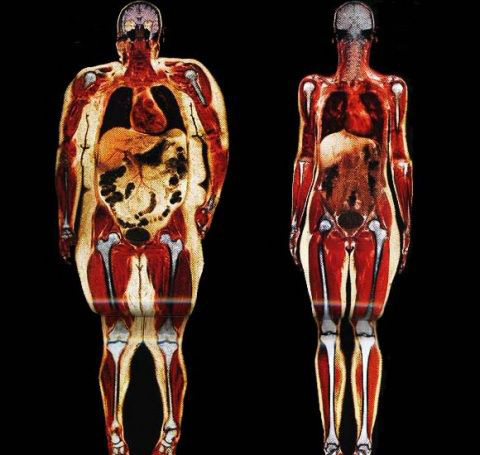


 We learned in Part 1 that not only do human infants start out with more fat than any other species, a higher percentage is brown adipose tissue (BAT). Women, in general have more than men and as Humans age, BAT seems to dwindle. It’s likely if you have ever been obese, you have less BAT then your skinny friends.